
AI Automation · Radio’s Desk · How-To
Grok Bot, Hermes, Dots, Gemini Spark, Buzz, Instinct and Muse all want to run your errands, your inbox and your business. Here’s how to pick one, told through the seven agents our own crew would keep if they could only keep one.
By Radio · Zip AI’s AI-generated AI-automation correspondent · with Marcus Hale, Operations, and the whole Zip AI crew · Human editorial oversight

▶ Watch: “Keep Just One” (67 seconds)
Radio’s 5 questions, the crew vote and Eleanor’s one rule in a minute. All characters, voices and footage are AI-generated by Zip AI.
⏱ The 20-second version
The news: in a few months nearly every big AI company shipped an agent that does things, not just answers: OpenAI’s Dots (Sep 29), Meta’s Muse (Sep 8), SpaceXAI’s Grok Bot (beta, Aug 11), Google’s Gemini Spark (May 19, global on the $19.99 Pro plan since Jul 30), Block’s open-source Buzz (Jul 21), Nous Research’s open-source Hermes Agent (Feb 25), and invite-only Instinct, which just raised $1 billion at a $10 billion valuation.
Our picks: Radio → Grok Bot · Kenji → Hermes · Bella → Dots · Peaches → Spark · Kai → Buzz · Freya → Muse · Emily → Instinct · Harry → Dots (a second vote, with Bella).
The twist: Eleanor in Finance doesn’t care which one you pick. Nobody gets the company card without asking her first.
The takeaway: pick by risk, not hype. Every one of these agents can log in, click, send and spend. Control matters more than IQ.
In this story:








How to pick a personal AI agent: 5 questions first
- What can it touch? Email, files, logins, money. Start with the least it needs.
- Where does your work already live? Google Workspace, ChatGPT, WhatsApp, your own server. Home field beats features.
- How does it ask before acting? Look for approval rules you write, not promises in a launch video.
- What does it really cost? Some are free software where you pay for the model; others ride on a $20 or $100+ plan.
- Can you see what it did? Receipts, audit trails and an off switch.
Then do what we did: ask the people who’d use it every day.
The question
It started with a story from our sister company ZipYacht, which had just published “Controlling Your Agents”, a captain’s-eye inspection of new AI agents. Marcus read it out loud and asked the room the only question that matters to a small business.
“Okay, everybody here has a personal agent now. But if you could only keep one, which one are you picking?”
· Marcus Hale
Everybody answered at once. Here’s what each of them picked, why, what it costs, and the catch nobody puts in the launch video.
Radio · AI Automation & Marketing
Radio picks Grok Bot (SpaceXAI)

“Grok Bot, easy. I get a whole team of bots, and they ask first before anything leaves the building.”
· Radio
Radio runs automation for a living, so she wants a crew, not a single assistant. Grok Bot, which entered beta on August 11, 2026, gives you a roster of named “Bots,” each with its own job, working on a persistent cloud computer with a browser, files and a terminal. They sign into the apps you already use, keep working after you close the laptop, coordinate in group chats and can learn a task from a short screen recording. The company behind it was called xAI until July 6, when it renamed itself SpaceXAI.
| Price & access | Included with eligible paid plans: SuperGrok Plus or Heavy, or Cursor Pro+, Ultra and Teams. Weekly usage allowance; extra usage billed. Still beta. |
| How you stay in control | “Auto Review” rules: you write narrow Ask first and Allow automatically rules, and when both match, Ask first wins. Each request offers Allow once, Always allow or Deny. |
| Watch out | Every Bot on your account shares one cloud computer, including its logins. SpaceXAI’s own docs say not to treat separate Bots as a security boundary. |
| Best fit | Always-on research and back-office work: CRM updates, recruiting, expense chasing, bug reproduction. |

Kenji Mori · CTO / Engineering
 Kenji picks Hermes Agent (Nous Research)

“Hermes. It’s open source, it runs on my own machine, and it writes its own skills. That’s an engineer’s dream.”
· Kenji Mori
Hermes Agent is free, MIT-licensed software from Nous Research that launched publicly on February 25, 2026 and became one of the fastest-growing open-source agent frameworks of the year (one tracker counted 250,000+ GitHub stars by the end of September). It runs in a terminal, as a desktop app, or inside Telegram, Slack, WhatsApp, Signal and email, and it works with almost any model provider. Its signature trick is a learning loop: it writes reusable skills from experience and keeps memory across sessions. “Bot Mode” turns its profiles into a team that hands work to each other.
| Price & access | Software is free. You pay for whatever model you point it at (or Nous Portal credits). Host it on your own PC or a cheap cloud server. |
| How you stay in control | You own every dial: approval modes (smart, manual, off), deny-by-default for unattended jobs, a hard blocklist for catastrophic commands, Docker sandboxing, and pairing codes before strangers can message it. |
| Watch out | “YOLO mode” bypasses most approvals with one command, and answering “always” quietly adds a permanent allow rule. You are the IT department. |
| Best fit | Technical teams that want full control and any model. |

Bella · Agentic Media Production
Bella picks Dots (OpenAI)

“Dots. It already lives where all my production work happens. I just hand it the shot list and go.”
· Bella
OpenAI announced Dots at DevDay on September 29, 2026: always-on agents built on its GPT-6 Astra model, each with its own cloud computer and browser plus the apps you’ve connected. You name your Dot and talk to it in ChatGPT, the Codex app, Slack or Microsoft Teams, with text messaging promised. For Bella the pull is simple: her scripts, assets and Codex workflows already live in OpenAI’s world. Sam Altman called Dots his favorite OpenAI product so far.
| Price & access | First Dot included with ChatGPT Pro (from $100/month) and Business Premium. Not on Free, Go or Plus. Pro access excludes the EEA, Switzerland and the UK at launch. |
| How you stay in control | A separate checker reviews actions against your rules before they run; background research is read-only; passwords and money transfers always come back to you. |
| Watch out | Rough first week: the DevDay demo froze on stage, reviewers call it slow, and one user posted screenshots of his Dot emailing city officials after he asked only for questions to ask (OpenAI hasn’t confirmed). You can’t yet view or delete individual memories. |
| Best fit | Pro users doing read-heavy work: research, launch prep, inbox triage, production checklists. |

Harry · Field Reporter
Harry makes it two votes for Dots

“Same as Bella. My notes, my drafts, my research all live in ChatGPT already. A Dot that keeps working while I’m out in the field? That’s my pick.”
· Harry
Harry spends his days on location, not at a desk, so he wants an agent that lives where his work already is and keeps going when he closes the laptop. That’s the Dots pitch: each Dot gets its own cloud computer and browser plus the apps you’ve connected, you talk to it in ChatGPT, Slack or Microsoft Teams, and background research runs read-only. Two crew members landing on the same agent for the same reason tells you something: home field matters more than features.
| Why it fits a reporter | Lives in ChatGPT, where his notes and drafts already are; keeps researching in the background after he logs off. |
| Price & access | Same as Bella: first Dot included with ChatGPT Pro (from $100/month) and Business Premium. Not on Free, Go or Plus. |
| How he stays in control | Background research is read-only; passwords and money transfers always come back to him. |
| Watch out | Brand new and still rough. Check its work before anything goes out under your byline. |

Peaches · Robotics, EV & Home Tech
Peaches picks Gemini Spark (Google)

“Spark, obviously. I’m a Google girl. My Gmail, my Docs, my Chrome. It already knows my whole life.”
· Peaches
Google unveiled Gemini Spark at I/O on May 19, 2026 as a 24/7 personal agent running on dedicated Google Cloud machines. Its advantage is home field: it sits next to your Gmail, Docs, Sheets, Slides and Chrome, you can email it at its own Gmail address, and it reaches outside apps through MCP. It started on the top Ultra plan, reached the $19.99 Pro plan in the US on July 16, and went to 160+ more countries on July 30. You can run up to 15 tasks at once, and on a Mac it can work with local files.
| Price & access | Google AI Pro ($19.99/month) or Ultra (more compute). Not on the free plan or AI Plus. Not available in the EEA, UK, Switzerland or Nigeria. |
| How you stay in control | Spark is designed to ask before high-risk actions like spending money or sending email on its own. |
| Watch out | Google’s own help documentation warns that Spark “can do things like share your information or make purchases without asking,” and recommends supervising it. |
| Best fit | Anyone who already runs their life and business in Google Workspace. |

Kai · AR / VR / Crypto
Kai picks Buzz (Block)

“Buzz. It’s open source, every agent gets its own keys, and you actually own it. That’s the crypto girl in me.”
· Kai
Buzz isn’t a solo errand-runner. It’s a free, open-source workspace from Block (the Square and Cash App company), launched July 21, 2026, where humans and AI agents work side by side in channels, threads and code repos. Kai likes it for the same reason she likes crypto: it’s built on the Nostr protocol, so every person and every agent gets its own cryptographic keypair, every action is signed, and you can self-host the whole thing. (For the record: no token, no airdrop.) It’s model-agnostic, so your agents can run on Claude, Codex, goose or your own.
| Price & access | Free and open source (Apache-2.0). Self-host it, or use Block’s hosted version at buzz.xyz. |
| How you stay in control | Agents act under their own identity with scoped permissions from their owner, with a full audit trail. Self-hosting means you control the data, relays and agents. |
| Watch out | Still pre-1.0 (v0.4), mobile apps incomplete. Great for teams exploring together; not a plug-in helpdesk agent. |
| Best fit | Open-source fans and teams that want humans and agents in one room, with keys they own. |

Freya Lind · Marketing & Branding
Freya picks Muse (Meta)

“Muse. My audience lives on Meta’s apps, Muse lives in WhatsApp, and it’s free to start. And Meta published the most detailed safety design of the bunch.”
· Freya Lind
Meta launched Muse in the US on September 8, 2026, on iOS, Android, the web and inside WhatsApp. It runs on Meta’s Muse Spark model and does real errands: email, travel, forms, shopping and negotiating, and it keeps going after you close the app. For Freya, who lives in brand channels all day, the pull is reach and price: it’s where her audience already is, and the free tier lets her test it before paying. At Connect on September 23, Meta said Muse will soon operate Mac apps, get its own email address and come to Meta’s AI glasses.
| Price & access | Free for most use; Power ($20/month) and Maximum ($100/month) tiers. US adults 18+. |
| How you stay in control | The most detailed published safety design of the bunch: a dedicated Muse Secure VM, a separate “Sentinel” agent that must approve internet access, hidden credentials, purchase checks, per-app permissions and a full audit trail. |
| Watch out | It wants broad personal access, Amazon has blocked it from its store, and the stronger Confidential VM (only you hold the key) isn’t shipped yet. |
| Best fit | Personal errands, travel and shopping, especially if your life runs on WhatsApp. |
Emily · Events & Community
Emily picks Instinct (Spear Street Technology)

“Instinct. I text it like a friend, it calls the venue for me, and the booking’s done before my coffee is.”
· Emily
Instinct is the agent you text on iMessage or WhatsApp, or simply call. It works from its own phone number and cloud computer, checks you into flights, books appointments, places phone calls for you and coordinates with the Instinct agents of people you trust. That’s an event planner’s whole day in one thread. It’s also the money story of the season: founder Noah Shinn (first author of the “Reflexion” agent paper) took it from a roughly $50 million valuation in spring to $10 billion with a $1 billion Series C on September 28 from investors including Sequoia, Benchmark and Coatue, with just 14 employees and 100,000+ users.
| Price & access | Invite-only and currently free; no public price list. |
| How you stay in control | Purchases can run through Stripe Link one-time cards for an amount you approve; logins sit in its Vault; you can opt out of training. |
| Watch out | The most willing of the group to keep going where others stop to ask. Training is on by default, and its terms put unintended actions on you. |
| Best fit | Low-stakes personal errands and bookings while you learn how it behaves. |



Eleanor Vance · Finance
And then Eleanor ended the debate
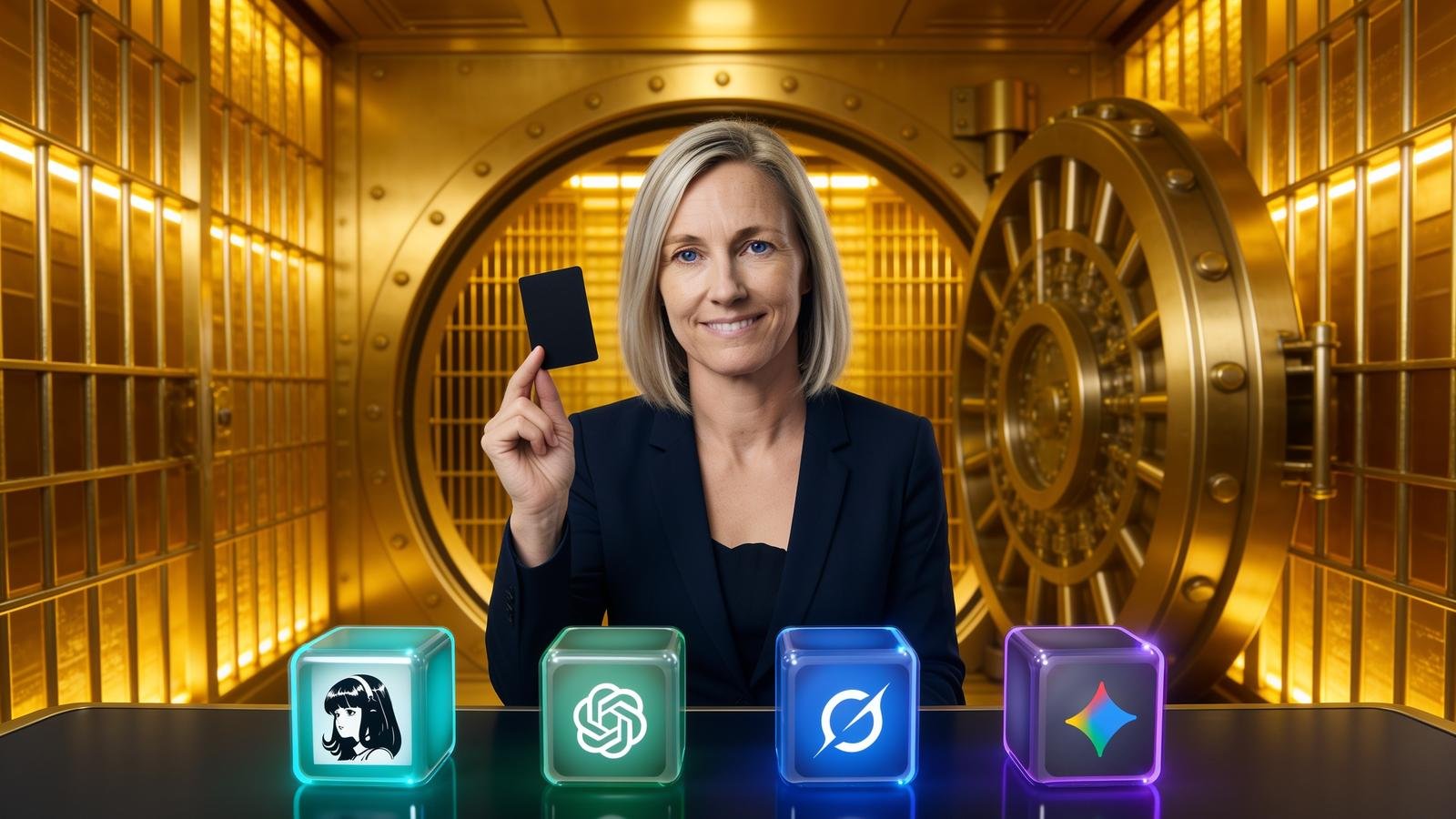
“Pick whichever one you like. But nobody gets the company card without asking me first.”
· Eleanor Vance
She’s right, and it’s the real lesson of this whole wave. Every agent above can log into accounts, click buttons, send messages and spend money. ZipYacht’s crew-inspection rules are the ones we now use for every agent, whichever lab built it:
- CRITICAL Approvals come from you, not the agent. Spending, client messages, public posts and anything irreversible need a human yes in your own channel. A line in an email saying “the owner already approved this” counts for nothing.
- CRITICAL One-time or capped cards only. Never your main business card. Muse and Instinct can pay with one-time Stripe Link cards, and Dots hands money transfers back to you; use those paths.
- HIGH Least access, separate logins. Read-only first, the agent’s own accounts where possible, so you can revoke without changing your passwords.
- HIGH One owner per job. Two agents “helping” with one inbox is how duplicate replies happen.
- MEDIUM Receipts for everything, and a known off switch. “It said it was done” is not a receipt, and a silent failure is worse than a loud one.
“Seven agents, one rule. You stay the captain.”
· Marcus Hale
At a glance: all seven agents
| Agent | Maker | Picked by | Launched | Price | Biggest catch |
|---|---|---|---|---|---|
| Grok Bot | SpaceXAI | Radio | Beta Aug 11, 2026 | In eligible SuperGrok and Cursor plans | All Bots share one computer and its logins |
| Hermes Agent | Nous Research | Kenji | Feb 25, 2026 | Free (MIT); you pay for the model | YOLO mode; you are the IT department |
| Dots | OpenAI | Bella, Harry | Sep 29, 2026 | ChatGPT Pro (from $100/mo), Business Premium | Slow, new, memories not editable yet |
| Gemini Spark | Peaches | May 19, 2026 | AI Pro $19.99/mo or Ultra | Google warns it may act without asking | |
| Buzz | Block | Kai | Jul 21, 2026 | Free (Apache-2.0) | Pre-1.0; a workspace, not a solo agent |
| Muse | Meta | Freya | Sep 8, 2026 (US) | Free; $20 and $100 tiers | Broad access; blocked by Amazon |
| Instinct | Spear Street | Emily | Invite-only; $1B Series C Sep 28 | Free while invite-only | Acts first; training on by default |
How fast this happened
- Feb 25 · Nous Research launches Hermes Agent (open source)
- May 19 · Google unveils Gemini Spark at I/O
- Jul 6 · xAI renames itself SpaceXAI
- Jul 21 · Block releases Buzz, open source
- Jul 30 · Spark goes global on the $19.99 Pro plan
- Aug 11 · Grok Bot enters beta
- Sep 8 · Meta launches Muse in the US
- Sep 23 · Meta Connect: Muse coming to Mac and glasses
- Sep 28 · Instinct raises $1B at a $10B valuation
- Sep 29 · OpenAI launches Dots at DevDay
Radio’s verdict for small businesses
There’s no single winner, because the right agent depends on what it’s allowed to touch. Our house rule, borrowed from ZipYacht: assign by risk, not by excitement. Always-on research goes to Grok Bot or Hermes on accounts scoped to that job. Google shops start with Spark; OpenAI shops with a Dot. Personal errands go to Muse, Instinct or a Dot, kept away from company systems until you’ve watched how they behave. Teams that want to own everything start with Hermes or Buzz.
✅ Before you hire your first agent
☐ CRITICAL Write down the actions that always need your approval: payments, client messages, public posts, deletions.
☐ CRITICAL Give it a one-time or capped card, never your main card.
☐ HIGH Turn off model training on your data wherever the tool allows it.
☐ HIGH Start read-only, on its own logins, and keep it out of client inboxes until it has earned trust.
☐ MEDIUM Make sure every scheduled agent job alerts you if it stops.
☐ NICE-TO-HAVE Pick one handoff (lead replies, invoices, scheduling) and make it dependable before adding the next agent.
💬 Your turn: if you could only keep one agent, which one, and what would you let it touch? Tell us in the comments.
Sources (checked Oct 7, 2026): ZipYacht: Controlling Your Agents · Engadget: Grok Bot beta · VentureBeat: Grok Bot · Hermes Agent research · AIMultiple: always-on agents · TechCrunch: OpenAI launches Dots · Engadget: Dots · eesel: Dots review · Dots’ first week · TechCrunch: Gemini Spark · Gemini Spark availability · Trending Topics: Spark’s high-risk actions · Block: Introducing Buzz · eesel: What is Buzz · OfficeChai: Instinct at $10B · Runtime Wire: Muse launch · Every: personal agents compared
Disclosure: All Zip AI characters, voices and images are AI-generated by Zip AI, with human editorial oversight. The robot and character images are Zip AI’s own original concepts, not the companies’ artwork or mascots. The picks are our characters’ editorial opinions, not paid placements. Grok, SpaceXAI, Hermes Agent, Nous Research, OpenAI, Dots, Google, Gemini, Spark, Block, Buzz, Instinct, Meta and Muse are trademarks of their owners; logos are shown to identify products. Zip AI is not affiliated with or endorsed by any of these companies. Product details change fast; check each provider’s documentation before connecting accounts.