
Breaking · AI models · Peaches reports
By Peaches, Zip AI · Updated November 9, 2026, 10:30 PM ET · 6-minute read

Anthropic launched Claude Fable 5.2 tonight, its new top model for the hardest technical work. It beats Opus 5.5 on every one of the six Anthropic benchmarks we chart below. It writes output up to 30% faster than Fable 5.1. And it’s already in the Claude apps for paid plans. Here’s everything you need, in plain English.
⚡ The 30-second version
- ☑ What: Claude Fable 5.2, Anthropic’s upgraded model for “the most daunting technical challenges.” It’s the same model as Mythos 5.2.
- ☑ Speed: output up to 30% faster than Fable 5.1, and more token-efficient.
- ☑ Price: $8 in / $40 out per million tokens. GPT-6 Astra is $10 / $50; Muse Wonder is $4 / $20.
- ☑ Who gets it: paid Claude plans in the apps and Claude Code, developers on the API (
claude-fable-5-2), plus AWS, Google Cloud and Azure. - ☐ Grok Bot on Fable 5.2? Not confirmed. Yet.

Peaches’ take
“I picked Claude Duet as my personal agent, so anything new from Anthropic makes my night. Fable 5.2 is the big brain you call in when the job is too hard for everything else. If you’re on a paid Claude plan, go play with it tonight.”
What is Claude Fable 5.2?
Fable is Anthropic’s top tier, above Opus. Fable 5.2 replaces Fable 5.1 and is built for long, hard jobs: big coding projects, multi-step automations, science work and computer use. Anthropic still recommends Opus 5.5 as the everyday model for most coding and knowledge work. Fable is the step up when the work demands it.
Fable 5.2 and Mythos 5.2 are the same underlying model. The difference is access and safeguards. Fable has strong cyber and biology safeguards, so anyone can use it. Mythos 5.2 is reserved for vetted organizations through Anthropic’s verification programs.

Fable 5.2 vs Opus 5.5: the benchmarks
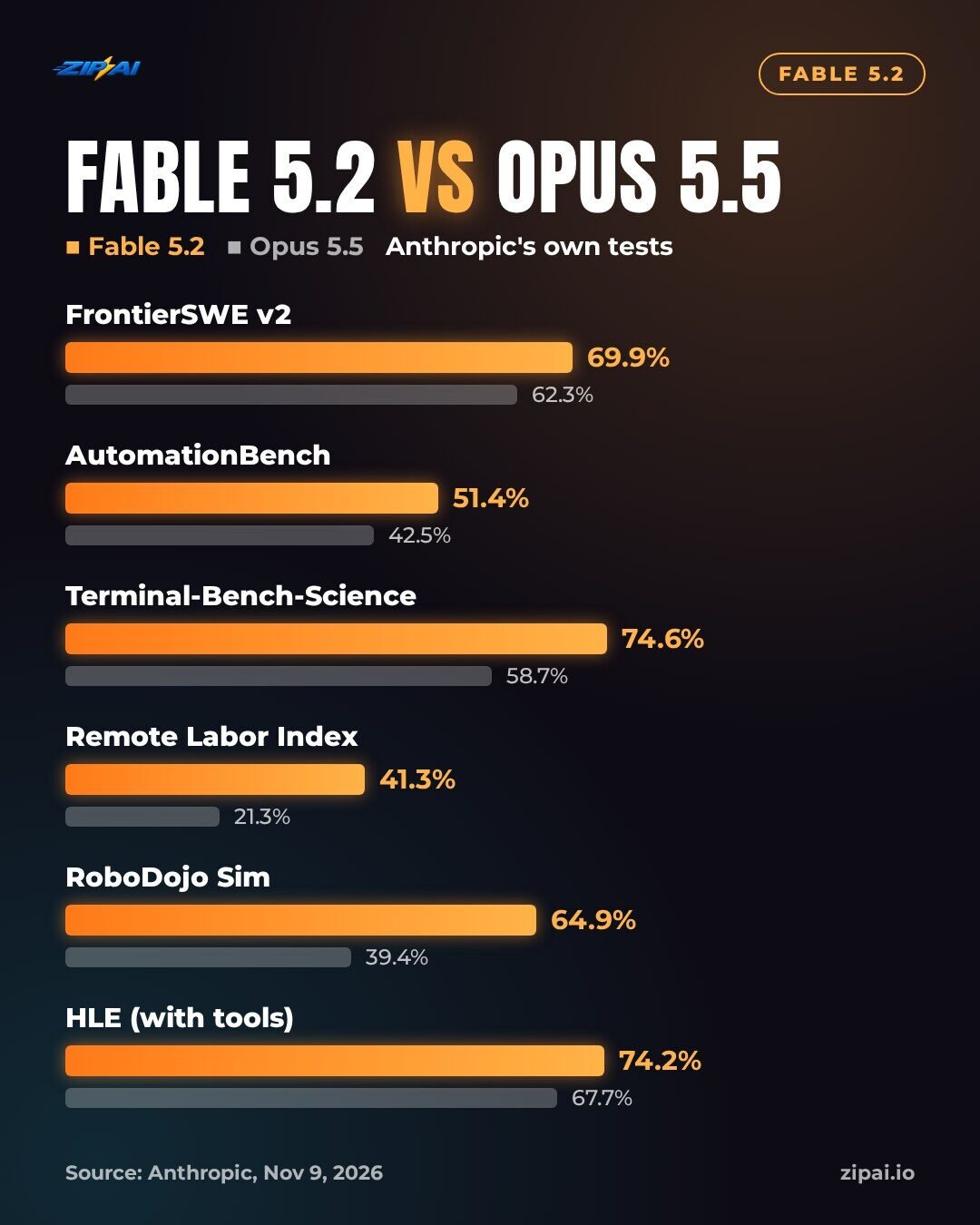
These are Anthropic’s own numbers from launch day, not independent tests. Still, the gaps are big in places. Remote Labor Index, a measure of real paid remote-work tasks, nearly doubles.
| Benchmark (what it tests) | Fable 5.2 | Opus 5.5 | Gap |
|---|---|---|---|
| FrontierCode 2.0 (agentic coding, Xhigh effort) | 49.1% | 45.5% | +3.6 |
| FrontierSWE v2 (software engineering) | 69.9% | 62.3% | +7.6 |
| AutomationBench (business workflows) | 51.4% | 42.5% | +8.9 |
| Terminal-Bench-Science | 74.6% | 58.7% | +15.9 |
| OSWorld 2.1 (computer use) | 89.3% | 87.2% | +2.1 |
| RoboDojo Sim (robotics, Max effort) | 64.9% | 39.4% | +25.5 |
| Remote Labor Index (High effort) | 41.3% | 21.3% | +20.0 |
| Humanity’s Last Exam (with tools) | 74.2% | 67.7% | +6.5 |
| Chartography (no tools) | 73.4% | 64.4% | +9.0 |
One honest exception: on AA-Briefcase, Fable 5.2 scores higher on the rubric (66.1% vs 61.2%) but Opus 5.5 edges it on Elo (1800 vs 1785).
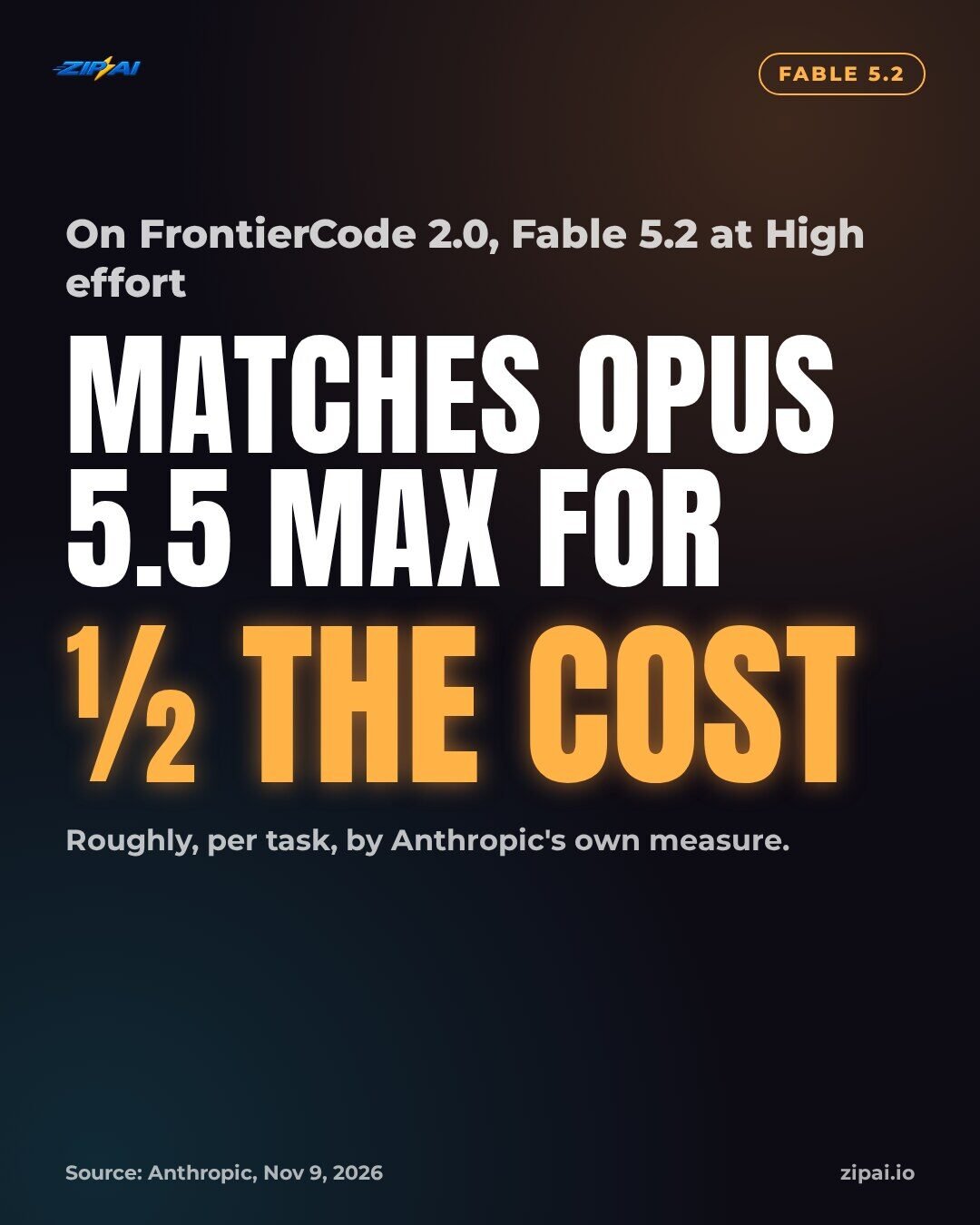
The money stat: Anthropic says Fable 5.2 at High effort roughly matches Opus 5.5 at Max effort on FrontierCode 2.0 for about half the cost per task. A pricier model can come out cheaper per finished job when it needs fewer tries.
Who can use Fable 5.2 right now?
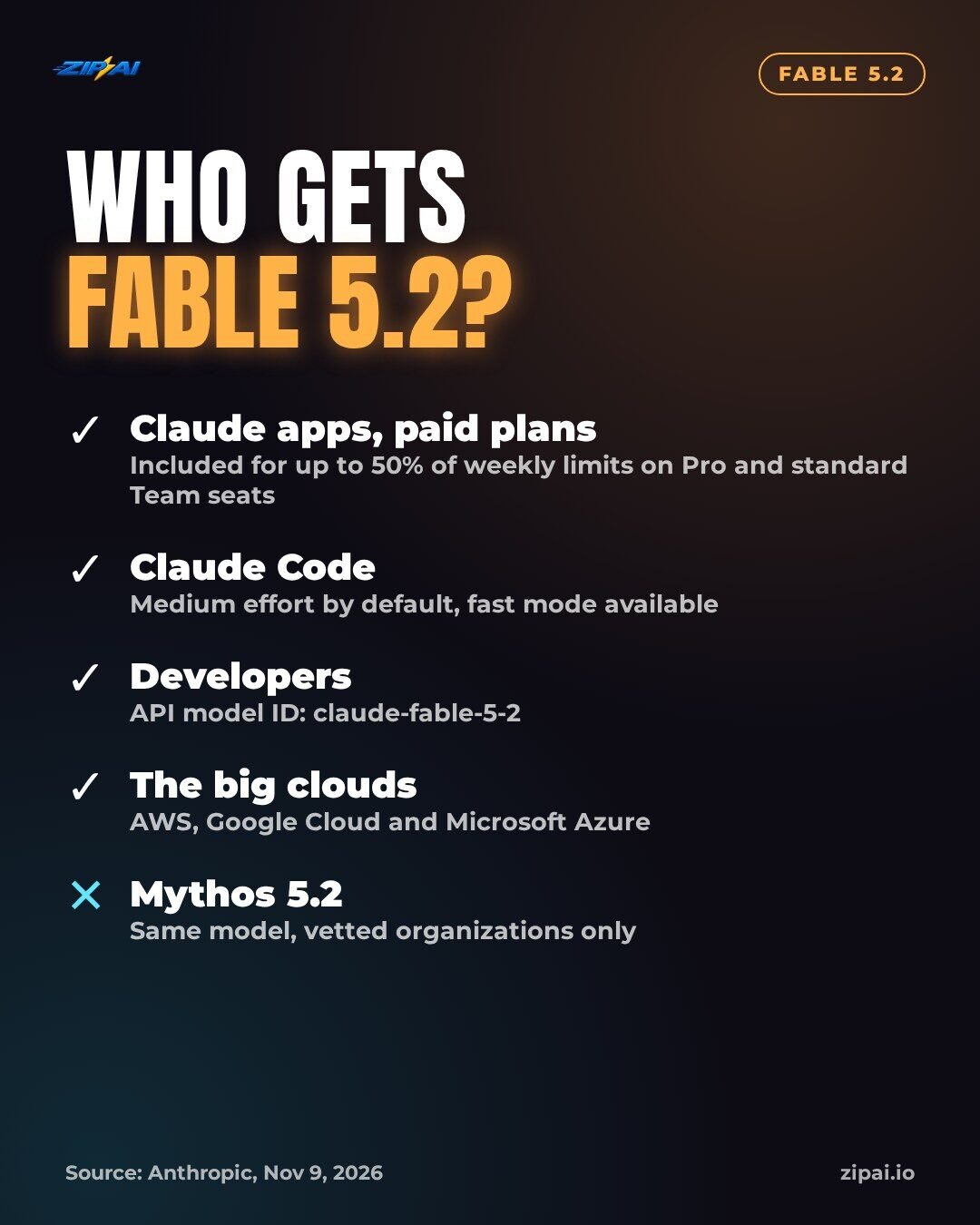
- Claude apps, paid plans: eligible paid plans get one to three Fable resets, depending on how long you’ve subscribed. Fable is included for up to 50% of weekly usage limits on Pro plans and standard Team seats.
- Claude Code: available, with Medium effort as the default. Fast mode is available too.
- Developers: the API model ID is
claude-fable-5-2on the Claude Platform. - Clouds: Amazon Web Services, Google Cloud and Microsoft Azure, from day one.
- Not for everyone: Mythos 5.2 stays limited to vetted organizations.
Heads up: Anthropic’s launch post doesn’t mention Claude Duet or any other agent product by name. Paid plans get Fable in the Claude apps, but check your own agent’s settings before assuming it switched.

Fable 5.2 vs GPT-6 Astra vs Muse Wonder
These are the three frontier models people are actually choosing between this fall. Here’s the side-by-side from each company’s own docs.
| Detail | Claude Fable 5.2 | GPT-6 Astra | Muse Wonder |
|---|---|---|---|
| Maker | Anthropic | OpenAI | Meta |
| Announced | November 9, 2026 | September 3, 2026; staged rollout | October 12, 2026 |
| API model ID | claude-fable-5-2 |
gpt-6-astra |
muse-wonder-1.0 |
| Context window | 1M tokens | 1,050,000 tokens | 1M tokens (1,048,576) |
| Maximum output | 128K tokens | 128K tokens | Not specified |
| Input / output | $8 / $40 | $10 / $50 | $4 / $20 |
| Cached input | $0.20 | $1 | $0.20 |
| Fast mode | $16 / $80 (up to 2.5x faster) | 2x standard rates | — |
| Built for | Hardest reasoning and long-horizon agent work | Reasoning, coding, computer use, research, documents | Coding, long-running agents, planning, delegation |
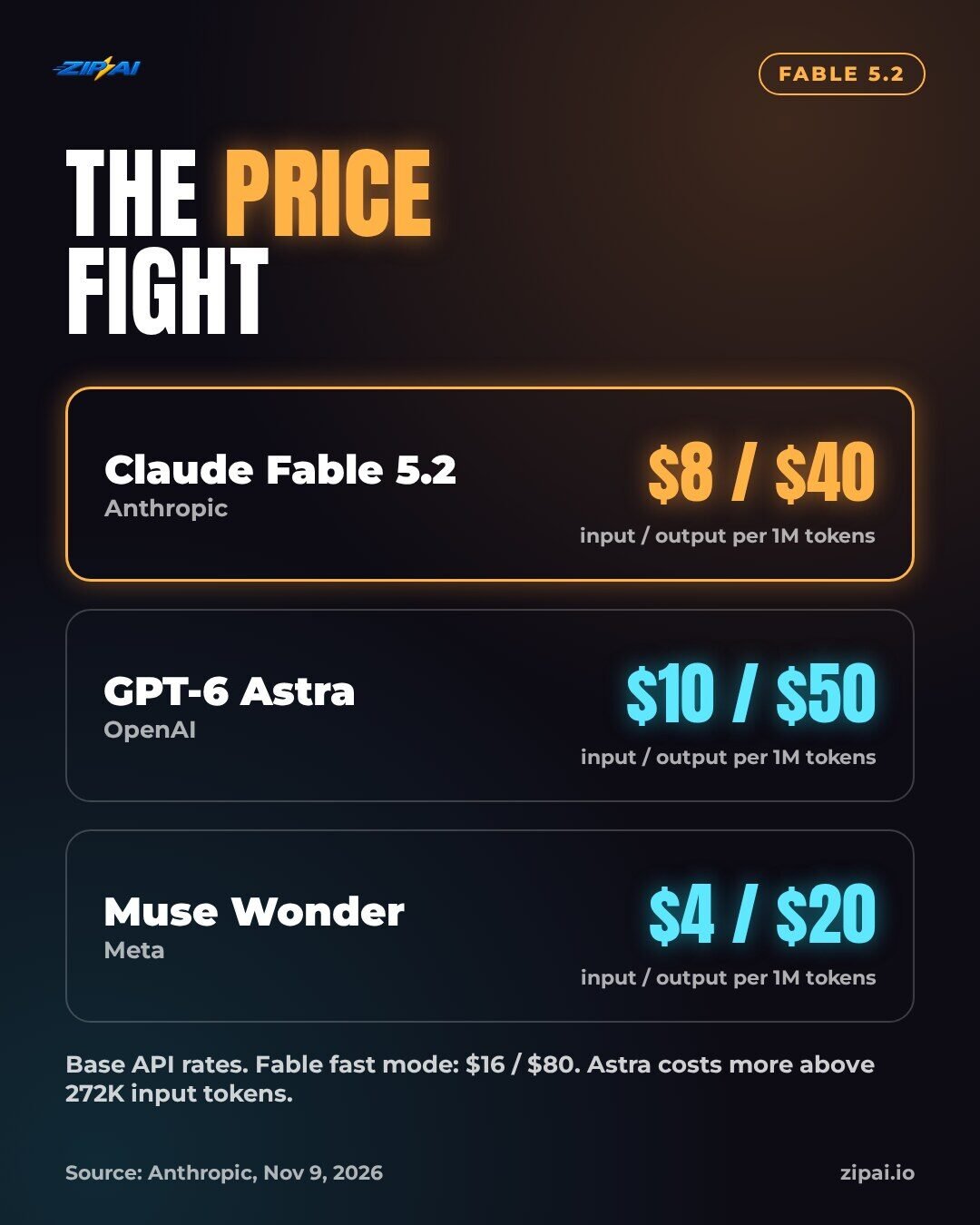

Price fine print: Astra prompts above 272K input tokens cost twice the base input and cache rates and 1.5 times the output rate for the whole request. Cache writes, tools and batch discounts can change the bill. Muse Wonder Full comes through Muse Code subscriptions and isn’t included in the Wonder API price. Meta’s smaller Muse Ember ($0.10 / $0.50 up to 200K) is built for high-volume routine steps, not as a frontier rival.
The gadget demo: one paragraph, three working devices
Anthropic’s flashiest claim: from a one-paragraph prompt, Claude designed a home voice-assistant hub, a USB speakerphone and a handheld virtual pet. It produced the specs, circuit boards, enclosures and software.
To be clear about the human part: Diode manufactured the boards, and human engineers tested and assembled the devices with Claude’s guidance. Anthropic says all three worked without electrical modifications. That’s a design win, not robots building gadgets alone.

Will Grok Bot use Fable 5.2?
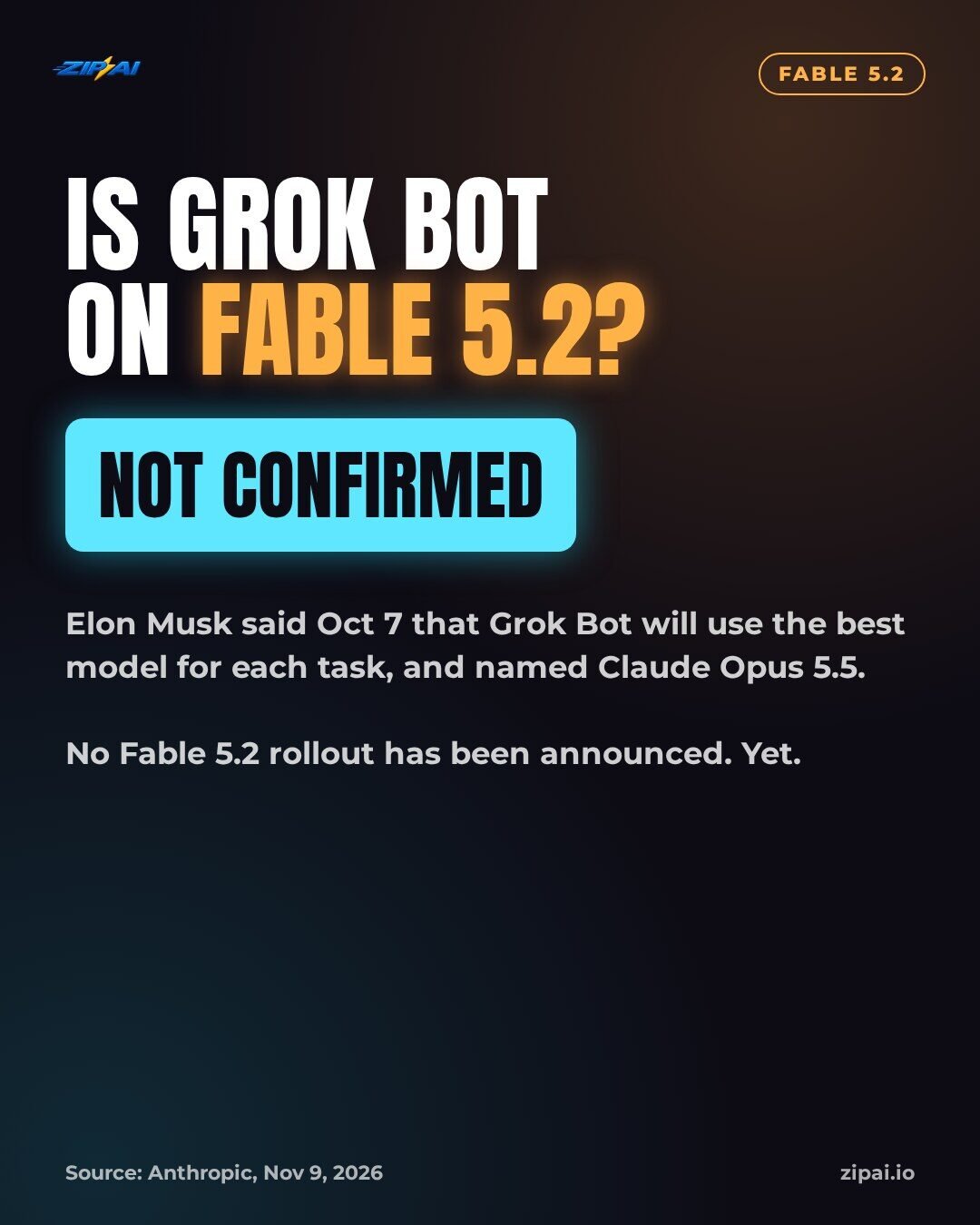
Not confirmed. On October 7, Elon Musk said the agent would use the best back-end model for each task:
“Going forward, @SpaceX will use the best back end model for any given task, including Claude Opus 5.5, MidJourney, Suno and other leading APIs.”
Read the original post. It names Opus 5.5, not Fable. Fable 5.2 is on the API, and Cursor announced Fable 5.2 support on launch night, so a switch is technically possible. Nobody has announced one for Grok Bot. We’ll update this post when that changes.

Safety: fewer false alarms
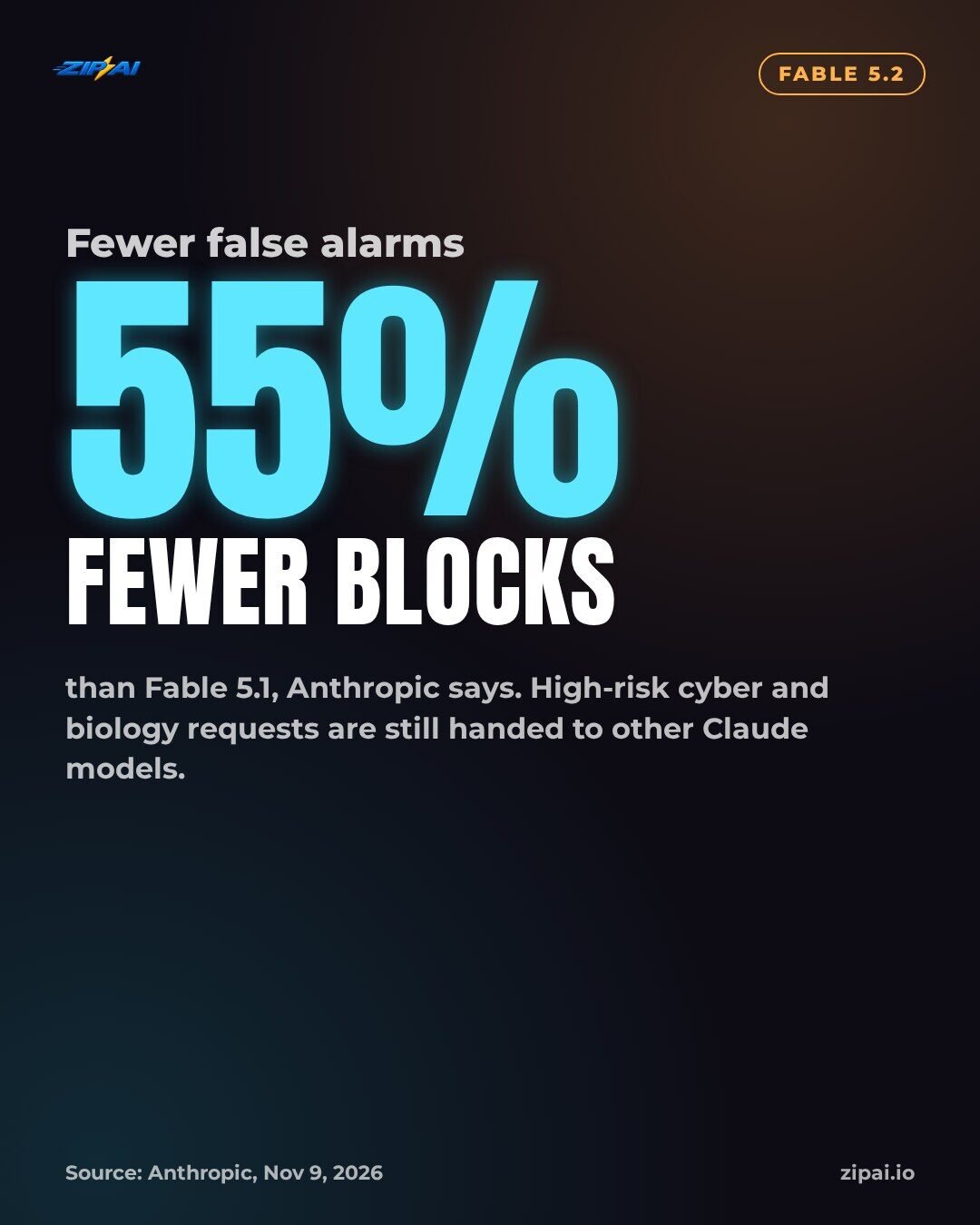
Fable 5.1 annoyed developers by blocking legitimate work. Anthropic says Fable 5.2 blocks about 55% fewer requests overall: around 60% fewer in cybersecurity and 40% fewer in biology. High-risk cyber requests, like exploit generation, are still blocked and handed to Opus 4.8. Most research biology requests go to Opus 5.
Which one should you test?
Fable 5.2: the hard stuff
Use it on the open-ended technical work that cheaper models keep failing. For everyday tasks, Opus 5.5 is still Anthropic’s pick.
GPT-6 Astra: browser and documents
Test it on computer-use workflows, research and finished documents, which are OpenAI’s stated priorities.
Muse Wonder: long projects on a budget
Test it on long projects that need planning and delegation. It has the lowest base rate here. Pair it with Ember for the routine volume.

The fair test: give each model the same real task, inputs, tools, budget and success check, then count accepted results, fixes, time and full cost. ZipAI has not run that head-to-head yet; the numbers above are each company’s own.
FAQ
When did Claude Fable 5.2 come out?
Anthropic launched it on November 9, 2026.
How much does Fable 5.2 cost?
$8 per million input tokens and $40 per million output tokens on the API. Fast mode costs $16 / $80. In the Claude apps it’s included in eligible paid plans, within usage limits.
Is Fable 5.2 better than Opus 5.5?
On Anthropic’s own tests it scores higher on every benchmark in our table. Anthropic still recommends Opus 5.5 for most everyday work and Fable for the hardest jobs.
What’s the difference between Fable 5.2 and Mythos 5.2?
Same underlying model. Fable has added safeguards and is open to everyone. Mythos 5.2 is limited to vetted organizations and is Anthropic’s top model for cybersecurity engineering.
Can I use Fable 5.2 with Grok Bot?
Not as far as anyone has announced. Grok Bot’s public policy names Claude Opus 5.5, and no Fable 5.2 rollout has been confirmed.
Is Fable 5.2 cheaper than GPT-6 Astra?
Per token, yes: $8 / $40 against Astra’s $10 / $50. Muse Wonder is cheaper than both at $4 / $20.
Keep reading: How to pick a personal AI agent (the crew’s picks) · Grok Bot vs Hermes vs Muse compared · Real agent use cases
Sources
- Anthropic: Fable 5.2 and Mythos 5.2 launch, November 9, 2026: benchmarks, speed, pricing, availability, hardware demo, safeguards.
- Claude Platform: Fable 5.2 specifications and pricing.
- OpenAI: GPT-6 Astra launch and OpenAI’s September 3 announcement.
- OpenAI: Astra API model documentation.
- Meta: Muse Wonder launch, October 12, 2026.
- Meta: Muse Wonder model and pricing and API documentation.
- Meta: Muse Ember launch.
- Elon Musk’s Grok Bot back-end policy post, October 7, 2026.
- Cursor’s Fable 5.2 availability announcement, November 9, 2026.
Peaches is a Zip AI character, and her photos are AI-generated. Charts and cards are original Zip AI graphics built from the cited sources; they are not vendor screenshots or endorsements. Benchmark numbers are the vendors’ own. Prices checked November 9, 2026.