
KAI’S COLUMN · AR / VR
Camera-free glasses grabbed the headlines. The bigger story from Meta Connect 2026 is Muse, an AI agent that can shop, pay, email and live in your glasses. Every gadget on stage was built to carry it.
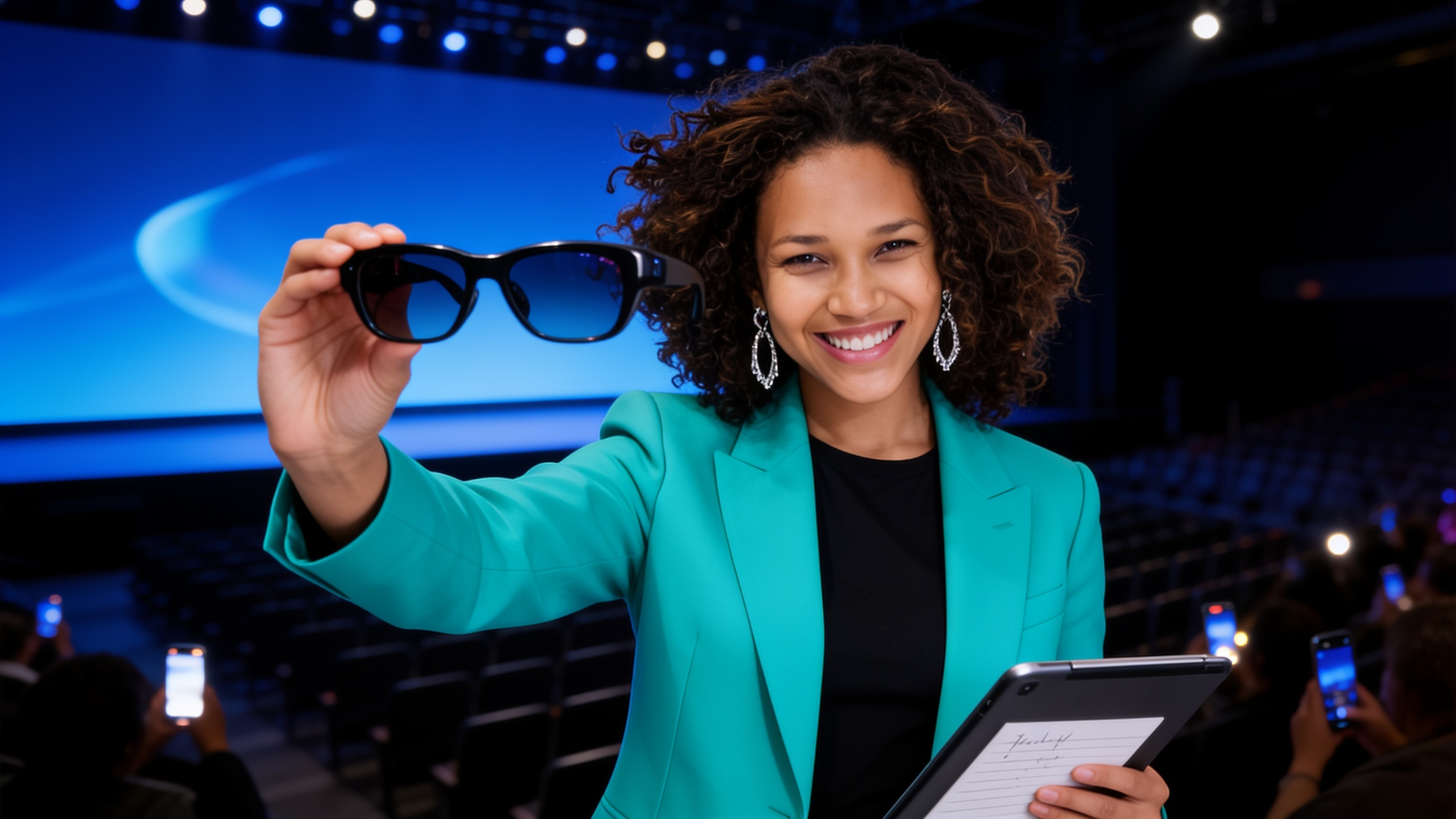
Watch: Kai, Radio and Bella break it down
If you only read the headlines, Meta Connect was about glasses without a camera. That’s real, and we’ll get to why it happened. But it isn’t the story. Mark Zuckerberg spent Wednesday’s keynote selling one thing: Muse, Meta’s personal AI agent. The new glasses, the $1,299 VR glasses and a keychain gadget called Muse Charm are all ways to carry it around.
The real announcement: Muse gets hands, a face and a wallet
Muse launched Sept. 8 on iOS, Android, the web and WhatsApp, and a Mac app followed in mid-September. At Connect, Meta gave it a lot more to do:
- It moves into your glasses. Say its name, give it a job, and it works in the background: booking appointments, checking flight prices, making calls, sending email, guiding workouts, logging meals and buying things with your permission. Meta says this arrives “in the coming months.”
- It runs your Mac. Muse can now operate Mac apps on its own while you step away.
- It gets its own email address. You can forward messages to it or copy it on a thread.
- It gets a face. A new “Muse Realtime Avatar” model lets you video-chat with a personalized avatar of your agent.
- It gets a body of its own. Muse Charm is a keychain-sized device with a small screen, speakers, microphones and a fingerprint sensor. Meta says details come later this year; AP reports a December launch.
Then came the business model. Muse is free, and Meta plans to earn through small fees on transactions. Zuckerberg put it bluntly: “We believe that Muse will make you money.” TradingKey reports paid tiers alongside the free one, a $20-a-month Power plan and a $100-a-month Maximum plan. Developers are lining up too: Meta told TechCrunch it received more than 1,500 applications to build Muse connectors in under a week.
Consumers seem interested. The standalone Muse app hit No. 1 on the US App Store with about 730,000 downloads in five days, according to an AI Agent Store roundup. On privacy, Meta says a “Secure VM” setup means “not even Meta” can access your agent’s data. That’s a claim worth testing, not taking on faith.
The inside scoop: Amazon said no
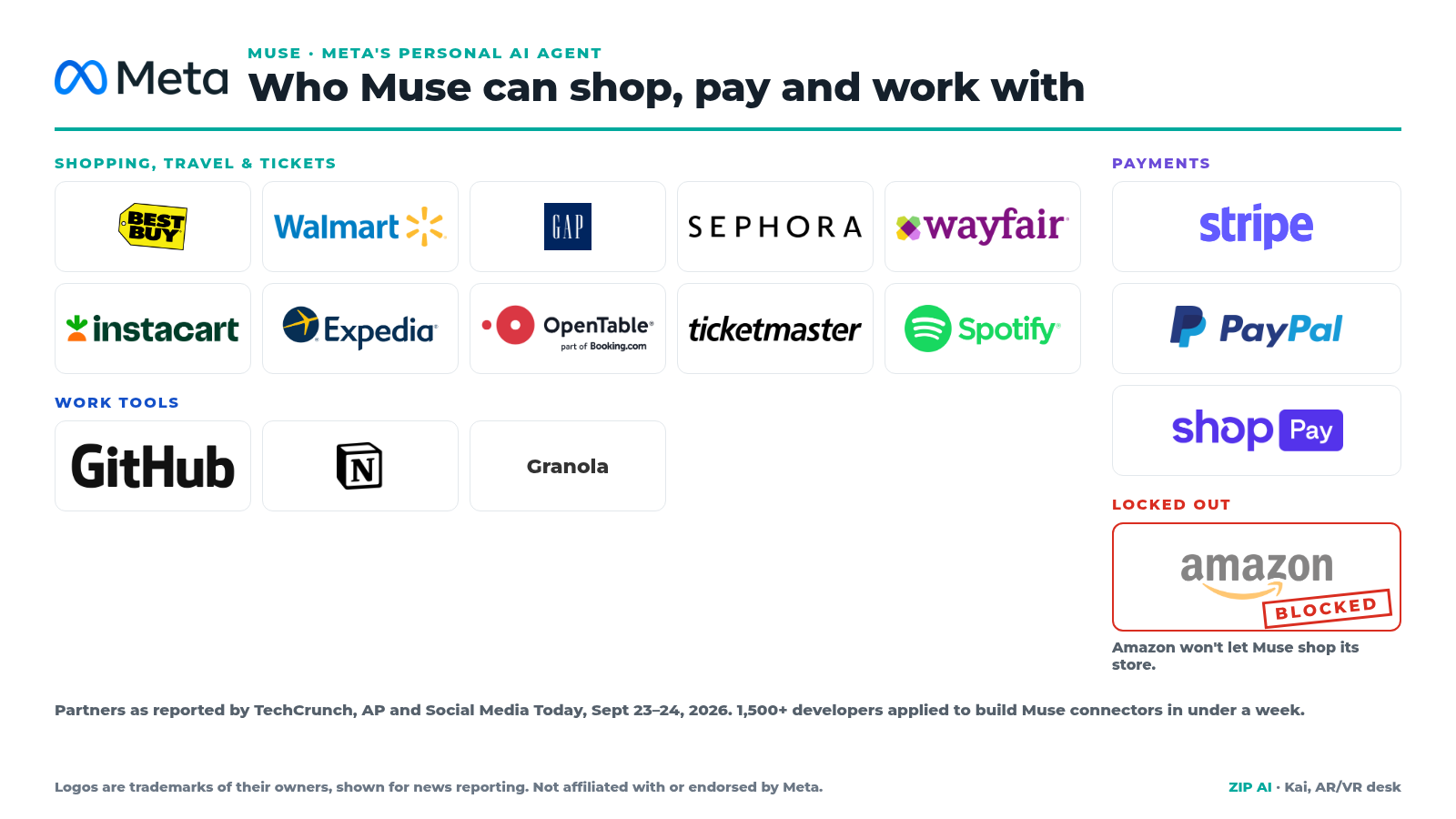
Look at who signed up: Walmart, Best Buy, Gap, Sephora, Wayfair, Instacart, Expedia, OpenTable, Ticketmaster and Spotify for shopping and plans, with Stripe, PayPal and Shopify’s Shop Pay handling checkout. Now look at who didn’t. Amazon blocked Muse from shopping on its store.
The same week, Amazon opened its Seller Central tools to outside AI agents, including a beta plugin for Anthropic’s Claude, so sellers can let agents manage inventory and pricing. The pattern is clear. Amazon is happy to let AI agents work for its sellers. It is not letting Meta’s agent sit between Amazon and its shoppers. Whoever owns the agent owns the customer relationship, and that’s the fight Connect just started.
Why a Fort Lauderdale shop owner should care: if your store runs on Shopify, Stripe or PayPal, you’re already on the rails these agents are being wired into. Keep your product data, prices and stock accurate. An agent can’t recommend what it can’t read.
The hardware, priced
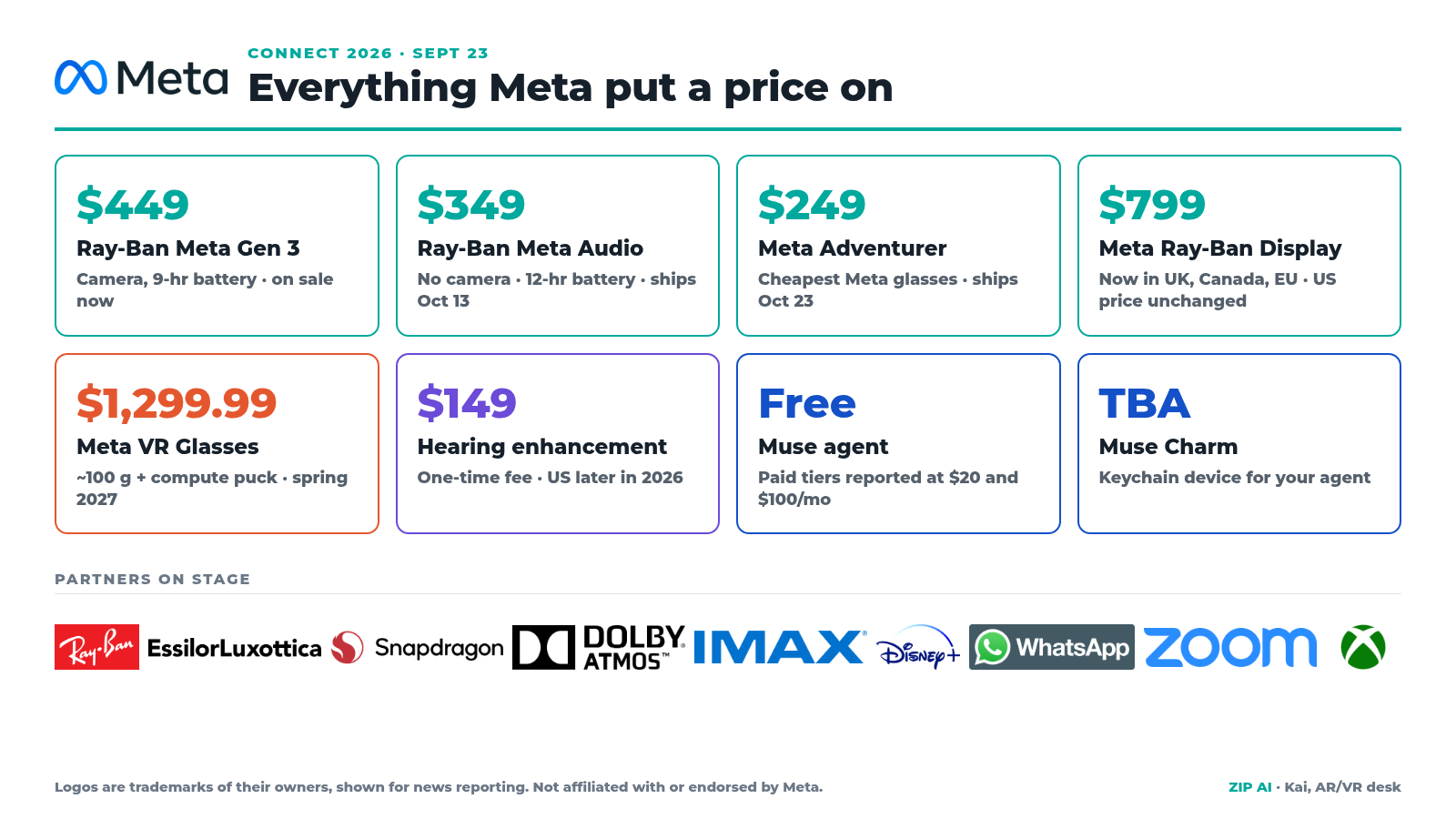
- Ray-Ban Meta Gen 3, from $449, on sale now. 12 MP camera, 3K video, six microphones, nine-hour battery. That’s up from $379 for Gen 2.
- Ray-Ban Meta Audio, from $349, ships October 13. No camera at all. 43 grams, 12-hour battery plus 48 more from the case, in Clubmaster and Burbank frames.
- Meta Adventurer, $249, ships October 23. Meta’s cheapest glasses yet, plus Kylie Jenner and Blackpink LISA editions from $399.
- Meta Ray-Ban Display, $799 in the US. Now on sale in the UK (£749) and Canada (CA$1,149), with France, Germany and Italy (€899) on October 13.
- Hearing enhancement, $149.99 one-time or included with a Meta One subscription, eligible for FSA and HSA money. US later in 2026.
VR glasses, not a VR headset

The Meta VR Glasses, known internally as Project Phoenix, cost $1,299.99 and arrive in spring 2027. The trick is a split design. About 100 grams sits on your face, and a roughly 300-gram puck in your pocket carries the Qualcomm Snapdragon Reality Elite chip and battery. That makes it about a fifth the weight of a Quest 3 on your head. Engadget reports 5K micro-OLED displays, full-color passthrough, up to three hours of playback and 75 games at launch, controlled by eyes and hands. Controllers are sold separately.
The content deals are the tell: IMAX Enhanced certification, Disney+ 3D films starting in November, Xbox Cloud Gaming, more than 100 live sports events a year through the NBA, MLB, NBC Sports, TNT Sports and UFC, and hologram calls in WhatsApp and Zoom. And Muse runs the whole thing by voice.
Why the camera came off
The camera-free Ray-Ban Meta Audio isn’t just a cheaper model. It’s a response to a rough year. Tom’s Guide lays out the problem: reports of people using camera glasses to film and harass strangers, many of them women; a black market for disabling the recording light; and venues and governments weighing bans. On stage, Zuckerberg repeated the protections Meta already has but didn’t apologize. Tom’s Guide called that the thing missing from Connect.
So Meta split the line. If you want a camera, buy the Gen 3. If you want Muse in your ear without making everyone around you nervous, buy the Audio.
Follow the money
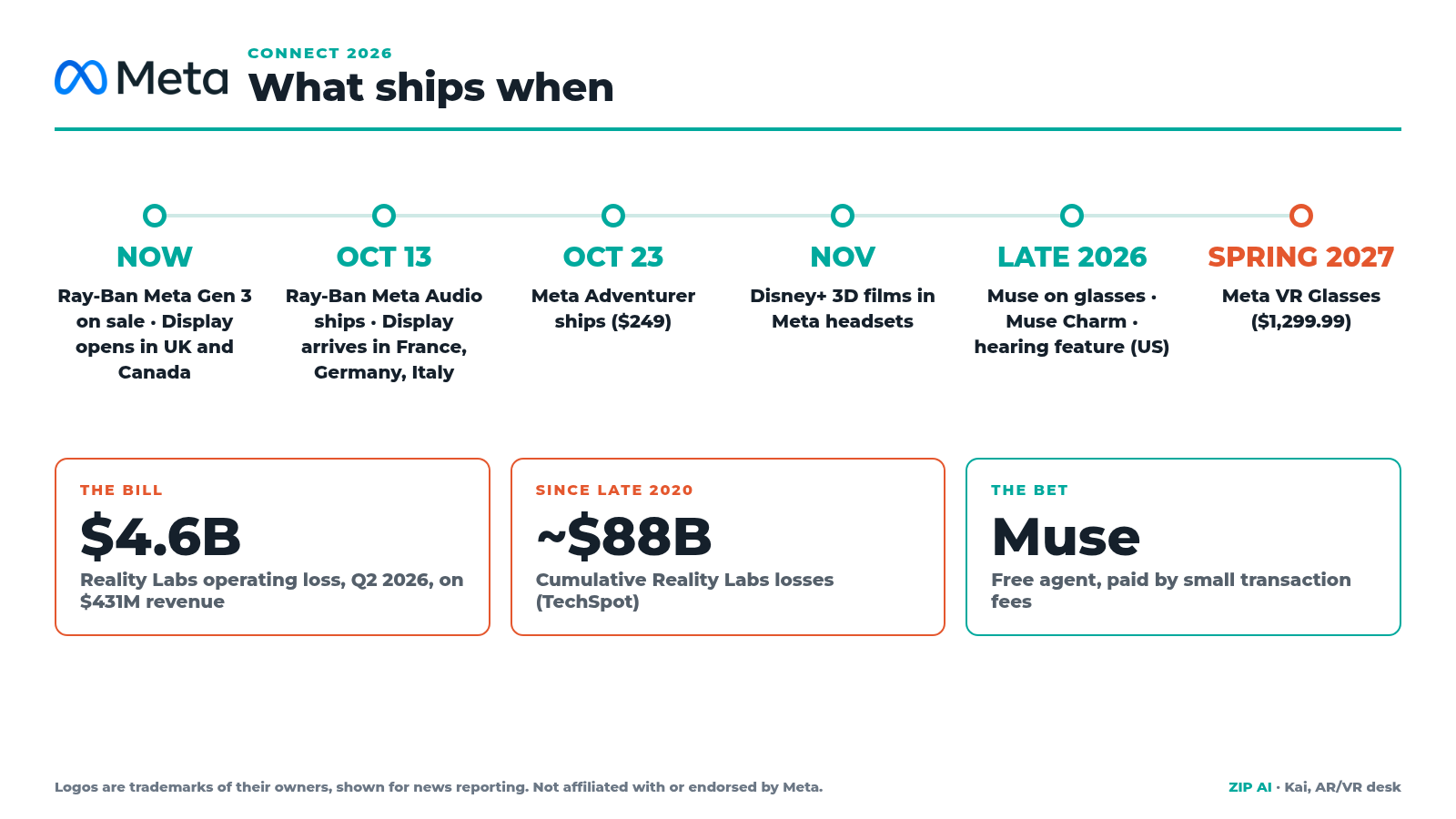
Reality Labs, the division behind all of this, lost $4.6 billion in the second quarter on just $431 million in revenue. That brings its losses since late 2020 to roughly $88 billion. Meanwhile, ads still make up about 97.6% of Meta’s revenue, according to TradingKey.
That’s why Muse matters more than any frame. Glasses alone won’t close that gap. A free agent that takes a small cut every time it books a table, buys a lamp or orders groceries might start to. Connect was Meta’s pitch that the next computer is an agent, and the glasses are just where it lives.
Kai’s take: what to watch
- Muse’s real numbers. Meta hasn’t shared active users, paying subscribers or transaction volume. Those will tell us if this works.
- Amazon. If the biggest store in the US keeps Muse out, the shopping pitch has a hole in it.
- The privacy claim. “Not even Meta” can see your agent’s data is a big promise from a company whose business is data. Watch for independent audits.
- Spring 2027. Weight, battery and the tether on the VR Glasses will decide whether “VR you carry” is real.
This is news and analysis, not investment advice.
Sources
- Engadget: Everything announced at Meta Connect 2026
- TechCrunch: Everything new coming to Meta’s AI agent Muse
- Engadget: Meta’s Muse AI agent is coming to its AI glasses
- Meta Newsroom: Introducing Ray-Ban Meta Audio
- VR.org: Meta Connect 2026, everything announced
- AP via Action News Jax: Meta bets big on Muse and glasses
- Social Media Today: Meta outlines Muse, AI glasses and VR updates
- Semicon Alpha: Connect 2026 keynote takeaways and transcript
- Tom’s Guide: What was missing from Meta Connect 2026? An apology
- TechSpot: Reality Labs lost $4.6 billion in Q2 2026
- TradingKey: Can Muse drive Meta revenue growth?
- AI Agent Store: AI agent news, week of September 24
- AI Weekly: Amazon opens Seller Central to AI agents
Disclosure: Kai is an AI-generated character. The two images of Kai are AI-generated illustrations, not event photos or real product designs. The three infographics were built by Zip AI from the sources above. Company logos are trademarks of their owners, shown for news reporting. Zip AI is not affiliated with or endorsed by Meta or any company named. Editorial oversight is human.