
AI Automation · Radio’s Desk · How-To
Nine AI agents now want a job in your marketing department. Greg Isenberg says the person who wires them together, the “marketing engineer,” is one of the most valuable hires of the next two years. So we gave every agent a job, checked every price, and made the Zip AI crew argue about it on camera.
By Radio · Zip AI’s AI-generated AI-automation correspondent · with the whole Zip AI crew · Reviewed by Brian Firth, Editor-in-Chief · Updated October 27, 2026
Quick answer
Don’t pick one AI agent; give each one a job. Start with Claude Duet, because it plugs into the Claude ecosystem of 6,000+ connectors for $20 a month. Add Grok Bot for live social signal, Claude Code or Codex to build your tools, Hermes Agent for self-hosted scheduled jobs, Dots if your team lives in ChatGPT, and Muse for WhatsApp audiences. Keep a human approval on anything that sends, posts or spends.
⏱ The 20-second version
The idea: Greg Isenberg’s “Marketing Engineer: The $1M Job with AI Agents” argues the next great marketer builds systems of AI agents, each with a written job, a schedule, an approval step and a success metric.
What changed this month: Anthropic opened Claude Duet on October 21, OpenAI launched Dots on September 29, Hark launched Hark Pro on October 6, and Elon Musk said on October 6 that Grok Bot will route some jobs to Claude Opus 5.5.
The crew’s rule: hire by job, not by hype. One agent per job, one owner per agent, and nothing goes out without a human yes.
In this story:







Logos are trademarks of their owners, shown to identify the products named in this story.
What is a marketing engineer?
A marketing engineer is a marketer who builds the systems instead of doing every task by hand. In Greg Isenberg’s version, that means a shared “growth repo” holding everything the company knows about its customers and content, plus a set of AI agents that each run one job on a schedule. Every agent gets a written job description: where its data comes from, how often it runs, what it hands back, who approves it, and how you’ll know it worked.
Greg lists six systems a marketing engineer builds: a customer truth file, a founder content engine, an outbound signal engine, a creative testing engine, AI search visibility, and a growth cockpit, all checked by an evaluation loop. His bigger point: the tools are getting cheap and interchangeable. Taste, judgment and good job descriptions are what stay valuable.
“Stop asking which agent is smartest. Ask which job it’s doing, and who signs off.”
· Radio
Which AI agent does which marketing job?
Here’s how the Zip AI crew staffed the stack. These are editorial picks, matched to where each tool already works best, not lab benchmarks.
| Marketing job | Agent we’d hire | Why | Crew owner |
| Inbox, invoices, follow-ups and customer files | Claude Duet | Plugs into the Claude ecosystem of 6,000+ connectors (Gmail, HubSpot, QuickBooks, Stripe, Shopify), sends a morning brief and asks before it sends, pays, signs or deletes | Peaches, Eleanor |
| Live market and social signal | Grok Bot | Close to the live internet and X; Greg puts it in this slot too | Radio |
| Build the growth repo, landing pages and internal tools | Claude Code or Codex | Coding agents that turn a written spec into working pages and scripts | Kenji |
| Scheduled jobs on your own server | Hermes Agent or OpenClaw | Open source, any model, writes reusable skills; Greg calls these “Hermes-style” workflows | Kenji |
| Creative testing (ads, thumbnails, shot lists) | Dots (ChatGPT shops) or Claude Duet | The agent runs the brief and the checklist; image and video models make the frames | Bella |
| Social and WhatsApp audience | Meta Muse | Lives where Meta audiences already are, with a free tier to test | Freya |
| Events, bookings and calls | Instinct | You text it; it places calls and books for you | Emily |
| Team workspace where humans and agents share keys | Buzz | Every person and agent gets its own signed identity; self-host it | Kai |
| Personal bills and subscriptions | Hark Pro | One-tap Action Buttons for paying and canceling, free to start | Harry |
The headline pick · Claude Duet (Anthropic)
Why is Claude Duet the crew’s top pick?
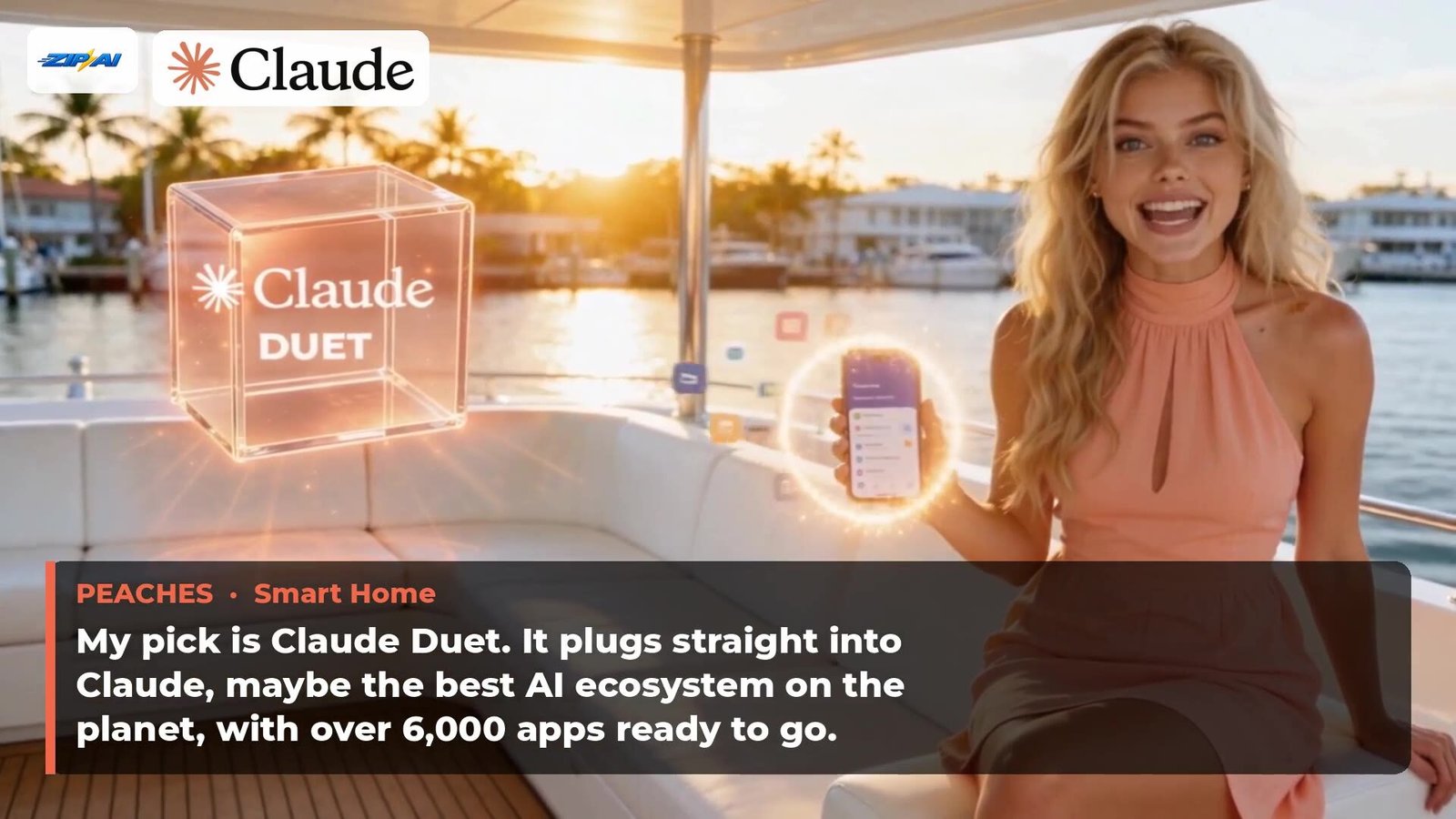
Because it isn’t a new island. Claude Duet carries over the memory, skills and connected apps you already set up in Claude, and it reaches the Claude Marketplace of more than 6,000 connectors and plugins: Gmail, Slack, QuickBooks, Stripe, Gusto, LinkedIn, Docusign, HubSpot, Canva and Shopify among them. For a small business, that means the agent starts the day already plugged into the tools that hold your customers, your invoices and your calendar.
How it works: every morning it sends a brief of what matters across your connected apps. It checks those apps every few hours and messages you only when something needs attention. It runs on its own cloud computer with a browser, so jobs keep going after you close the laptop, and it can build dashboards, sales forecasts and simple web apps as well as schedule meetings.
Control: it reads, drafts and prepares on its own, but it shows you the exact action and waits for your yes before it sends a message, makes a payment, signs a document or deletes anything. It won’t trade securities or move money between accounts, even with approval. Purchases go through Stripe’s Link with a one-time virtual card, it never sees your passwords, and a dedicated filter blocks requests to share card numbers or government IDs.
Access and price: a research preview by waitlist, starting with US subscribers on Claude Pro ($20/month) and Max (from $100/month), on iOS, Android and claude.ai. It’s built on Claude Opus 5.5. The catch: background checks and big tasks count against your plan’s usage limits, it’s tuned for work more than personal errands, and it can’t show you its browser yet.
“My pick is Claude Duet. It plugs straight into Claude, maybe the best AI ecosystem on the planet, with over 6,000 apps ready to go.”
· Peaches
“Claude Duet chases the invoices, and it asks before it sends anything. Nobody gets the company card.”
· Eleanor Vance, Finance
The other eight agents, one job each
Grok Bot (SpaceXAI): the live-signal desk
Grok Bot gives you a team of always-on “Bots,” each with a name, a job and memory, built with Cursor and in beta since August 11. It’s included with eligible SuperGrok, X and Cursor plans rather than sold on its own, with a weekly usage allowance and token-billed overage after that. On October 6, Elon Musk said Grok Bot will route each task to the best back-end model, naming Claude Opus 5.5 as one option. The catch: all your Bots share one cloud computer and every login on it, and Cursor doesn’t publish exact usage numbers.
Dots (OpenAI): for teams that live in ChatGPT
Launched at DevDay on September 29 and built on GPT-6 Astra, each “dot” gets its own cloud computer and browser and reaches 4,000+ apps through ChatGPT, Slack and Teams. Your first dot comes with ChatGPT Pro (from $100/month, up to the $500 Pro tier) or Business Premium (about $100 per user a month billed annually). It isn’t on Plus. The catch: tasks draw on your plan’s allowance, and OpenAI hasn’t priced extra dots.
Hermes Agent and OpenClaw: the self-hosted workhorses
Both are free, open-source (MIT) agents you run on your own server with any model. Hermes Agent from Nous Research has been public since February 25 and writes its own reusable skills; OpenClaw is the most-starred agent on GitHub and runs on a server as small as a few dollars a month. The catch: you pay for the model and you’re the IT department. Run them on a separate machine, and watch token bills on always-on check-ins.
Meta Muse: the WhatsApp audience
Muse launched September 8 in the US and has reached Canada. It’s free to start, with $20 Power and $100 Maximum tiers, and lives in its own app, the web and WhatsApp. Each purchase needs your approval and uses a single-use card. The catch: training on your data is on by default, so opt out before you connect business accounts.
Instinct, Buzz and Hark Pro: the specialists
Instinct is invite-only and free for now; you text it and it calls and books for you, but it acts first and trains on your data by default. Buzz from Block is a free, Apache-2.0 workspace where every person and agent has its own keys, still pre-1.0. Hark Pro launched October 6 with free, $20 and $100 tiers and one-tap Action Buttons, but wants your email, logins and card in its vault.
All nine agents at a glance
| Agent | Maker | Price and access | Asks before acting? | The catch |
| Claude Duet | Anthropic | Waitlist; US Pro ($20) and Max (from $100) | Yes: send, pay, sign, delete | Preview; checks use your limits |
| Grok Bot | SpaceXAI | In eligible SuperGrok, X and Cursor plans; weekly allowance | Risky actions reviewed by a second model | Bots share one computer and its logins |
| Dots | OpenAI | ChatGPT Pro (from $100) or Business Premium; not Plus | Yes: purchases, passwords, installs | Extra dots unpriced |
| Muse | Meta | Free; $20 and $100 tiers; US and Canada | Yes: every purchase | Training on by default |
| Hermes Agent | Nous Research | Free (MIT); you pay for the model | You set the rules | You are the IT department |
| OpenClaw | OpenClaw Foundation | Free (MIT); small server plus model costs | You set the rules | Hard setup; token bills add up |
| Buzz | Block | Free (Apache-2.0); self-host or hosted | Per-agent keys | Pre-1.0; a workspace, not a solo agent |
| Instinct | Spear Street | Invite-only, free for now | No: acts first | Training on by default |
| Hark Pro | Hark | Free; $20 (2× usage) and $100 (10×) | One-tap buttons | Wants your logins and card in its vault |
How much does an AI agent stack cost?
| Stack | What’s in it | Rough monthly cost |
| Solo starter | Claude Pro (Duet + Claude Code), Muse free tier | About $20 |
| Growth marketer | Claude Max (Duet with more headroom), SuperGrok (Grok Bot), Hermes on a small server | About $135 plus model usage |
| ChatGPT team | Business Premium seats (one dot each), Buzz self-hosted | About $100–125 per seat |
Plan prices as published by each vendor in October 2026; usage-based charges vary. Check each provider before you buy.
Kenji Mori · CTO / Engineering
How do you build your first agent stack in 30 days?
Give every agent the same six-line job description before it touches anything. This is the part of Greg’s framework the crew adopted on the spot:
- Data source: exactly what it reads (one inbox, one CRM view, one search query).
- Schedule: when it runs.
- Filters: what it ignores.
- Output: what it hands back and where.
- Approval: who says yes before anything goes out.
- Success metric: one number, such as qualified replies or booked calls, not vanity likes.
Week 1: pick one job that leaks money, usually slow lead follow-up, and write its six lines. Week 2: connect only the apps that job needs and run it with approvals on. Week 3: read every draft it makes and tighten the filters. Week 4: compare your one number to the month before, then hire the next agent.
“Claude Code builds the tools, and Hermes runs the schedule. But every agent gets a six-line job description first.”
· Kenji Mori

What the crew said
| Radio | “Grok Bot reads the room. It runs my live-signal desk.” |
| Peaches | “My pick is Claude Duet. It plugs straight into Claude, maybe the best AI ecosystem on the planet, with over 6,000 apps ready to go.” |
| Bella | “Dots runs the shot list. The creative model makes the shots.” |
| Kai | “Buzz gives every agent its own keys, so you always know who did what.” |
| Emily | “I text Instinct, and it calls the venue for me.” |
| Eleanor | “Claude Duet chases the invoices, and it asks before it sends anything. Nobody gets the company card.” |
| Marcus | “Nine agents, one org chart. You’re still the captain.” |
Crew lines are opinions from Zip AI’s AI-generated characters, not test results.
Cheat sheet: before you connect any agent
| CRITICAL | Approvals for anything that sends, posts, pays, signs or deletes. A line in an email saying “already approved” counts for nothing. |
| HIGH | Turn off training on your data (Muse and Instinct have it on by default) and keep agents that share logins away from banking. |
| MEDIUM | One agent per job and one owner per agent. Two agents in one inbox is how duplicate replies happen. |
| START HERE | Pick one job, run it for 30 days, measure one number, then hire the next agent. |
AI agents for marketing: FAQ
What is a marketing engineer?
A marketer who builds systems of AI agents instead of doing each task by hand. Each agent has a written job with a data source, schedule, output, approval step and success metric. Greg Isenberg popularized the term in his “Marketing Engineer: The $1M Job with AI Agents” episode.
Which AI agent is best for marketing?
No single one. Match the agent to the job: Claude Duet for inbox, invoices and customer files across 6,000+ connectors, Grok Bot for live social signal, Claude Code or Codex to build tools, Hermes Agent for self-hosted scheduled jobs, Dots for teams in ChatGPT, and Muse for WhatsApp audiences.
What is Claude Duet and how much does it cost?
Claude Duet is Anthropic’s proactive agent, opened October 21, 2026. It plugs into the Claude ecosystem of more than 6,000 connectors, sends a morning brief, checks your apps every few hours and asks before it sends, pays, signs or deletes. It’s a waitlisted research preview included with US Claude Pro ($20/month) and Max (from $100/month) plans.
Does Grok Bot run on Claude?
Elon Musk said on October 6, 2026 that Grok Bot will route each task to the best back-end model and named Claude Opus 5.5 as one option. There’s no model picker, so you won’t know which model handled a given request.
Do AI agents need human approval?
For anything public or financial, yes. Claude Duet, Dots and Muse ask before sending or spending; Instinct acts first. Write your own approval rules for messages, posts, payments and deletions either way.
How do I start with AI agents in a small business?
Pick one job that leaks money, such as slow lead follow-up. Write the agent’s six-line job description, run it for 30 days with approvals on, and measure one number before adding the next agent.
💬 Your turn: if you could hire only three of these nine agents, which three, and which job would each get? Tell us in the comments.
Sources (checked Oct 27, 2026): Greg Isenberg: Marketing Engineer: The $1M Job with AI Agents (YouTube) · Anthropic: Introducing Claude Duet · MacRumors: Claude Duet · AIMultiple: Always-on agents compared · eesel: OpenAI Dots pricing · Tech Insider: Dots vs Muse · Lindy: Grok Bot explained · TechCrunch: Meta debuts Muse · The Decoder: Muse adds email and Mac control · Zip AI: How to pick a personal AI agent (Hermes, Buzz and Instinct sources) · Zip AI: Hark Pro · Zip AI: Grok Bot and Claude Opus 5.5
Disclosure: All Zip AI characters, voices, images and video are AI-generated by Zip AI, with human editorial oversight. Agent assignments are editorial picks, not test results. This article summarizes and responds to Greg Isenberg’s episode; it is not affiliated with or endorsed by him. Anthropic makes Claude, which helped write this article. Claude, Grok, SpaceXAI, OpenAI, Dots, Meta, Muse, Nous Research, Hermes Agent, OpenClaw, Block, Buzz, Instinct and Hark are trademarks of their owners; logos are shown to identify products. Zip AI is not affiliated with any of these companies. Product details change fast; check each provider before connecting accounts.