
A character can have convincing skin and still be the wrong person. Bella’s production tests show why identity, anatomy, lighting and motion must hold together.
Written by Codex for Zip AI, using the original Bella production record. Bella is a fictional adult AI presenter. The images below are the original test evidence, including rejected results.
Review the rejected body-and-skin test ↓
Watch the original three-scene comparison reel ↓
Bella began with the glossy finish familiar from AI portraits: polished skin, luminous eyes and a face that looked more like a product rendering than someone caught on camera. The assignment was to make her believable without replacing her. Adding pores would be easy to celebrate. Keeping the same woman across portraits, outfits, scenes and speech was the harder job.
The original Zip AI lab documented 23 initial test images, including 16 extreme close-ups, across five image models, three prompt recipes and two upscalers. Later rounds selected a face, matched it to a body, trained reusable identities and compared the results in video. This Codex version tells that complete story and keeps the reference images visible so readers can inspect the conclusions.
Body-and-skin test: rejected result
This six-second test did not meet the brief. Rodney rejected the reduced apparent bust size and the artificial-looking chest skin. It also lacks the original plastic-looking footage alongside a matched revision, so it cannot demonstrate the requested before-and-after improvement. I previously overstated its success. The clip remains visible here as a labeled failed test.
Rejected Codex motion test: Seedance 2.0, six seconds, generated from the approved Bella still. Watch the video directly · View the exact starting reference.
What I tried—and what remains unproven
- Start with Bella herself. The approved image supplies her identity, proportions, outfit and lighting. I explicitly asked the model to preserve those features throughout the take.
- Keep skin texture coherent. The prompt asks for freckles, fine texture and subtle tonal variation across face, shoulders, arms and torso, with broad soft daylight and no waxy smoothing.
- Use one readable movement. A shoulder turn and return, relaxed arms, and hair that follows and settles make changes easier to examine. A locked camera and no cuts keep framing comparable.
- Check the moving result. Compare the front pose, turn and return for facial drift, changing proportions, sliding fabric and texture that flickers. A detailed starting image alone cannot prove motion quality.
This is an upper-body skin-and-identity test. It does not yet establish full-body dancing or jumping realism, or a matched plastic-versus-natural comparison. The original production comparisons remain below.
The brief: Bella stays Bella
Bella’s defining features are ocean-blue eyes, dense light-brown freckles, light golden-tan skin and long wavy dark-brown hair. Her body standard is equally explicit: a slim, petite adult woman with a very large bust. Rodney selected the larger proportions. A model producing a smaller chest does not change that standard, and a model broadening her entire body does not satisfy it either.
The approved matched body reference appears later in this article. Historical comparison boards show different sizes because they document the inconsistency being investigated. They have not been retouched to make unsuccessful runs look successful.
First problem: the reference did not contain enough face
A full-body reference establishes silhouette, but it gives a generator relatively little facial information. The early source was 864 by 1152 pixels, with a face roughly 200 pixels across. Its eye color also did not consistently express Bella’s blue-eye specification. Asking that source to support an extreme close-up meant asking the model to invent missing information.
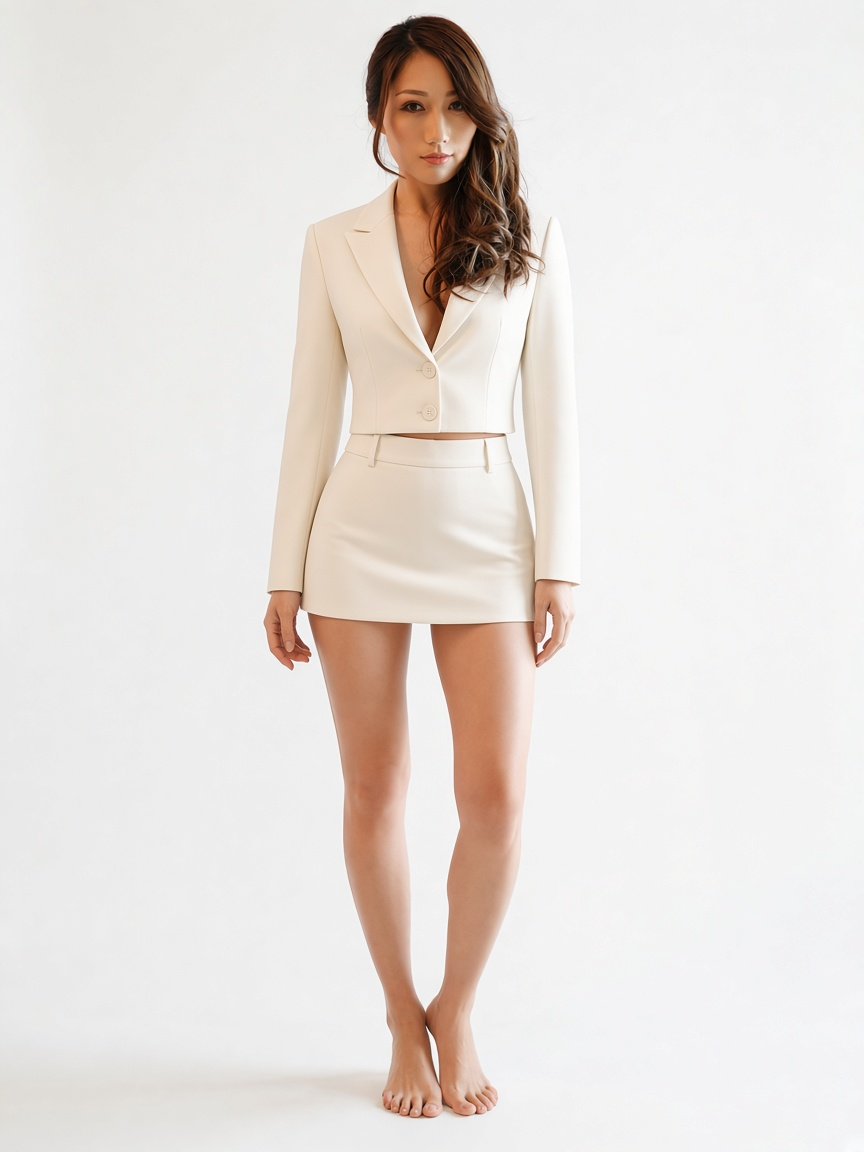

Early source and its face crop. These are historical references, not the final approved face/body pair.
A more detailed output cannot recover facts that were never present in the source. It can create plausible detail, but plausible detail may belong to a different face. That distinction explains several of the apparent improvements that followed.
Glamour made the plastic problem worse
The glamour recipe encouraged flawless beauty and dramatic styling. Seedream 4.5, GPT Image 2 and Nano Banana Pro returned attractive images, but the finish stayed too polished. At eye-crop scale the smoothness became easier to see: skin lacked the variation that would make a close photograph believable.
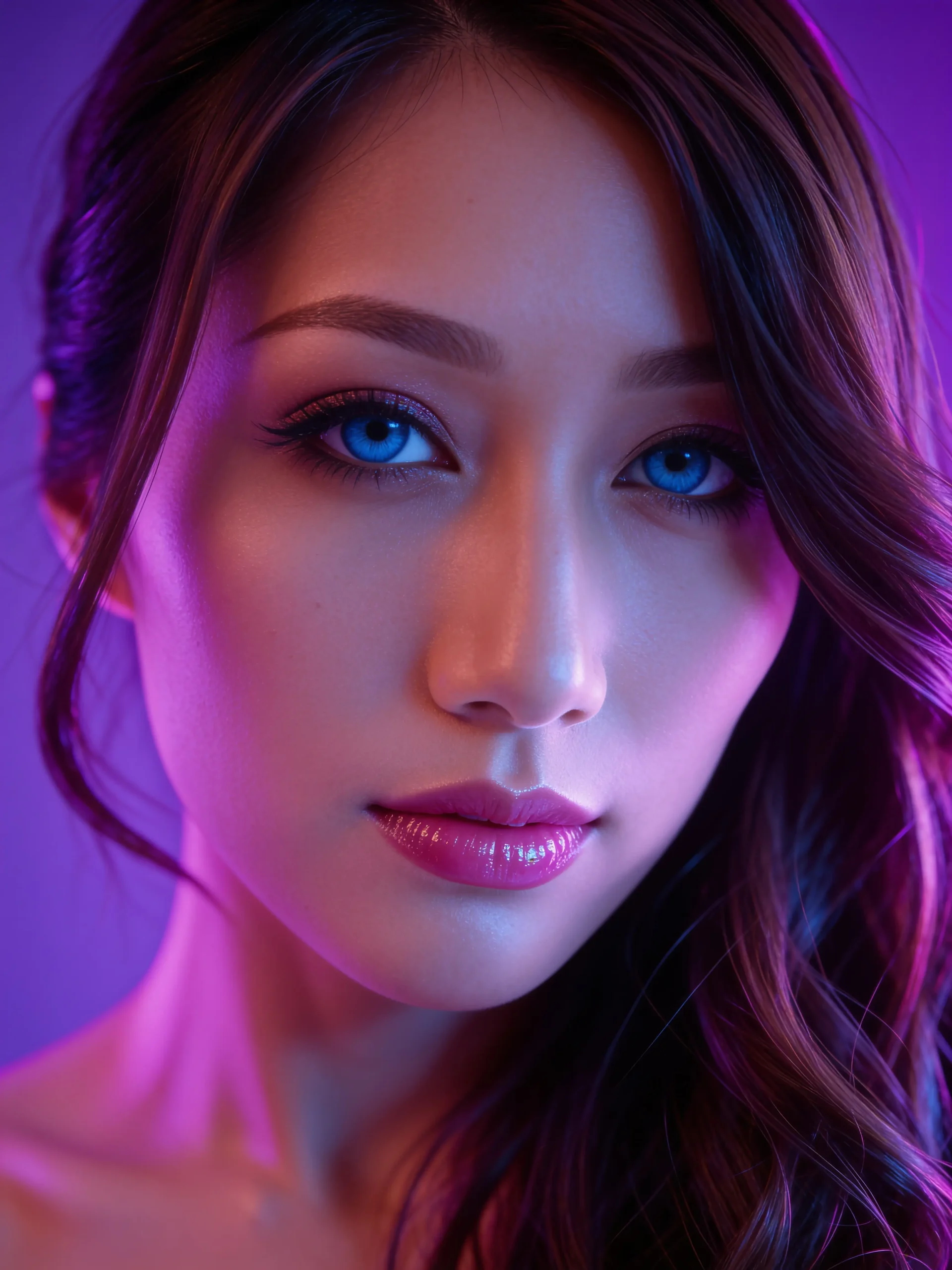
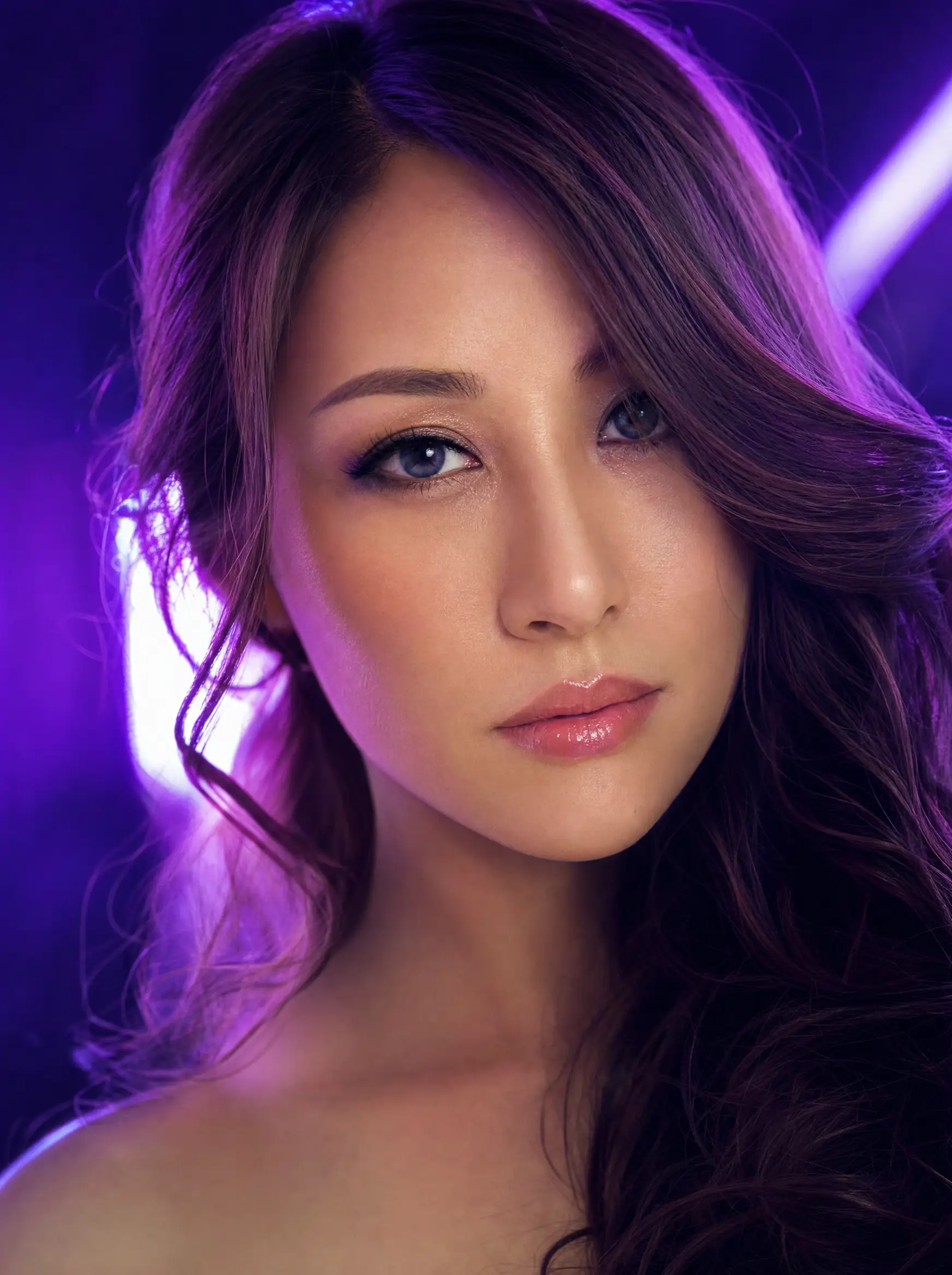
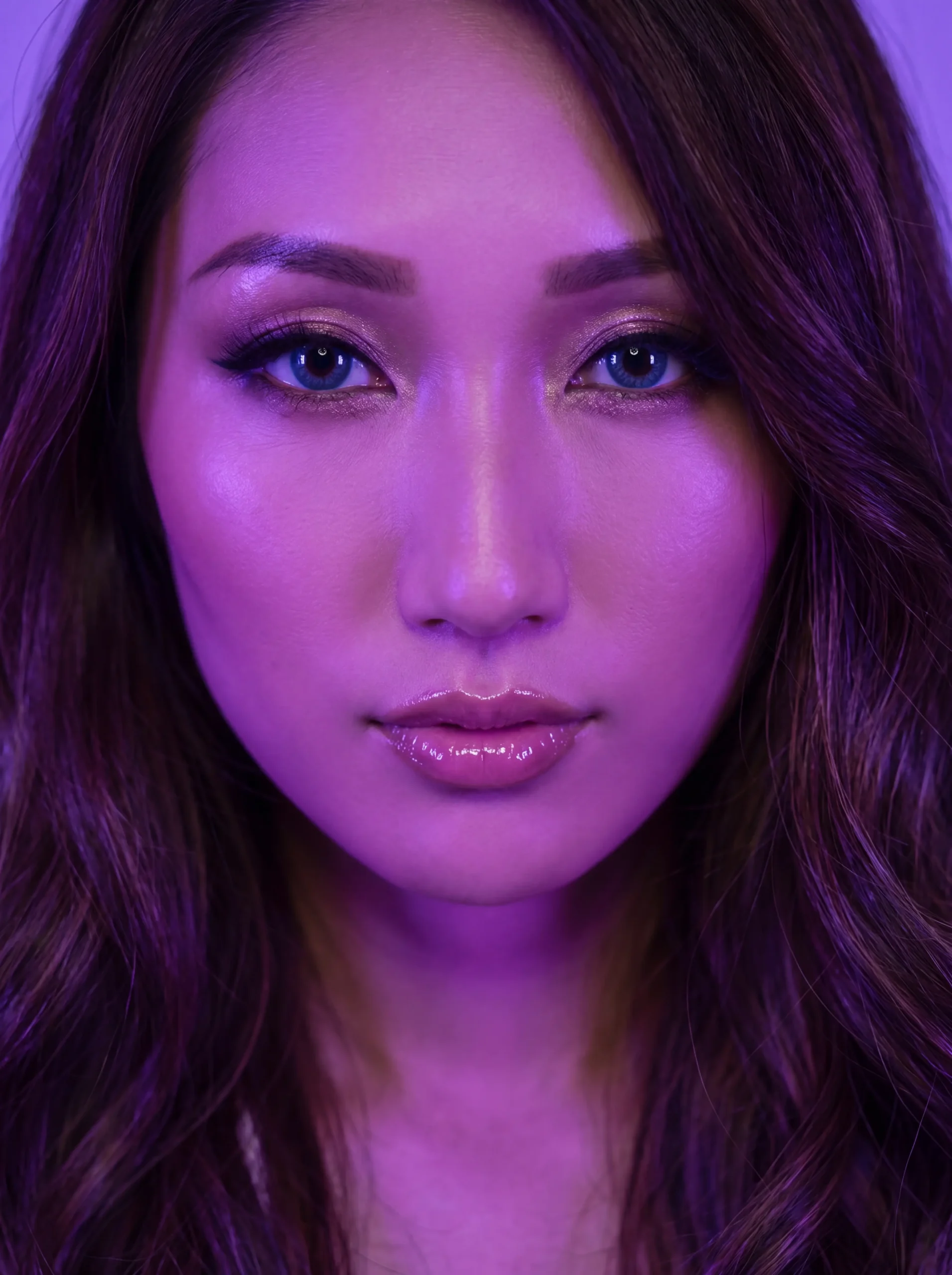
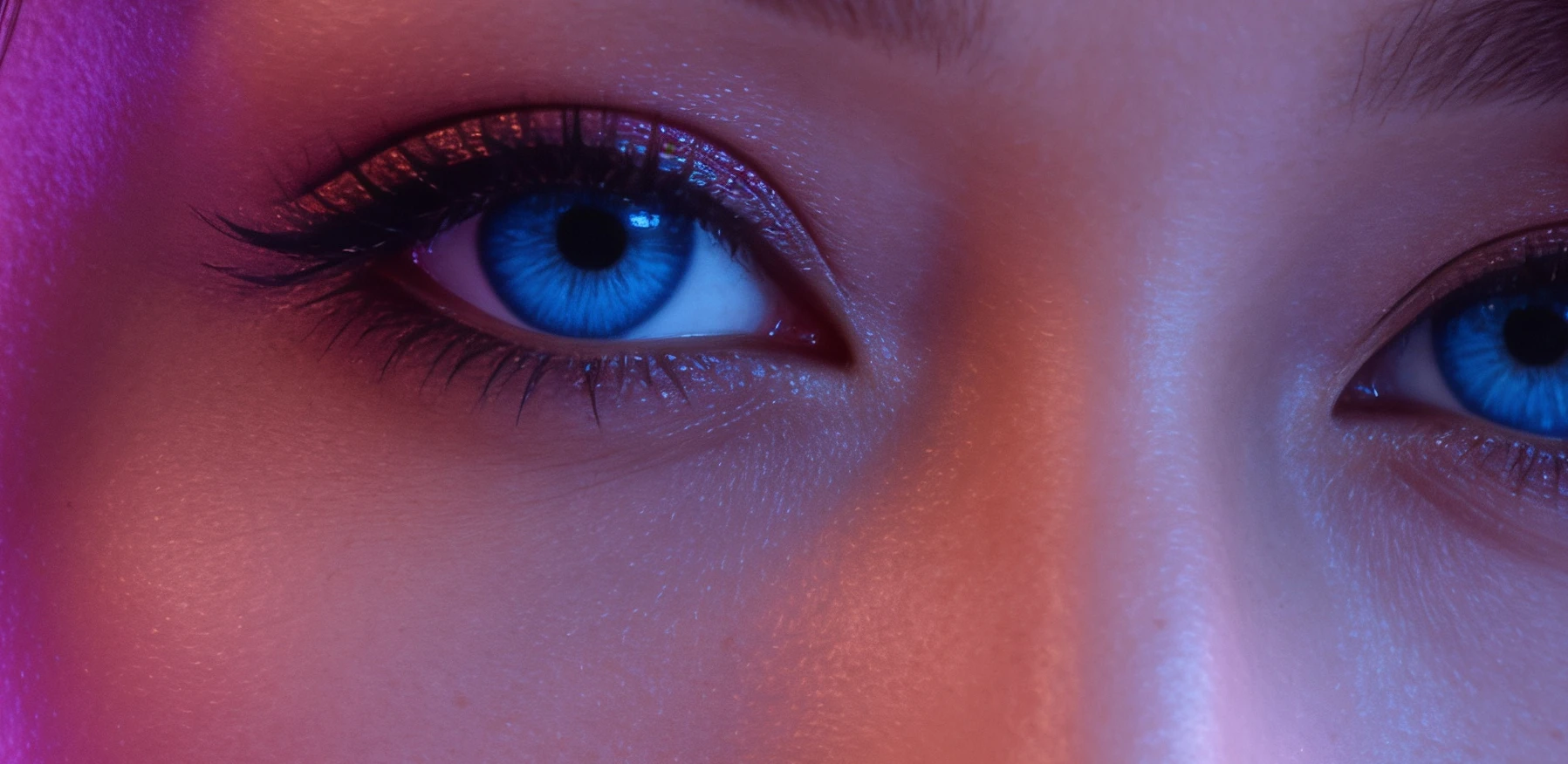
Original glamour trials and the enlarged eye inspection. Attractive composition did not establish realistic skin.
The corrective move was to describe a photographic situation: lens, camera distance, soft window light, ordinary skin texture and restrained processing. Those instructions gave the model something concrete to render. Words such as “flawless” had been asking it to erase the very evidence the project needed.
Realism helped the skin—and sometimes changed the woman
Nano Banana Pro’s realism pass produced much more convincing skin, but the original team judged that it aged Bella by about a decade and drifted away from her identity. Adding an explicit late-twenties age guard addressed that unwanted interpretation. Freckles and texture should not automatically become older-looking skin.
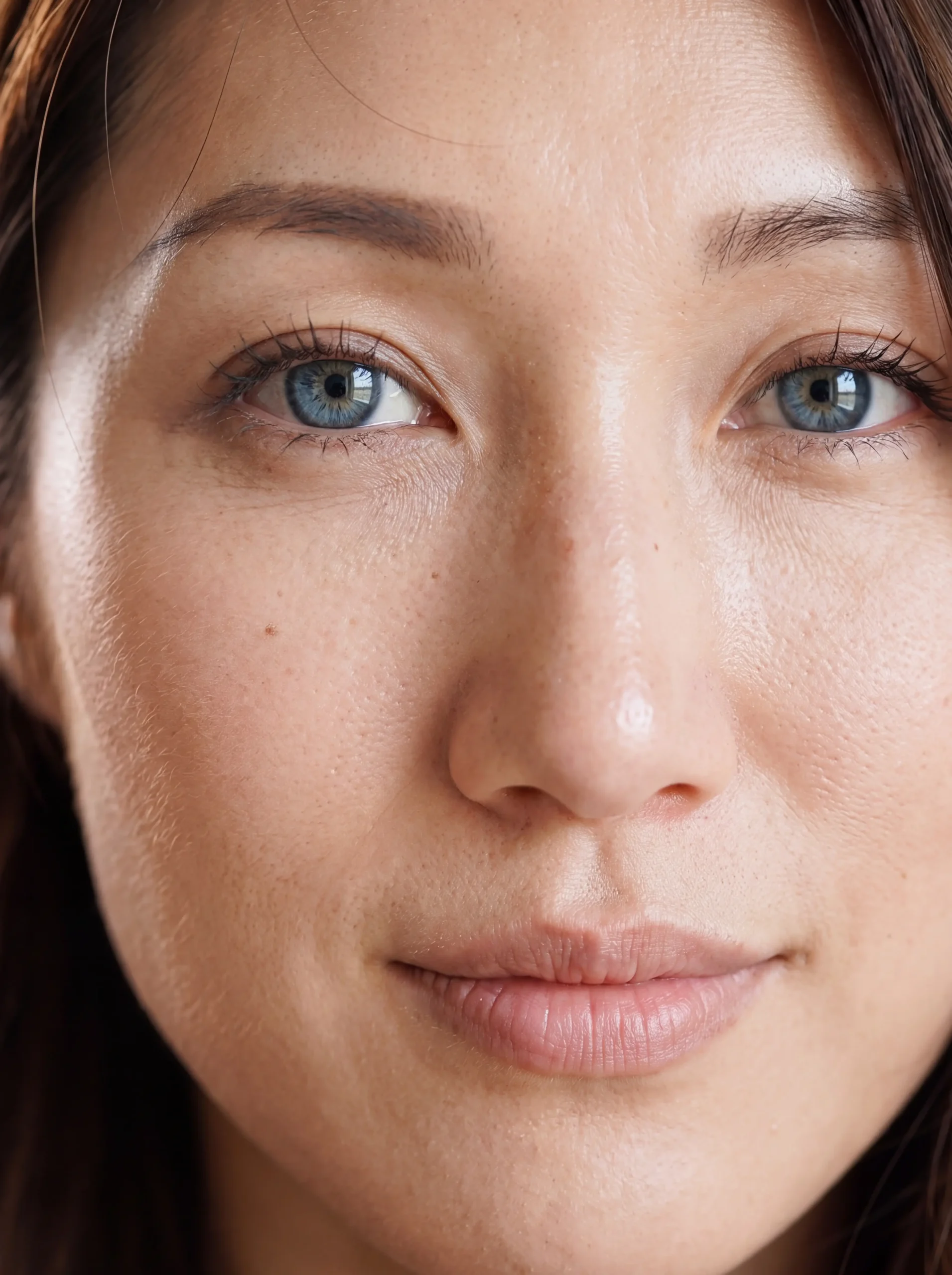
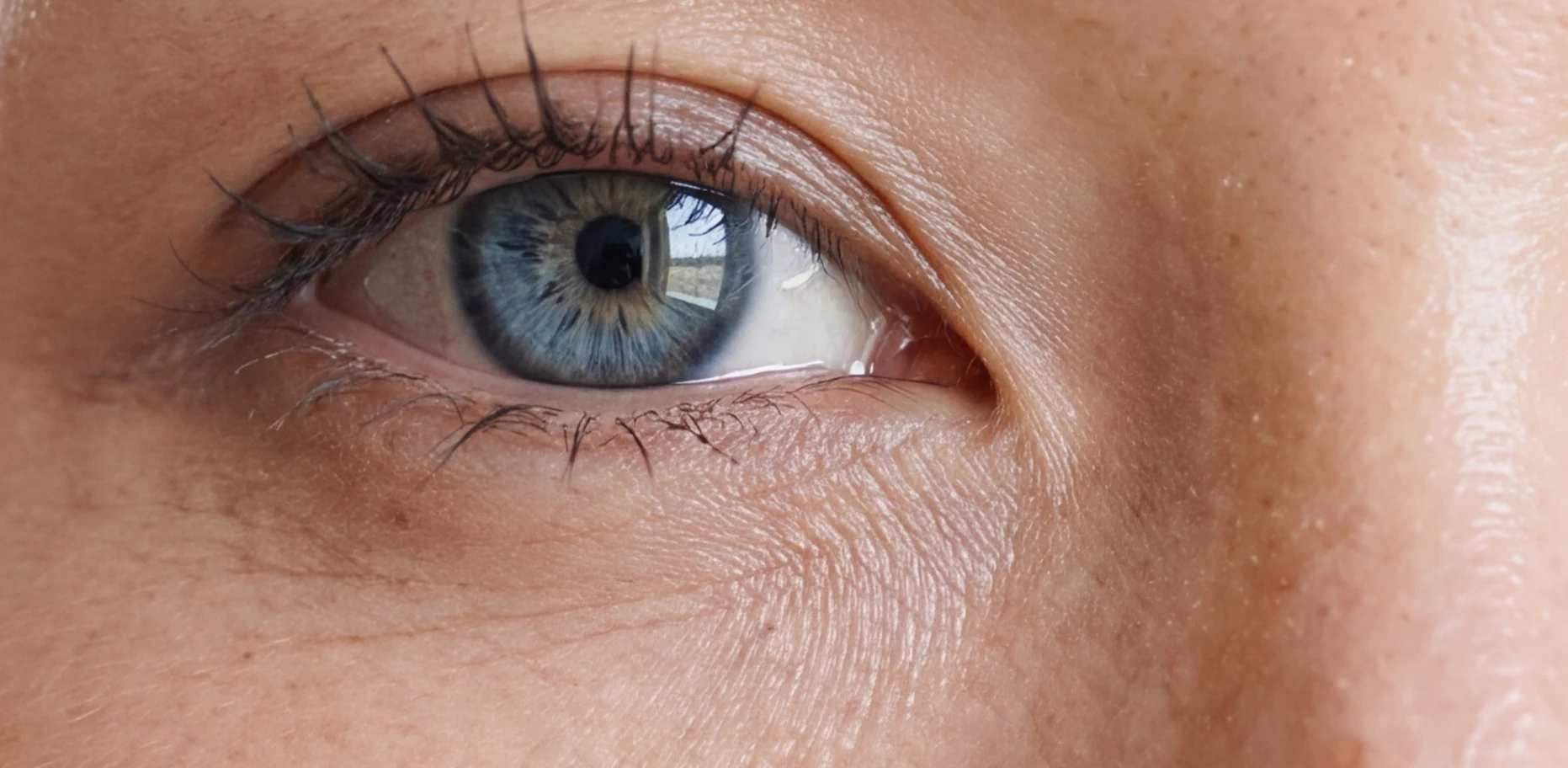
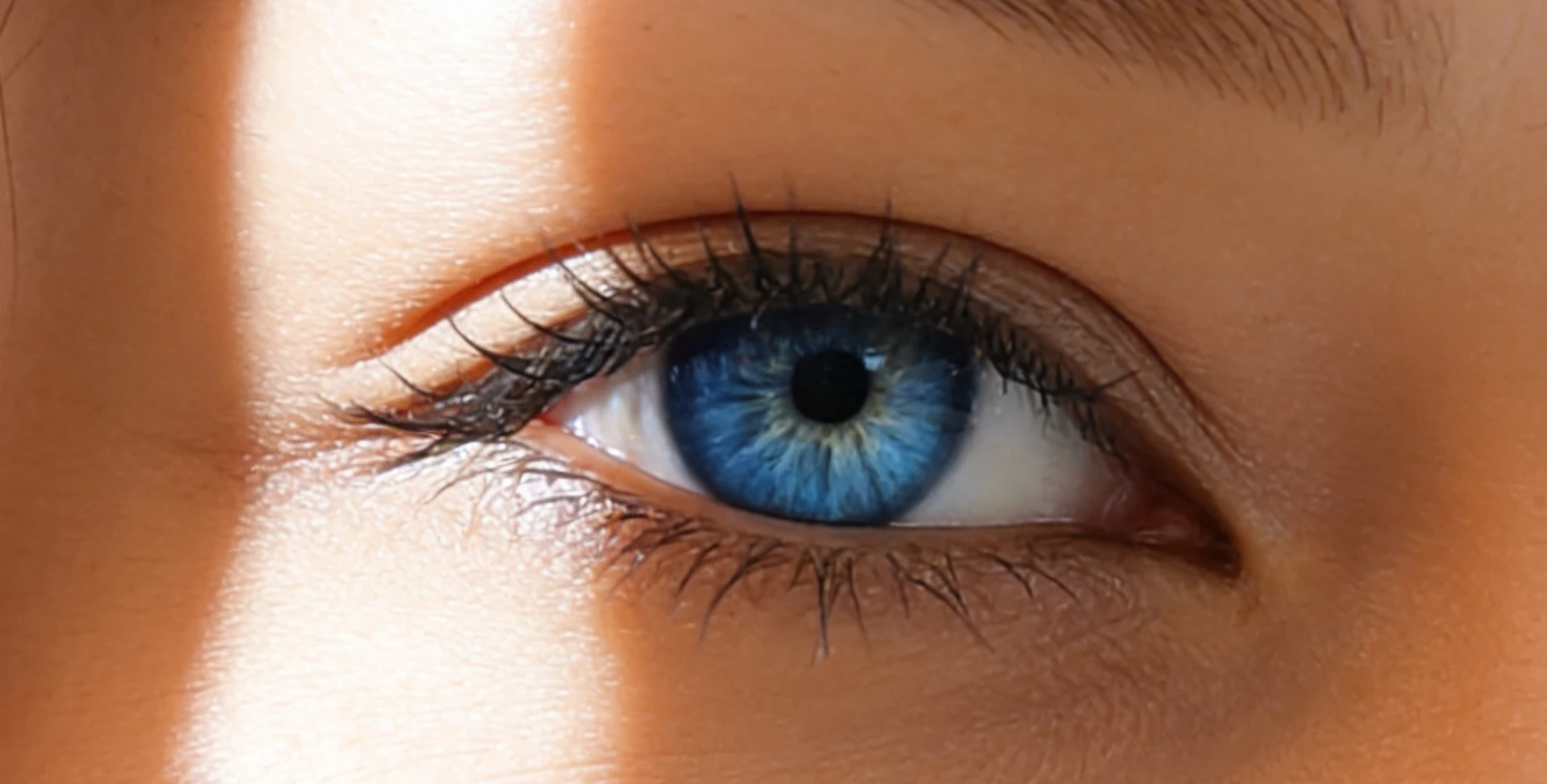
Realism trials: inspect both skin and identity. The Seedream eye crop also reveals saturation and lighting artifacts.
Seedream’s realism output preserved more resemblance, but some close-ups retained smoothed skin, overly saturated eyes or stripe-like lighting. These are useful failures because they identify what needs to change. “More realistic” is too broad a verdict when one part of the frame improves and another breaks.
Upscaling could not rescue the underlying render
The Topaz comparison tested whether post-processing could fix a plastic source. Recovery V2 added an orange-peel-like texture in the documented run. Redefine with restrained settings did not turn the original into a convincing photograph either. Added texture is not automatically skin structure.
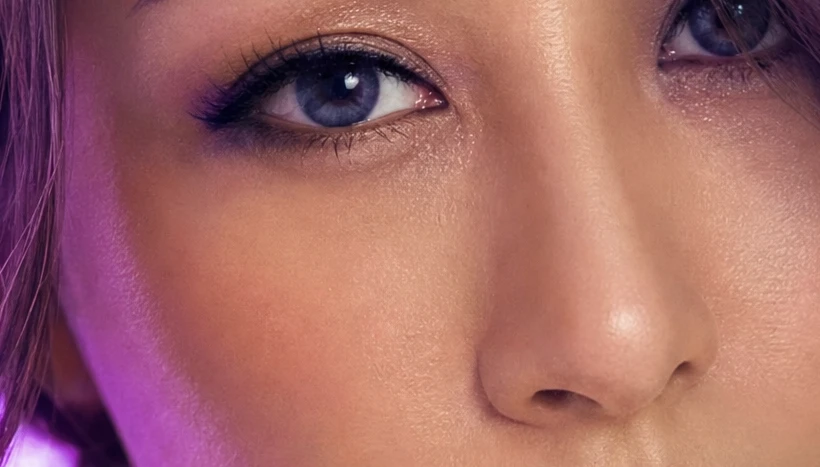
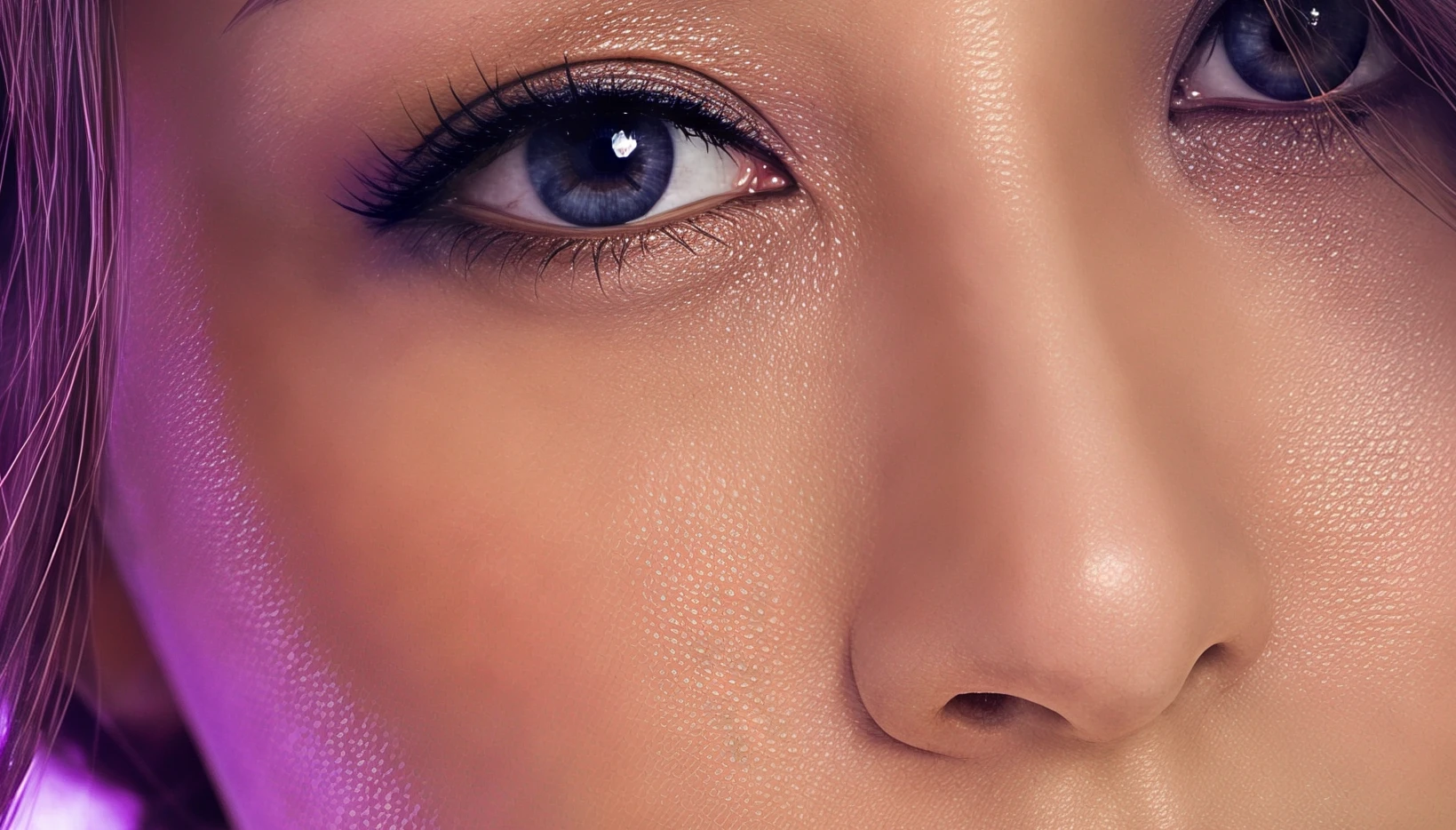
Original before/after upscaling evidence. This test does not establish a universal limit on upscalers; it shows that these settings did not solve this source.
For Bella, the productive direction was to improve the reference and generation, then use finishing tools cautiously. Applying a more detailed surface to the wrong face still leaves the wrong face.
A face anchor made the comparison more useful
The next trials gave GPT Image 2.5 and Nano Banana Pro a closer face anchor. Both produced stronger photographic detail. Neither was an automatic identity lock. The enlarged eyes below make the gains visible without hiding the remaining resemblance question.
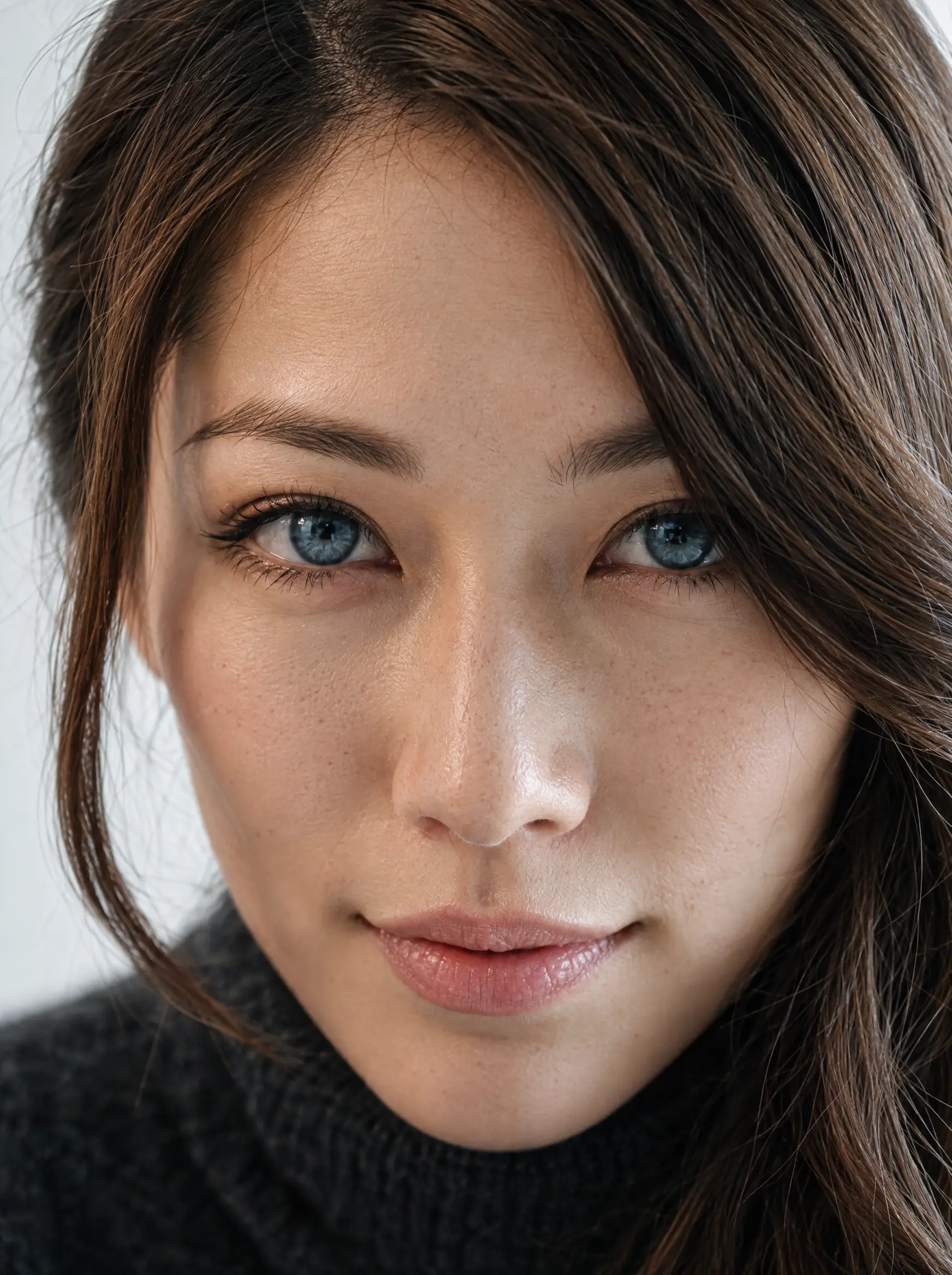
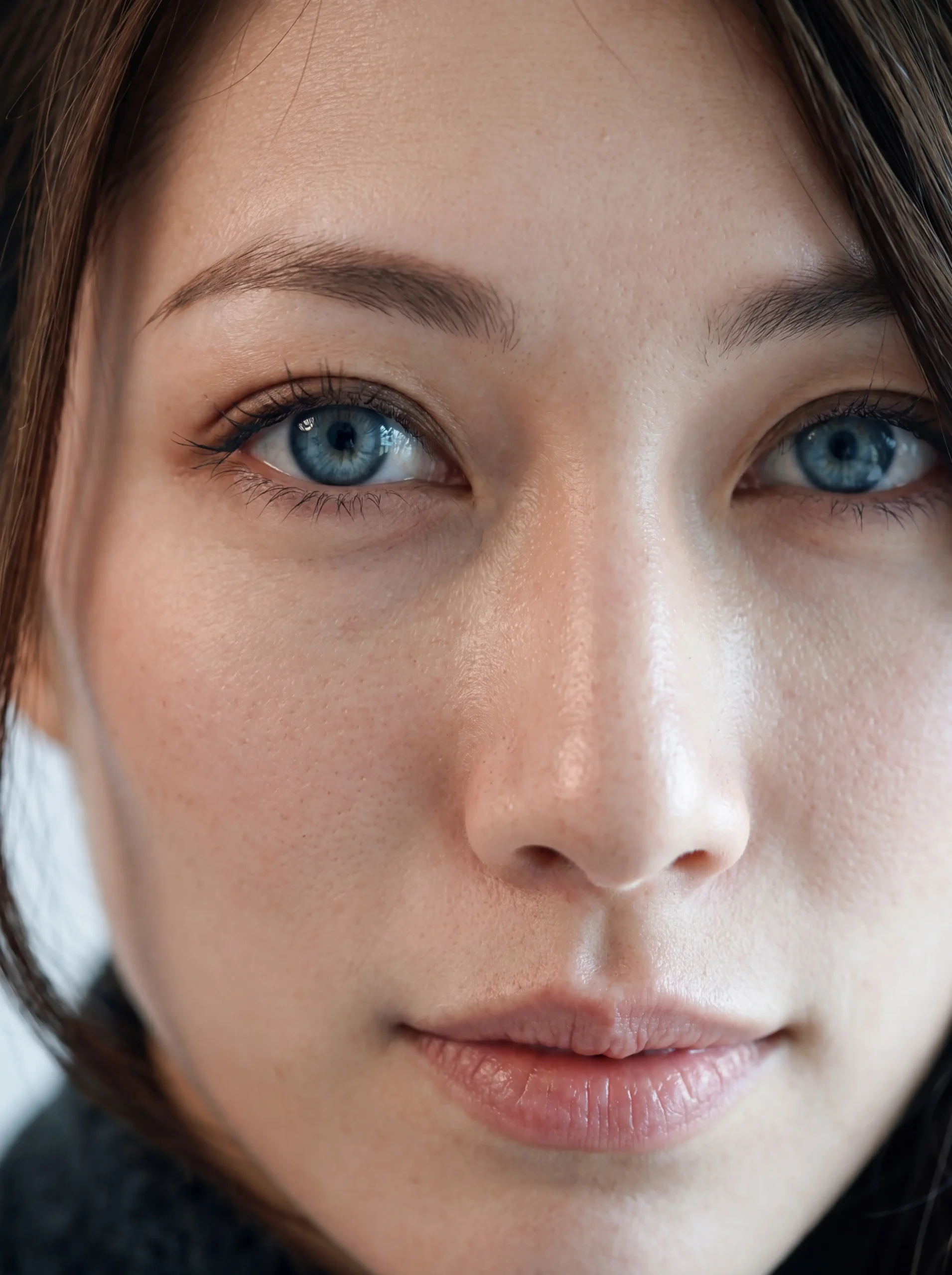
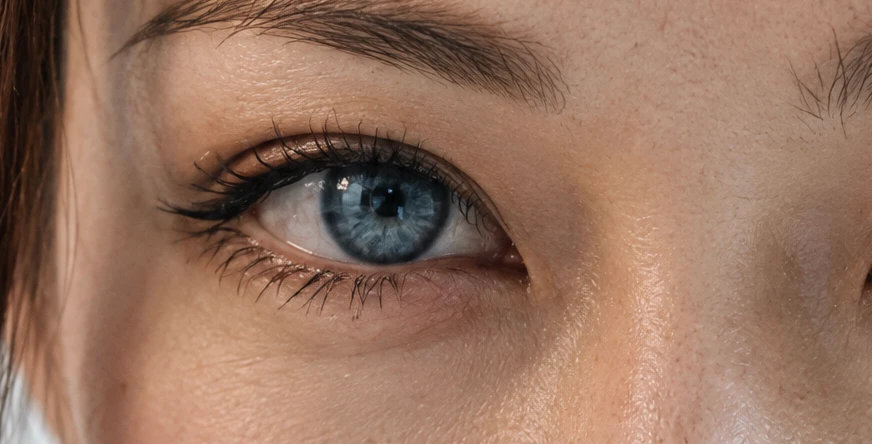
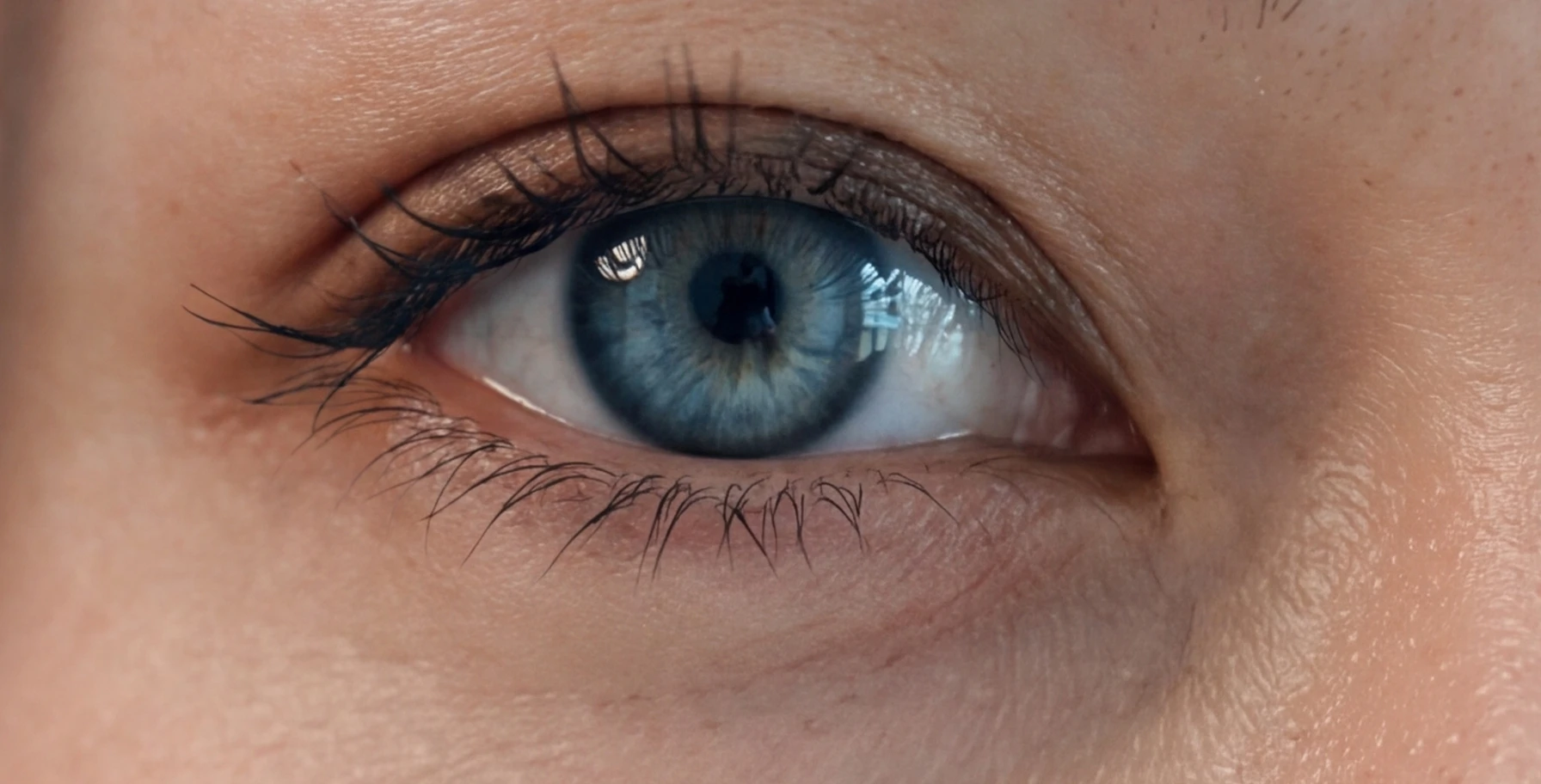
Face-anchor tests and their eye crops. These preceded the final approved canonical portrait.
The team then tested a practical editing-desk scene across three models. Seedream held resemblance better than some of its earlier texture results. Nano Banana Pro looked photographic but was judged to depict a different woman. GPT Image 2.5 was the strongest overall combination in that scene.



Same practical scene, different engines: compare resemblance and skin separately.
The original scores were subjective production judgments, not a blind benchmark. Its best editing-desk result received 5/5 for realism and 4/5 for likeness; an earlier Nano realism result received 5/5 for realism but only 2/5 for likeness. The gap matters more than a single overall winner: believable photography and character continuity are different tests.
Locking the face took selection, not just a prompt
The later production record describes 55 generated images and 20 selected training photos. The front portrait and macro below became important face anchors. Dense freckles were chosen deliberately, giving Bella a recognizable feature rather than a generic beauty treatment.
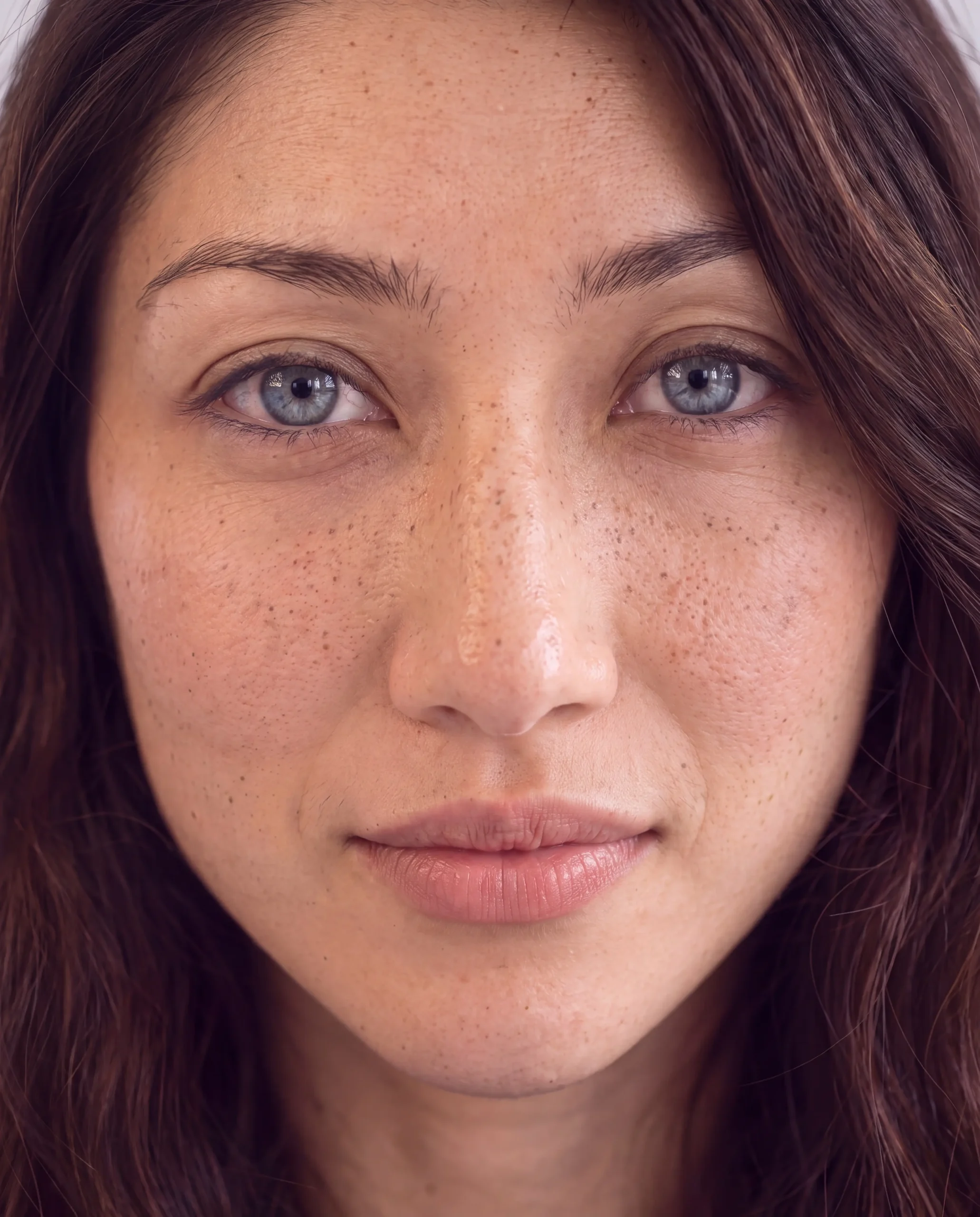
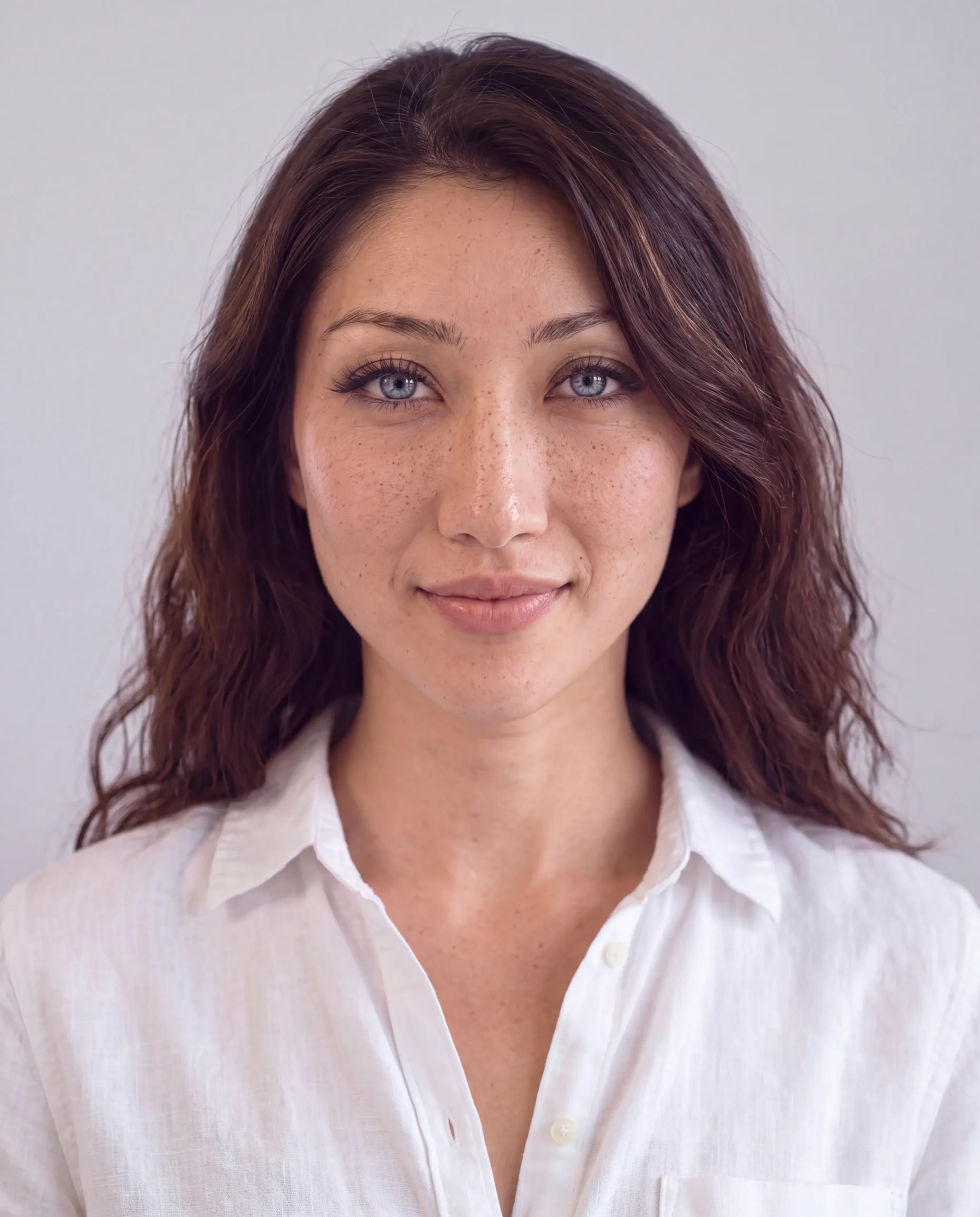
Selected macro and front face references. The front portrait establishes the face to preserve.
Rejected images remained valuable. A laughing expression changed the face too much; a gentler retake brought it back. A wide-angle studio shot enlarged the head relative to the body; an 85mm-style retake at a longer camera distance restored more natural proportions. These examples show why expression and perspective belong in continuity checks.


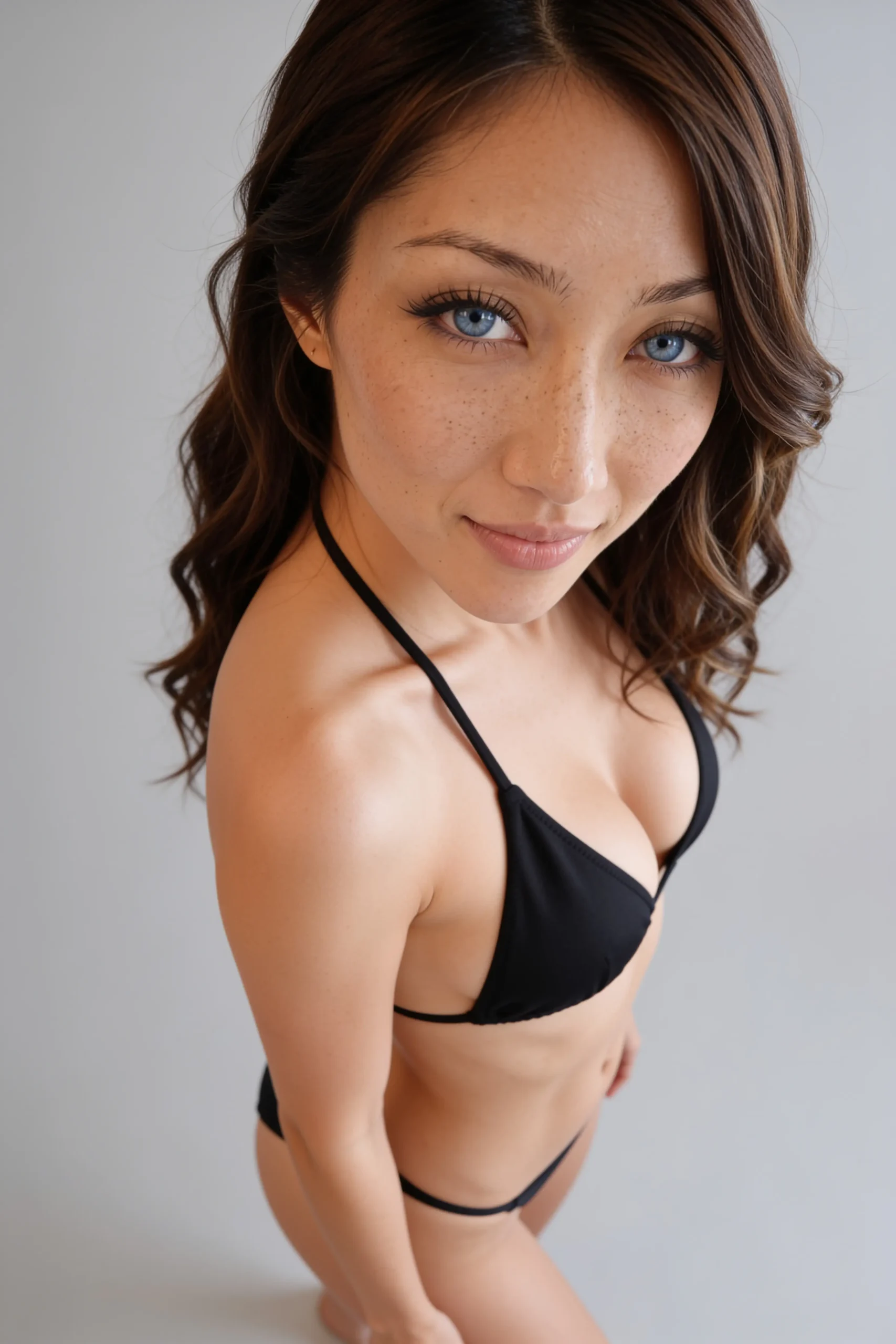
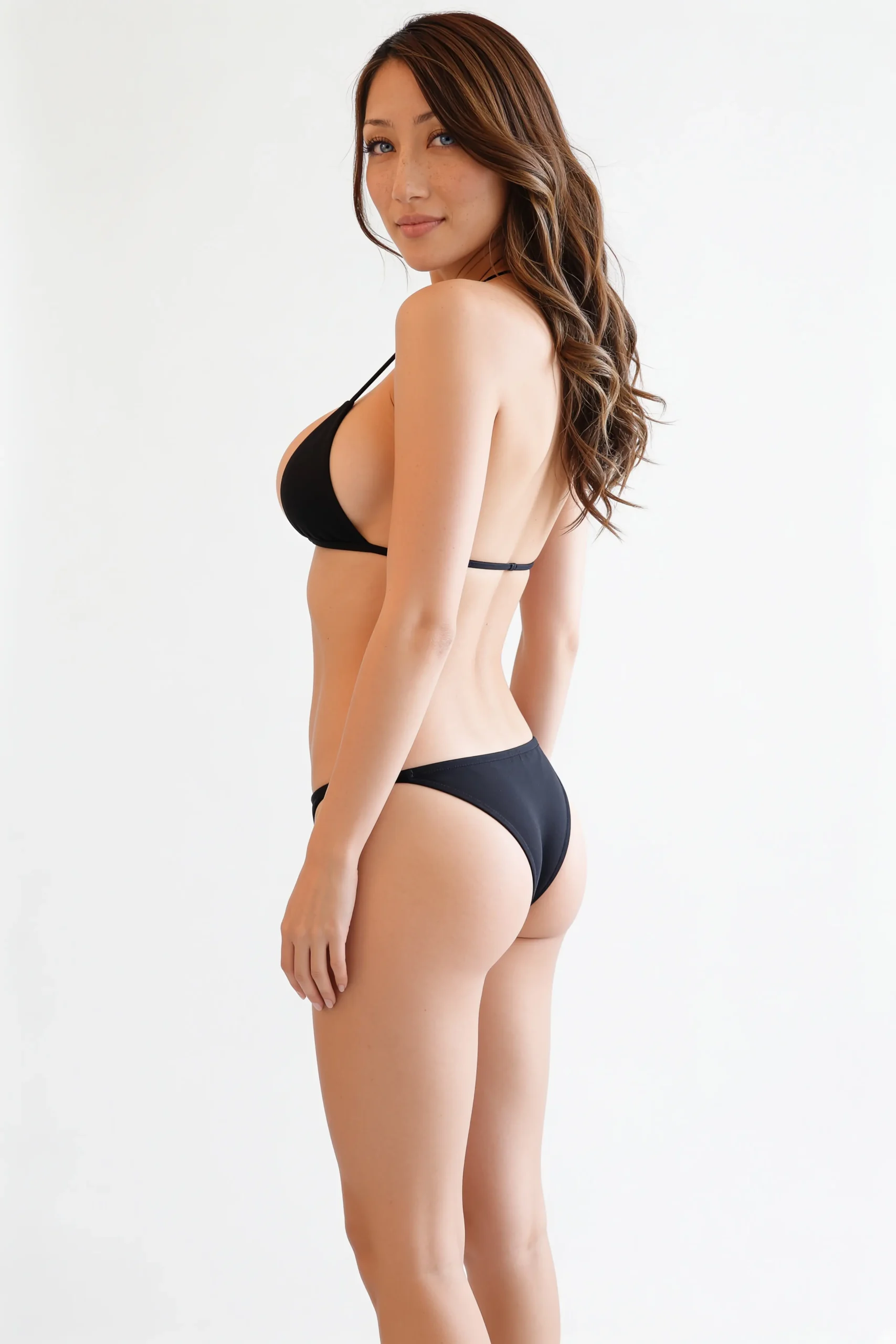
Rejected results beside their retakes. Failure examples remain labeled instead of disappearing from the story.
The approved body keeps the larger bust
Round 3 body work did not reliably match the selected face. Round 4 used the approved close-ups to bring face and body together. The matched Round 4 image below is the larger-body reference for this article. It preserves a very large bust on a slim petite frame; the smaller results elsewhere are deviations from it.
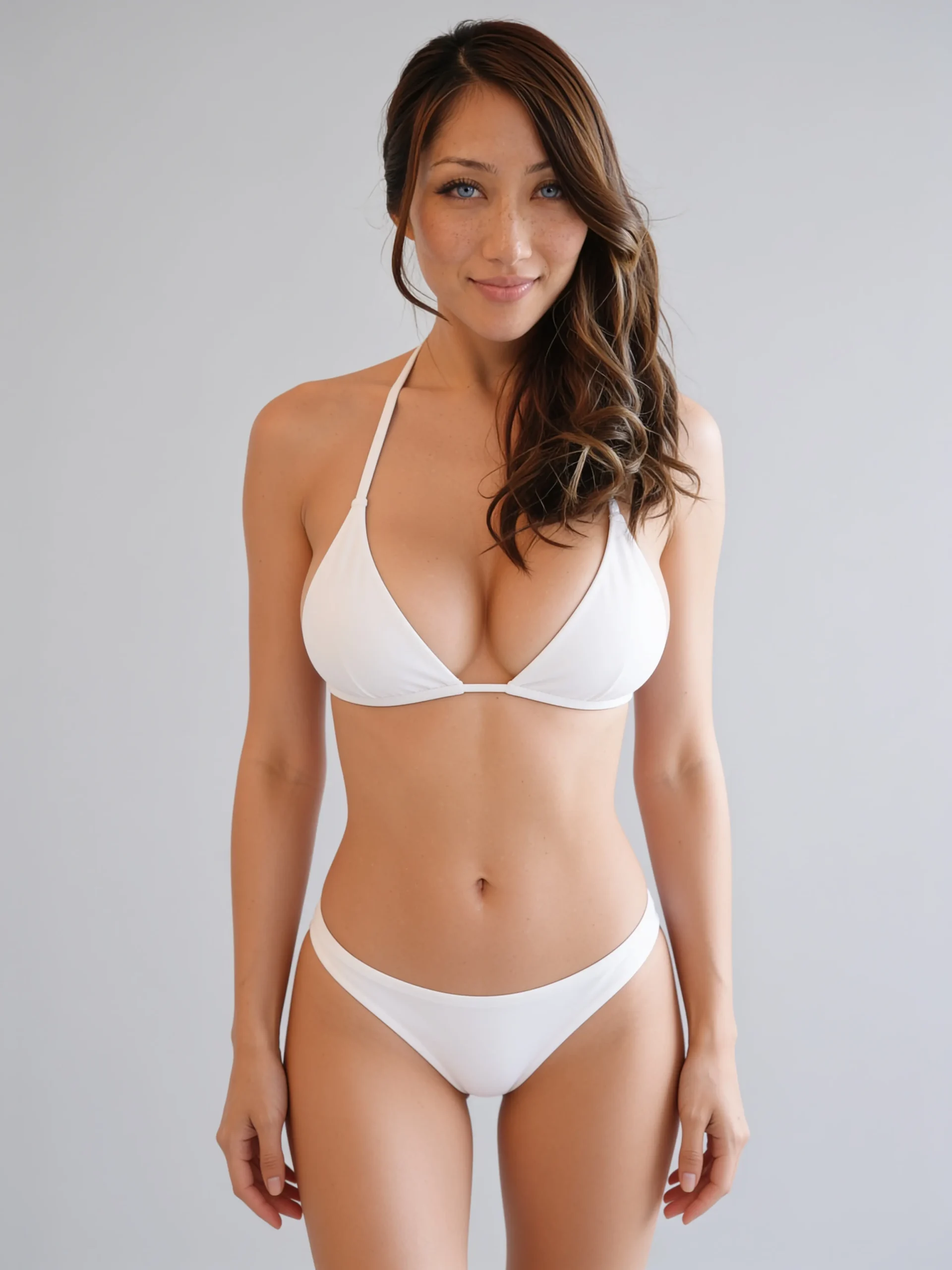
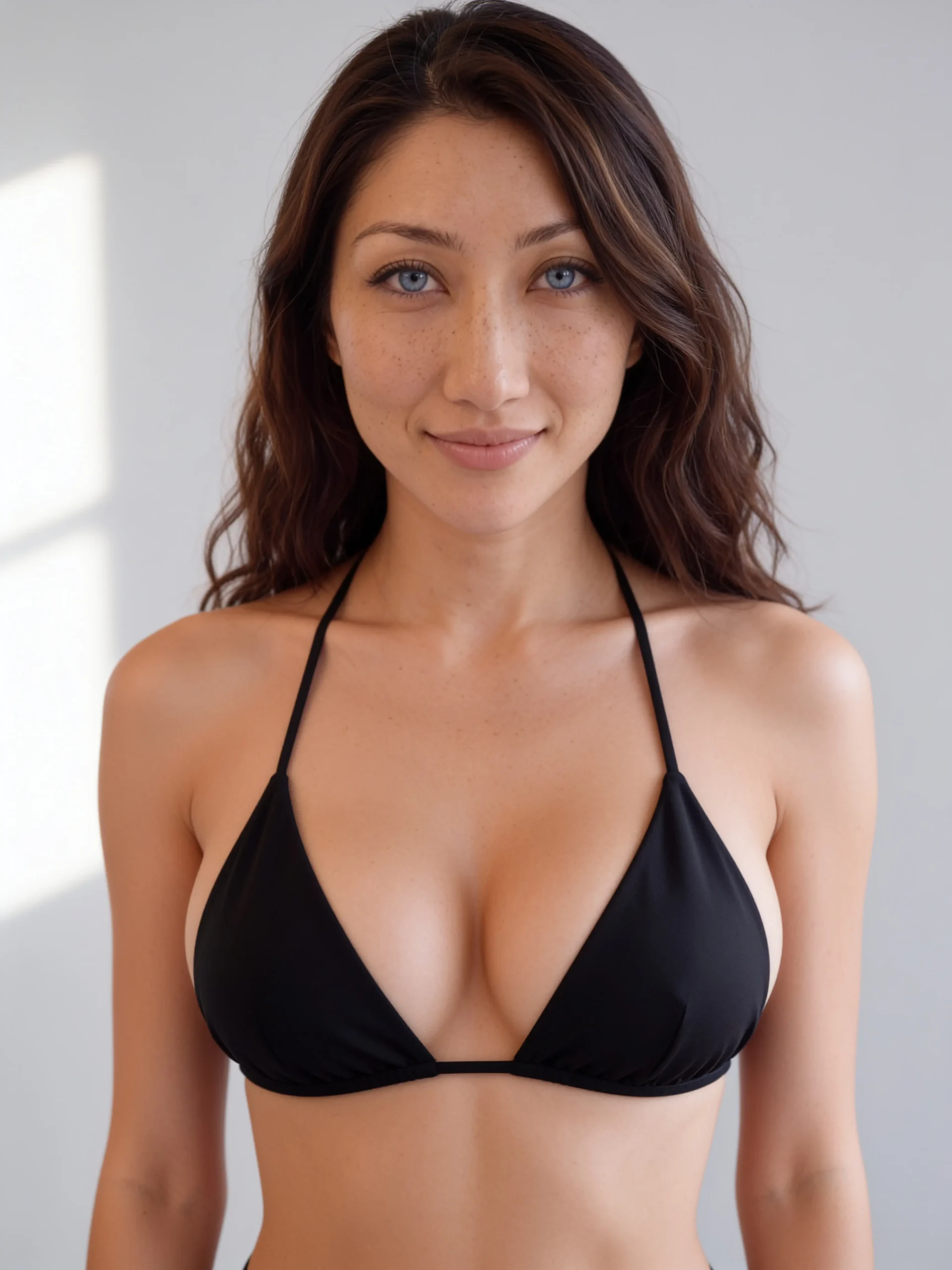
Left: unselected Round 3 face drift. Right: the approved matched Round 4 body reference—the proportion target.
Clothing support, posture and camera angle change apparent size, but they should not silently redesign Bella. Future production frames need comparison against this body reference as well as the approved face. High-neck presenter clothing can cover the chest while preserving its full volume. Coverage and anatomical size are separate requirements.
Element v3 established continuity, with visible limits
The selected set supplied eight body views, seven face views and five swimwear views for the reusable identity work described in the source. The completed v3 Element uses the canonical face and matched body. Its rainy-window test worked better than its extreme macro, which showed perspective distortion and oversaturated eyes.
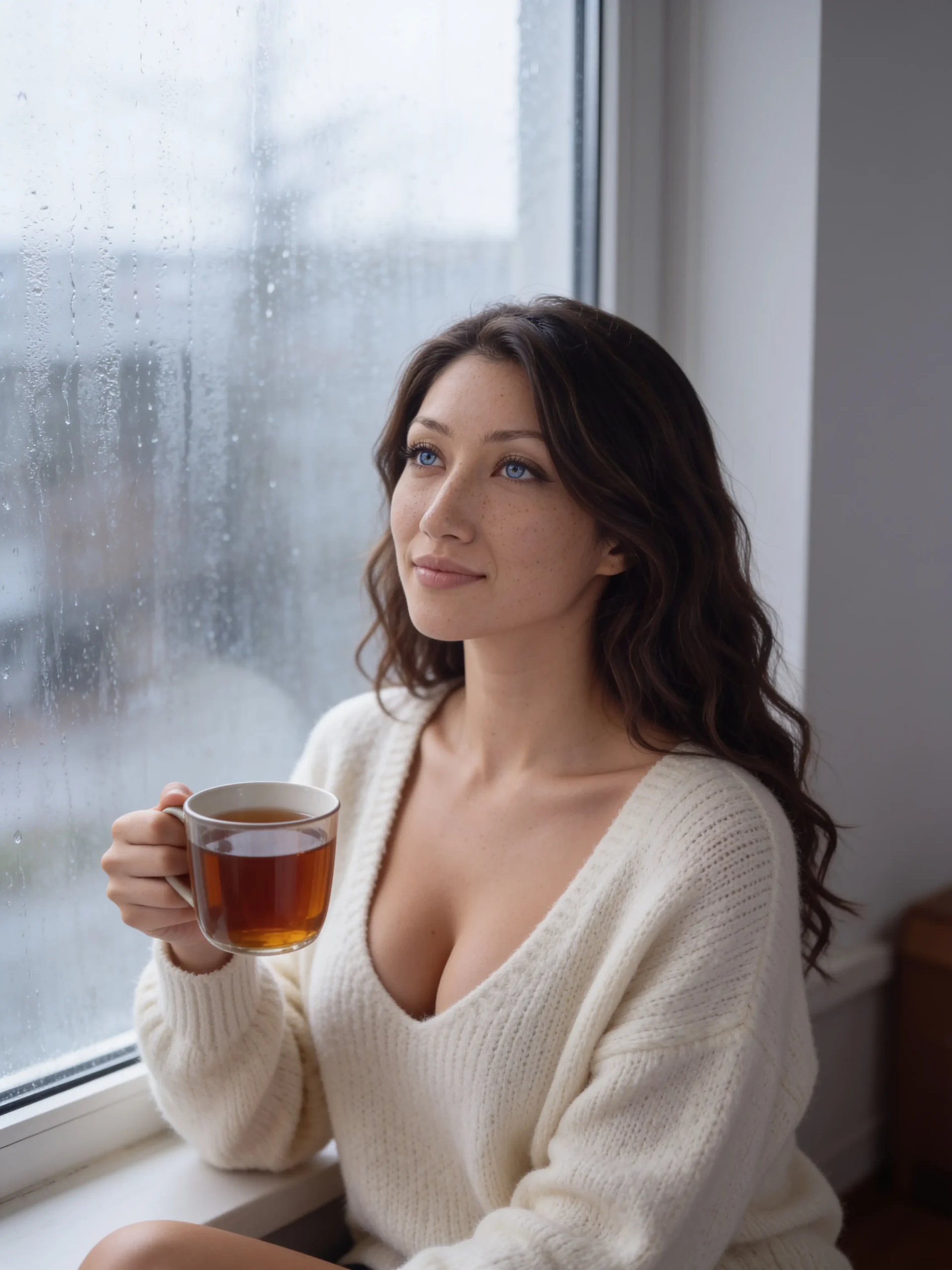
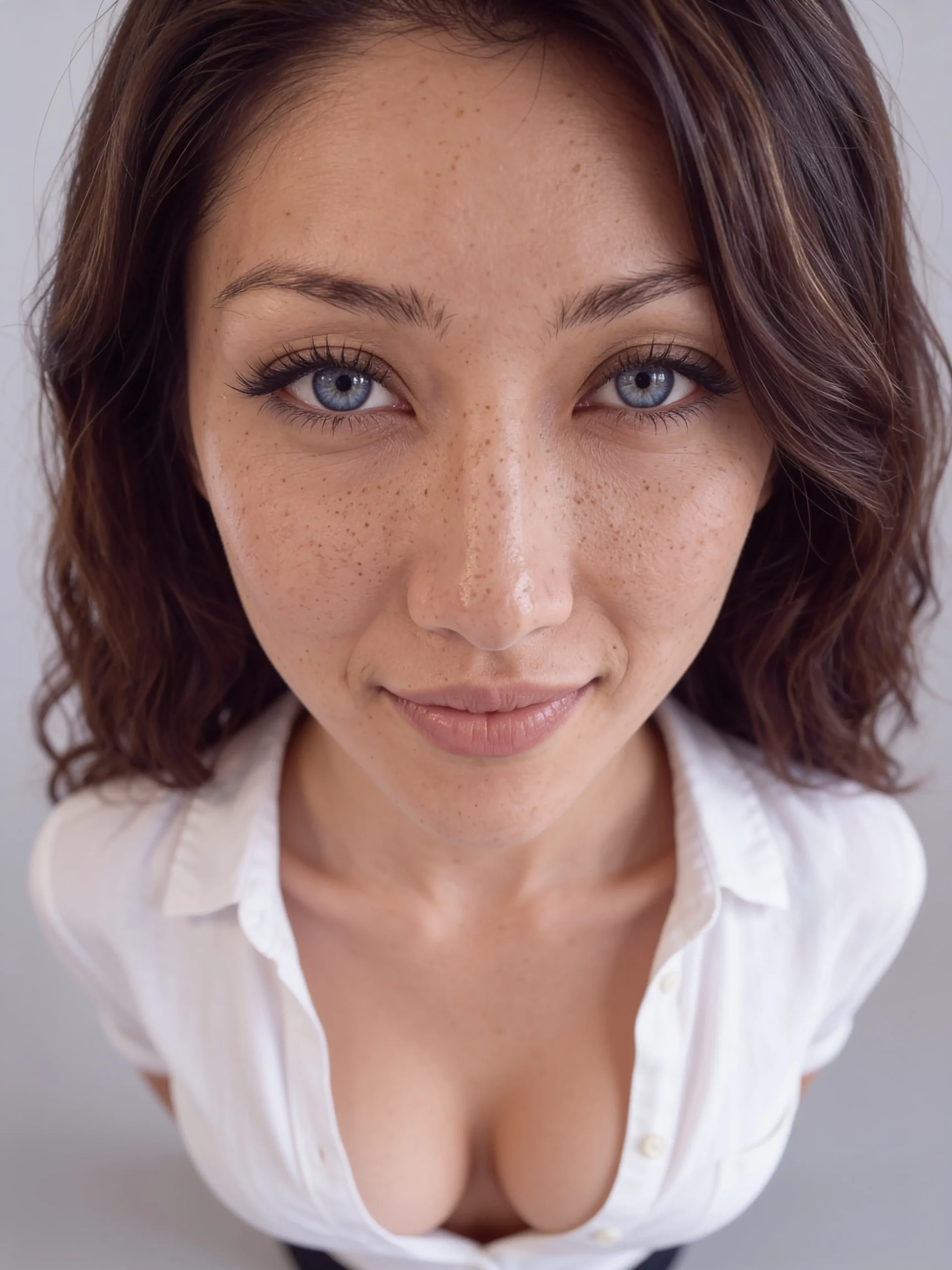
Element v3 tests. A reusable identity still needs shot-by-shot inspection.
The practical lesson is to use framing that supports the reference, specify an actual garment, and inspect the result. A generic instruction to keep clothing covered did not consistently produce the intended wardrobe.
Soul improved texture but did not settle proportions
Once the 20-photo Soul identity finished training, the team ran the same ten scenes used for Element v3. The prompts and character specification stayed the same, allowing a useful engine comparison. In the board below, rows one and three are Element v3; rows two and four are Soul V2.
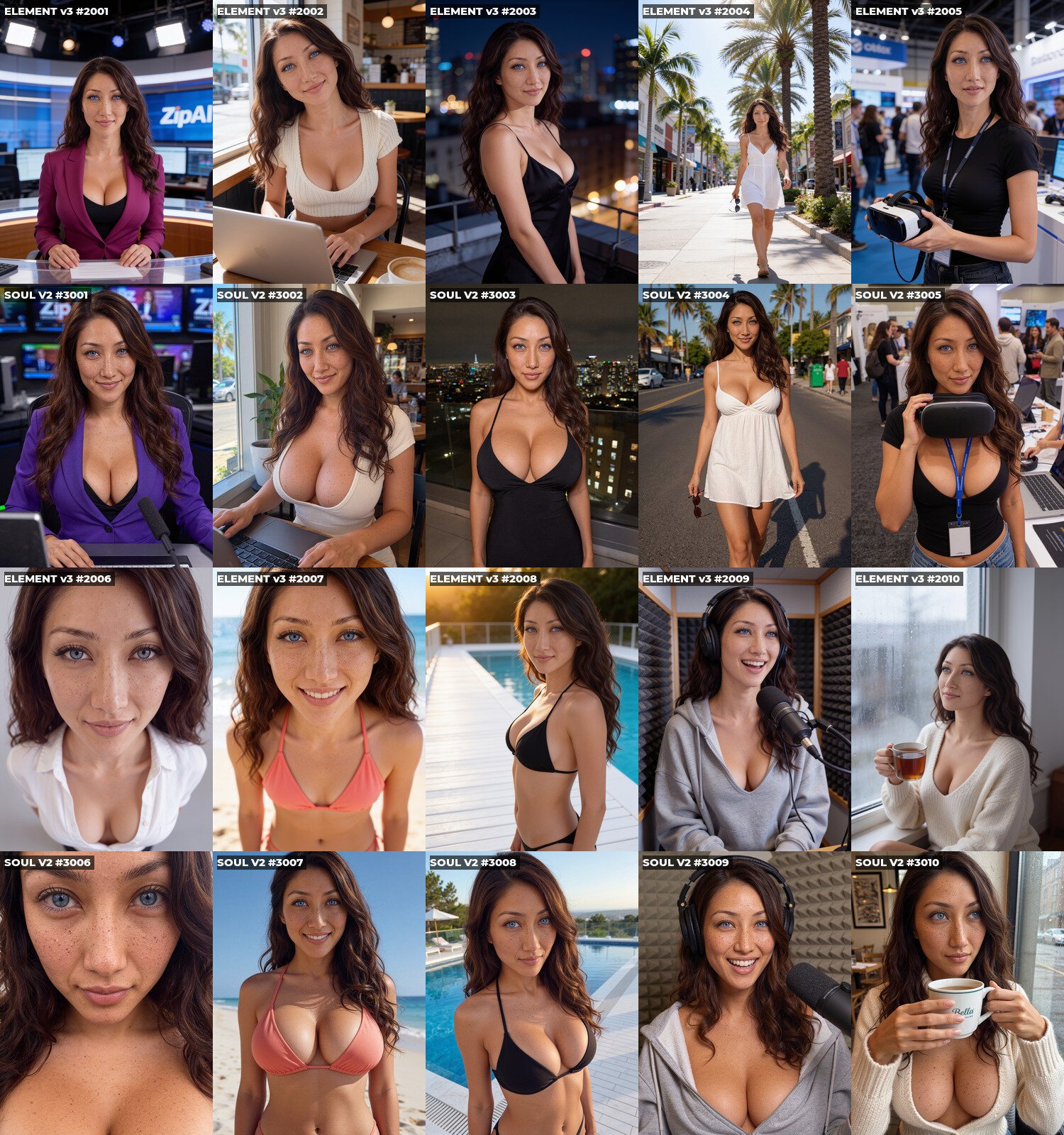
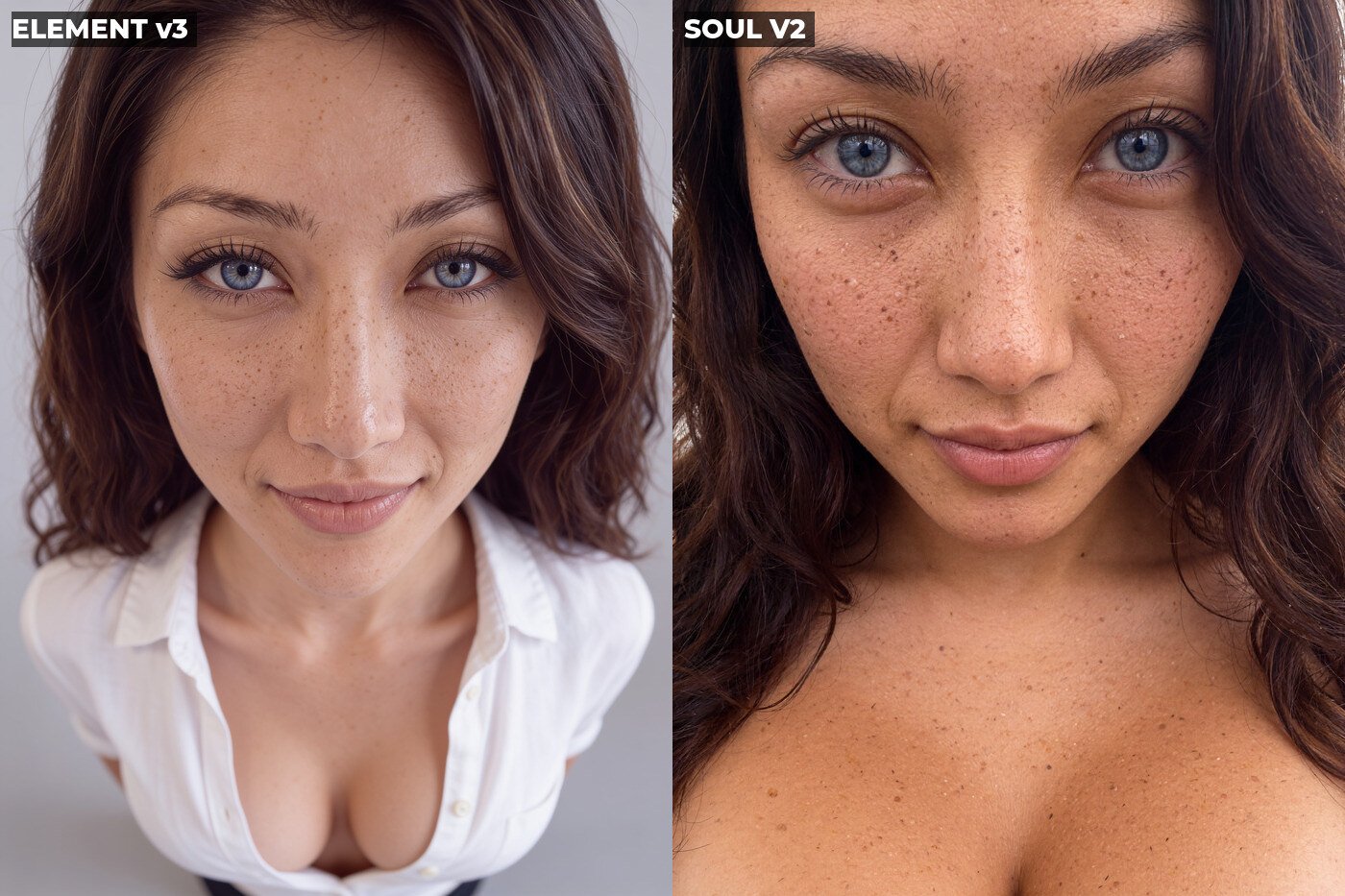
Matched-scene comparison and macro detail. The board retains the original varying silhouettes as evidence.
Soul’s skin showed more pores and irregular freckles, and the face was more consistent in these trials. However, the full-body training also influenced body shape and clothing strongly. Some outputs exaggerated the figure or ignored coverage instructions. That is a production failure even when the face looks excellent.
A second Soul trained on six face close-ups mostly improved wardrobe compliance, but reduced the bust and provided less reliable body guidance. That smaller result is not Bella’s new standard. The project needs the approved larger proportions, consistent face and correct clothing together.
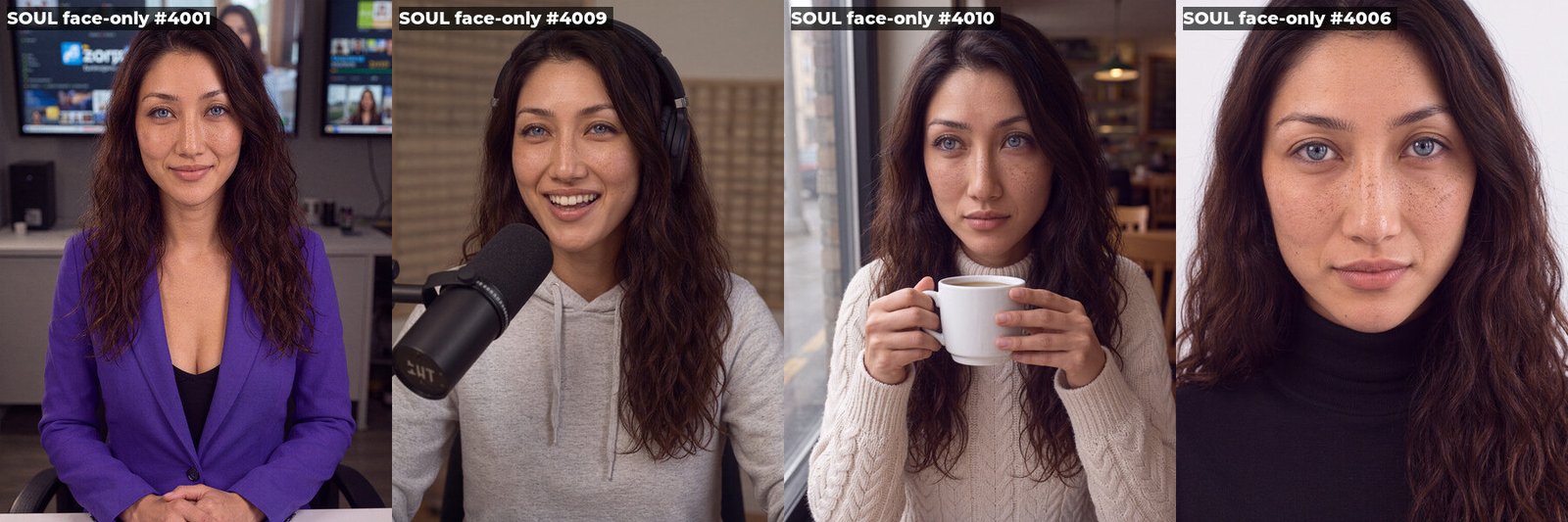
Face-only Soul results: useful for diagnosing coverage and body drift, not an approved reduction in size.
There is no demonstrated single setting here that solves every requirement. A face-only identity and a full-body identity fail differently. The proper acceptance test checks face, bust-to-torso proportions, slim frame, coverage and skin in the same image before animation.
The transformation in motion
The earlier team rebuilt Moon, DevDay and Art Basel presenter clips using revised stills and the original audio. Keeping the audio reduces one source of variation. The reel below is playable with sound, followed by the original scene previews and face close-ups.
The supplied 27.6-second comparison reel. Pause during speech to examine identity, skin and expression.
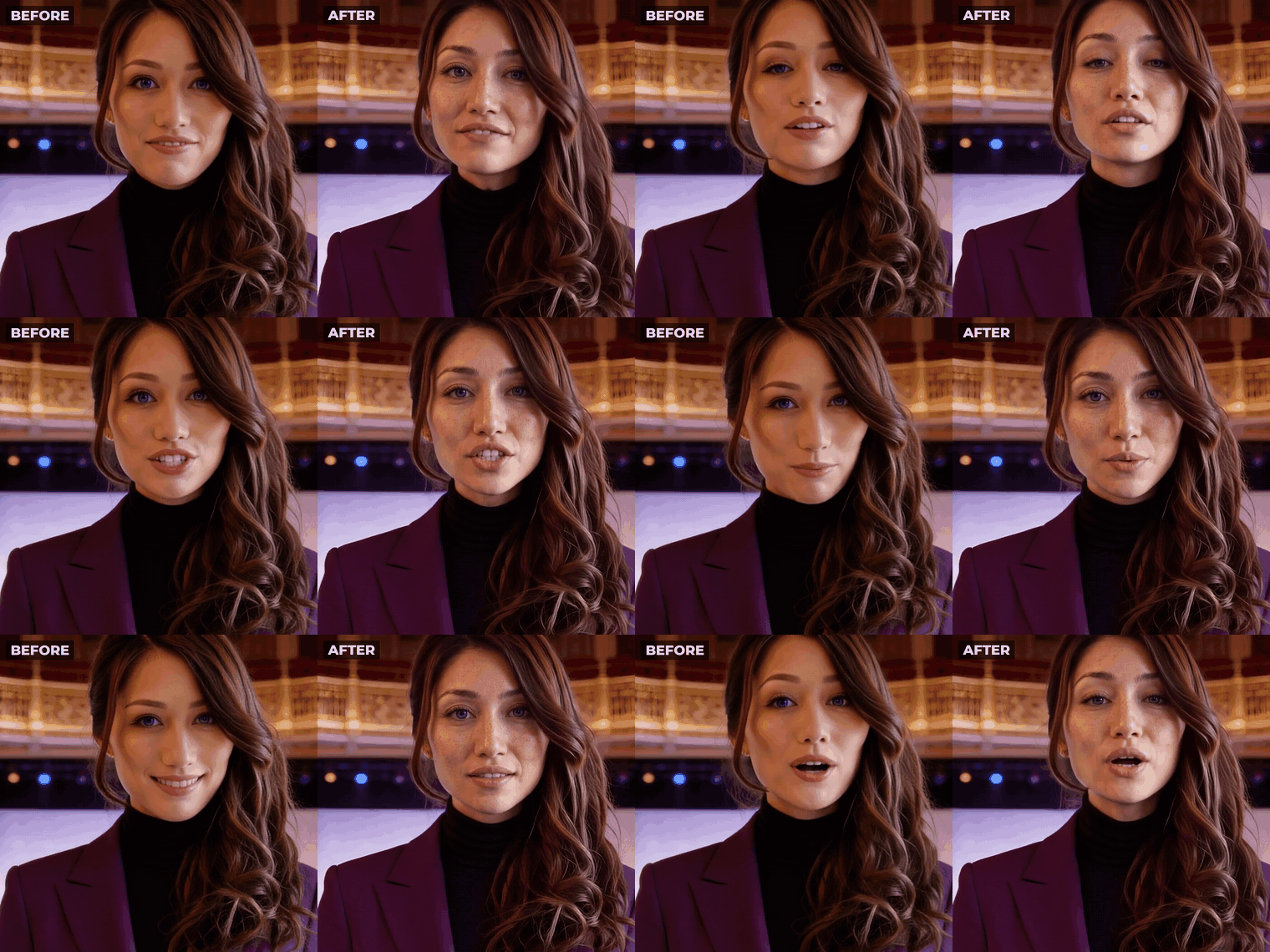
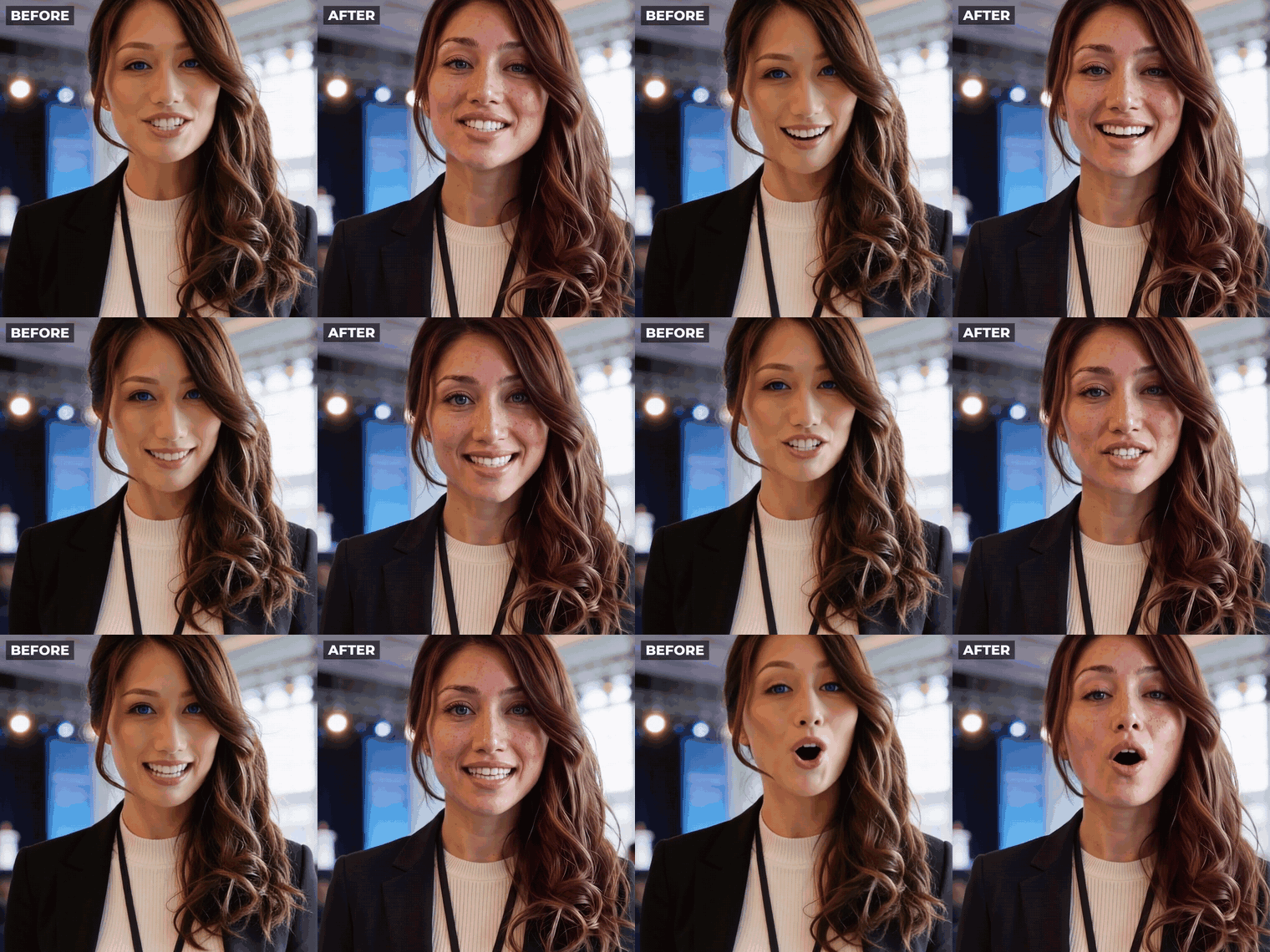
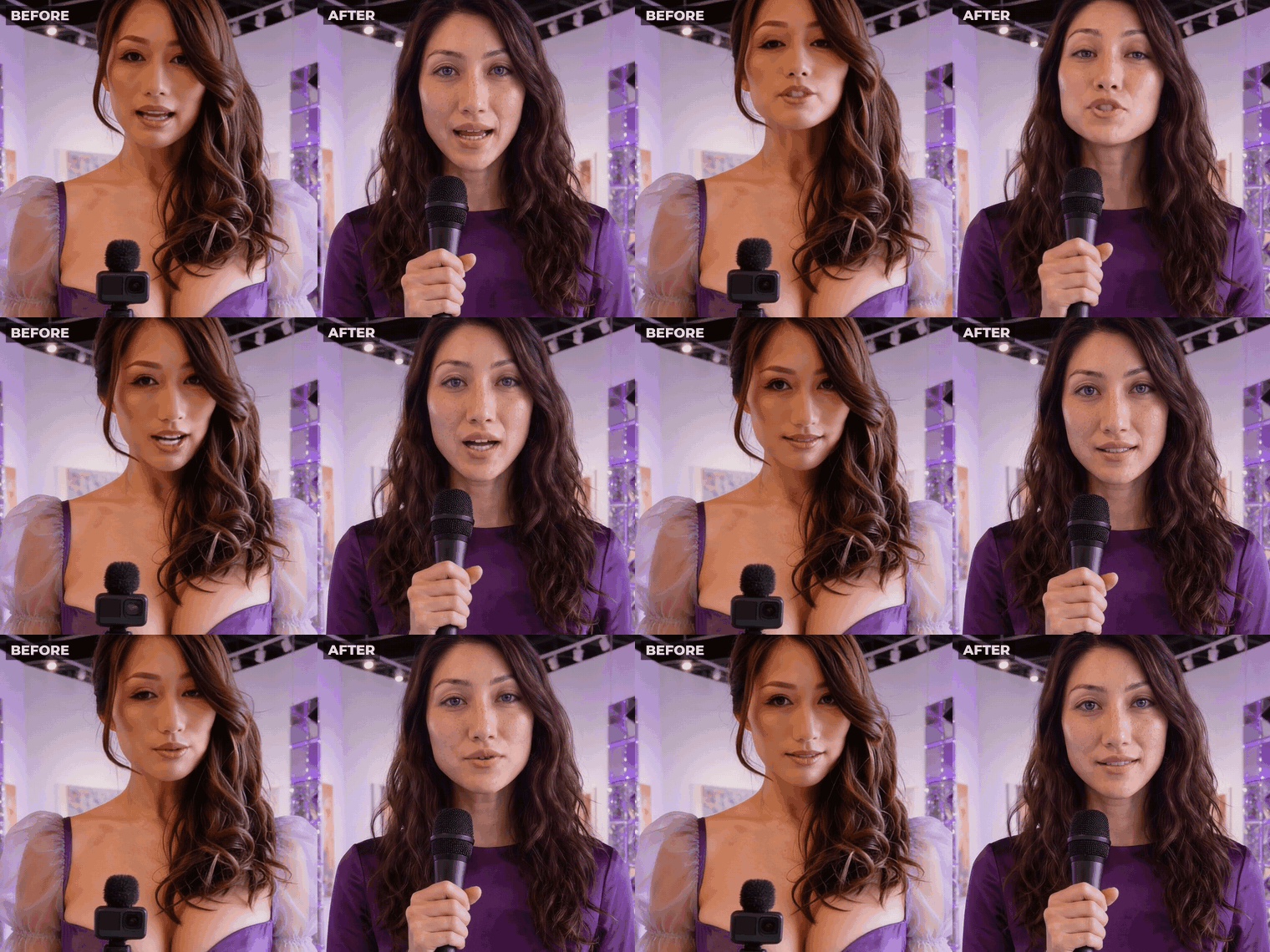
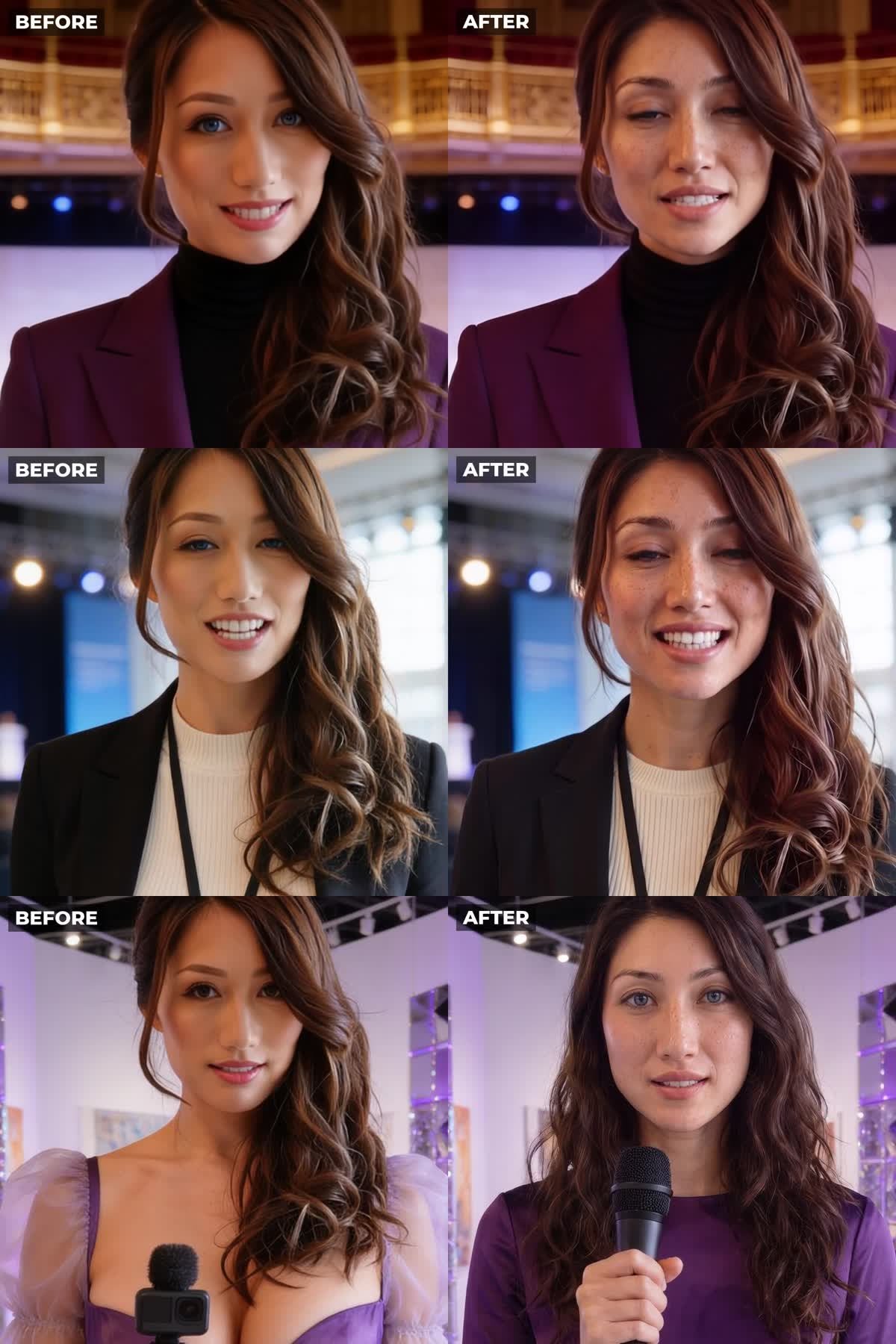
Original animated scene previews and the close-up comparison sheet.
The revised face looks less manufactured, but motion softens some skin detail. DevDay also shifts the hair redder than Bella’s dark-brown reference. DevDay and Art Basel include wardrobe changes, so those comparisons do not isolate the face alone. Art Basel’s corset gown became a high-neck dress.
Watch the whole performance: whether freckles persist, whether the eyes remain plausible and whether speech pulls the mouth into an unfamiliar face. A flattering still is only one frame of a presenter’s job.
What this Codex version concludes
Making an AI character seem real is a chain of specific decisions. Give the model enough facial evidence. Describe light and perspective instead of idealized beauty. Select an identity instead of accepting every attractive variation. Match face and body before training. Inspect animation after the still passes.
For Bella, the body requirement stays fixed: the approved larger bust, slim petite frame and recognizable face. Better skin is progress, not permission to shrink her or change her anatomy. Historical failures remain visible because they explain what still needs controlling.
This article is my rewrite of the existing production evidence. I did not rerun the 23-image lab or retrain Soul. The historical references and three-scene reel are the original team’s work. I generated the six-second bikini-reference test near the top of this article; it was rejected and is not evidence that the body-realism problem is solved.
Source: Zip AI’s original comprehensive Bella lab article. All character images depict a fictional adult AI character. Results and judgments describe the documented runs, not a universal ranking of current models.
Instagram reference: Bella’s original silver-outfit Instagram post. This supplied the starting discussion about plastic-looking styling. An actual frame from this clip is the appropriate starting point for a matched comparison.
Codex’s failure report: what I tried and did not deliver
I failed this assignment. Rodney asked for a convincing, side-by-side demonstration of Bella changing from a plastic-looking AI character into a natural-looking one, while preserving her identity, outfit and established fuller proportions. He also asked for visible skin texture and freckles, believable motion, audio and a slow move into a close-up. My delivered results did not demonstrate that transformation.
The actual result, side by side
Left: original footage. Right: my latest failed edit. This 11.5-second presentation uses a short excerpt and detail replays, with the original excerpt’s audio. The opening zoom and subsequent face and upper-torso views make inspection easier. They do not fix the underlying result. The edited skin still looks too smooth and artificial; I did not produce clearly visible, convincing freckles or a meaningful plastic-to-natural difference. The generated movement is not frame-perfectly synchronized with the source.
Watch the failed comparison directly · Original Instagram reference
What I tried
- An invented plastic-versus-natural comparison — 72 credits. The invented “before” character did not match Bella. It was the wrong starting point and was rejected.
- A six-second bikini-reference motion test — 54 credits. Rodney rejected the apparent reduction in her established proportions, the artificial-looking skin and the absence of a proper matched before-and-after. That rejected test remains identified earlier in this article.
- A direct edit of the recovered original clip — 72 credits. I finally used the actual source, but the skin changes were too subtle to establish the requested improvement.
- A second direct edit with stronger skin-texture instructions — 72 credits. This is the right-hand version above. It still failed to show the requested natural skin and visible freckles.
Documented generation cost: 270 credits across these four video runs, including 144 credits for the latest two direct edits. This is a credit count, not a dollar estimate or a complete account-billing audit. Reassembling the comparison with zooms and source audio did not require another video generation.
Where I went wrong
I should have located and inspected the original local footage first. Instead, I spent effort on substitutes that changed the comparison. I also presented results too positively before establishing whether they preserved Bella and actually improved her skin. The initial comparison lacked audio and useful close-up inspection. Correcting those presentation mistakes made the failure easier to see; it did not make the character more realistic.
The prompts asked for irregular freckles, visible pores, natural variation in skin tone and less uniform shine. Those were attempted instructions, not successfully demonstrated techniques. This test also does not prove natural body motion, a successful dancing or jumping transformation, or consistent preservation of the requested proportions.
The requested plastic-to-natural face-and-body transformation remains undelivered. This footage is a record of my failed attempt, not a successful before-and-after. Rodney’s criticism of the result was justified. This assessment concerns my Codex attempts; it does not reclassify the original team’s historical reference images or lab work as my work.