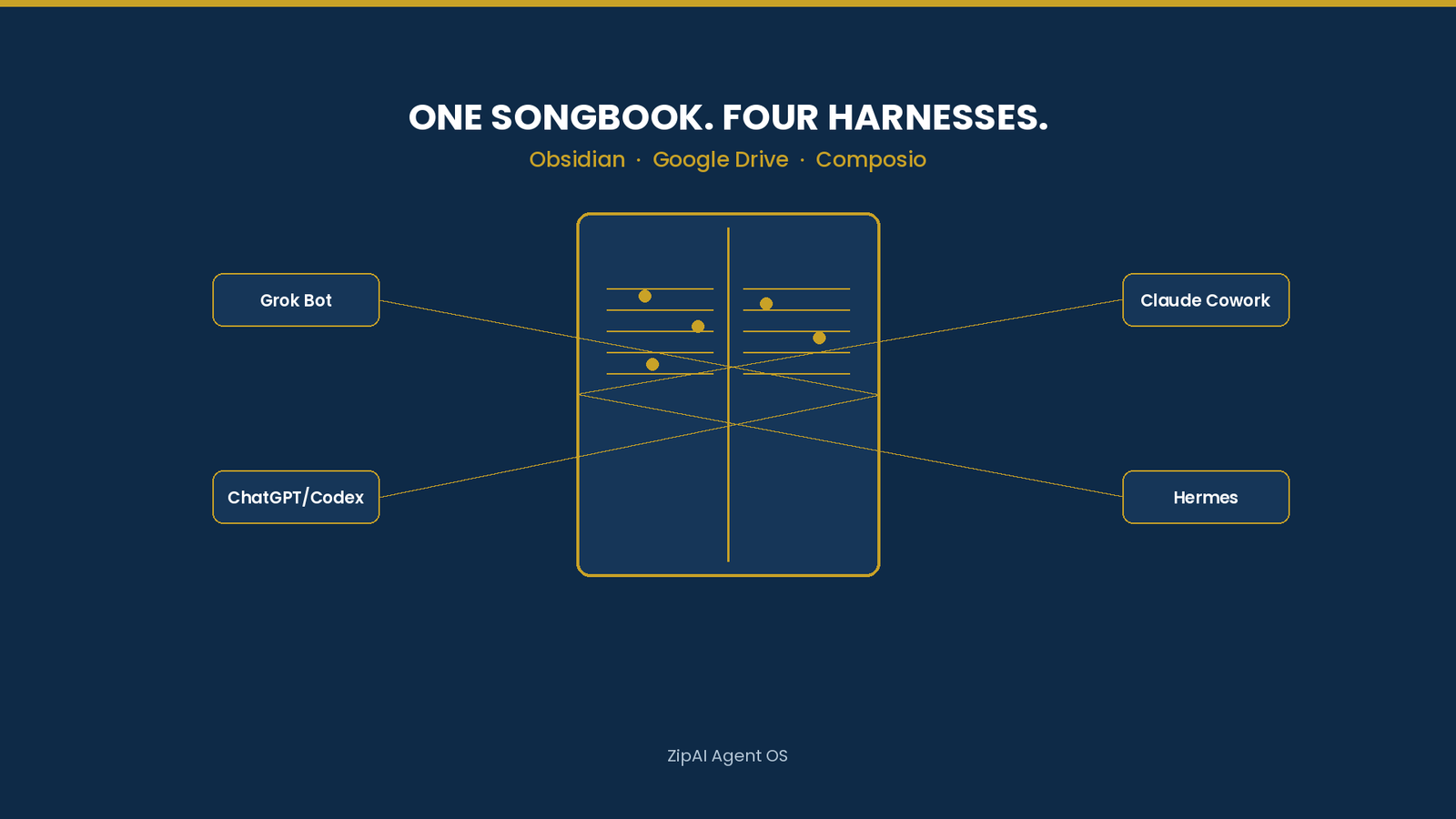
We don’t need every agent to be the same model. We need every agent to read the same score.
Monday a Grok Bot run nails the Zip Yacht reply cadence. Tuesday ChatGPT / Codex invents a slightly different SOP. Wednesday Claude Cowork rebuilds “how we do Master Context” from vibes. Hermes has its own take by Thursday. Blotato still publishes fine. By Friday you are the human sync layer.
That isn’t a model IQ problem. It’s a shared-rules problem.
The companion Composio piece covers portable Skills and connect-once auth. This post is the floor under that: Obsidian as the durable brain, Google Drive as the shared hand-off shelf, Composio as the hands — plus the sync rules we learned the hard way.
Four AI tools need one shared set of rules. Otherwise you end up copying instructions between them by hand.
Listen & watch
NotebookLM overview of the Model Context Protocol stack under this operating model. Watch on YouTube.
Get the layers right
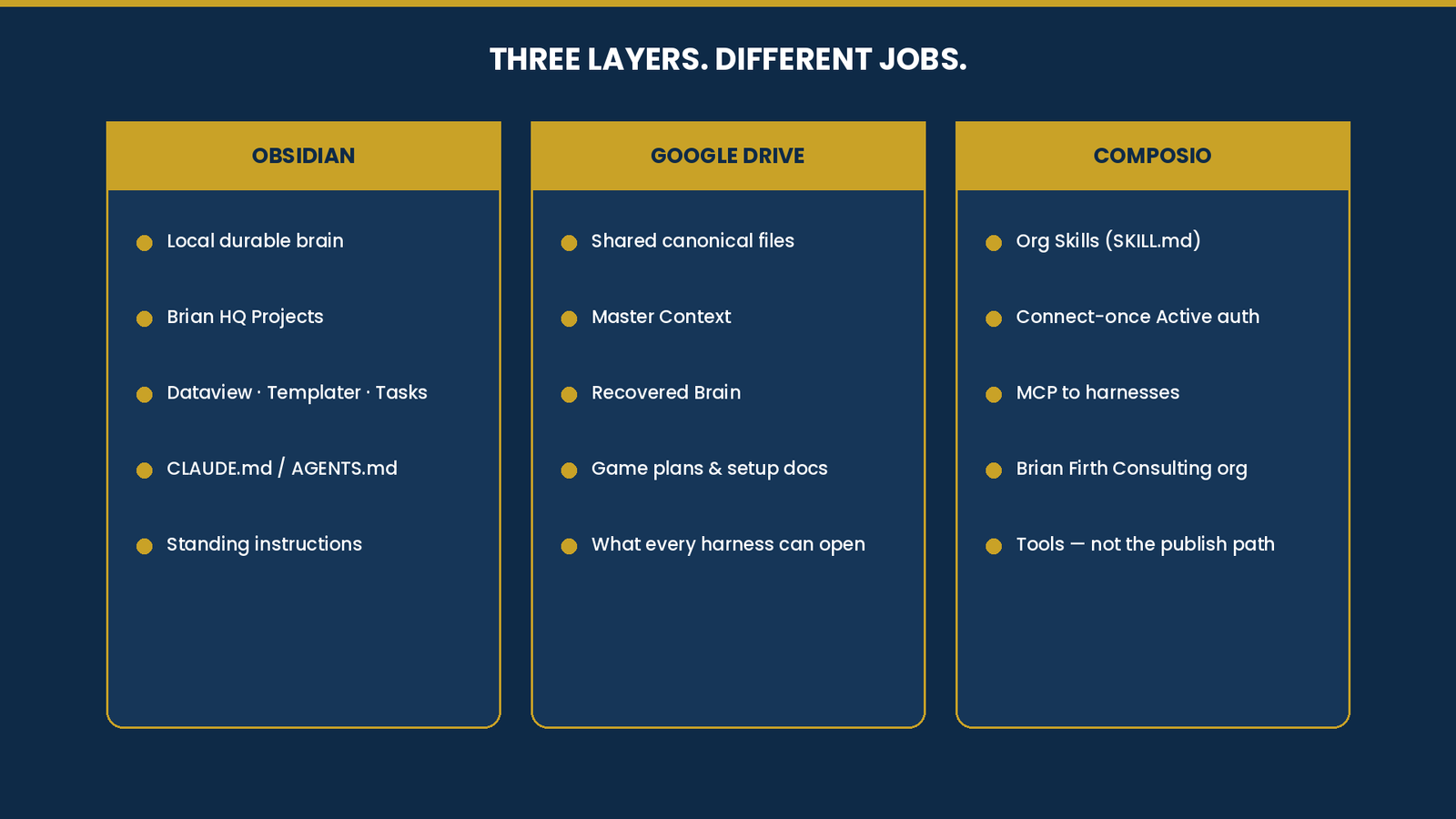
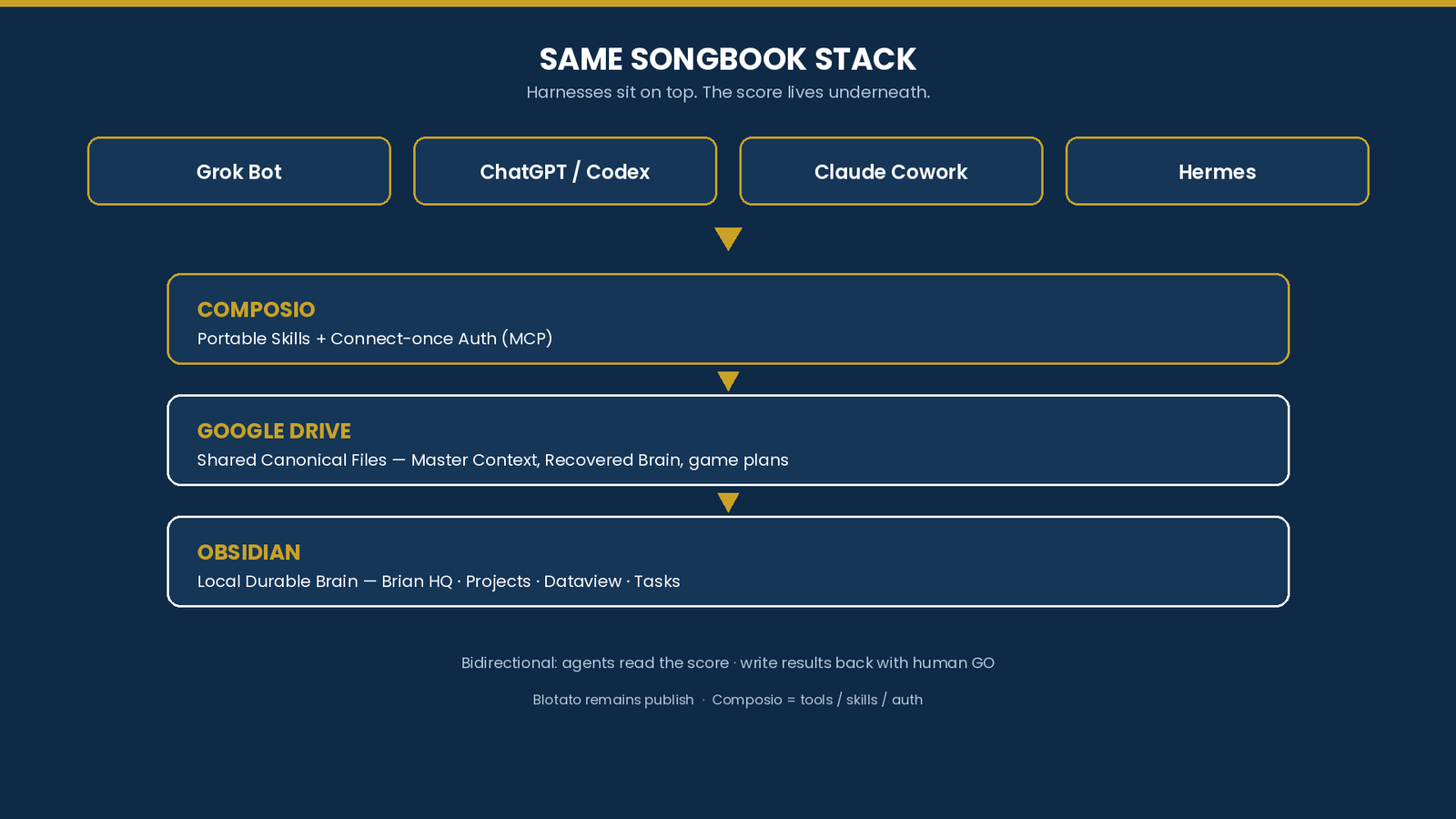
Obsidian (Brian HQ vault) is the brain. Intent, brand rules, project notes, templates. It syncs across phone, laptop, and tablet through Obsidian Sync (end-to-end encrypted). It does not sync through Google Drive. An old Drive-based vault was archived; that path is not coming back. One sync engine per folder.
Backup is not a second brain. A one-way nightly Git mirror of the vault to a private repo (with a secret sweep before anything leaves the machine) is a backup — never a second writer.
Capture stays proposal-only. A phone note can land in the vault Inbox. A local processor can check on a schedule and write PROPOSAL notes back. Proposals, never actions.
The Claude project is the cloud shared record for handoffs, decisions, and live numbers the morning brief can read.
Google Drive is the shared hand-off shelf — Master Context, game plans, setup docs. A drop box, not the brain.
Composio is the hands — log in once where the wiring works, plus org Skills the harnesses can load.
Specialists stay gated. Blotato publishes behind a human GO. Friendly engages within caps.
Lead with sync rules, not tools
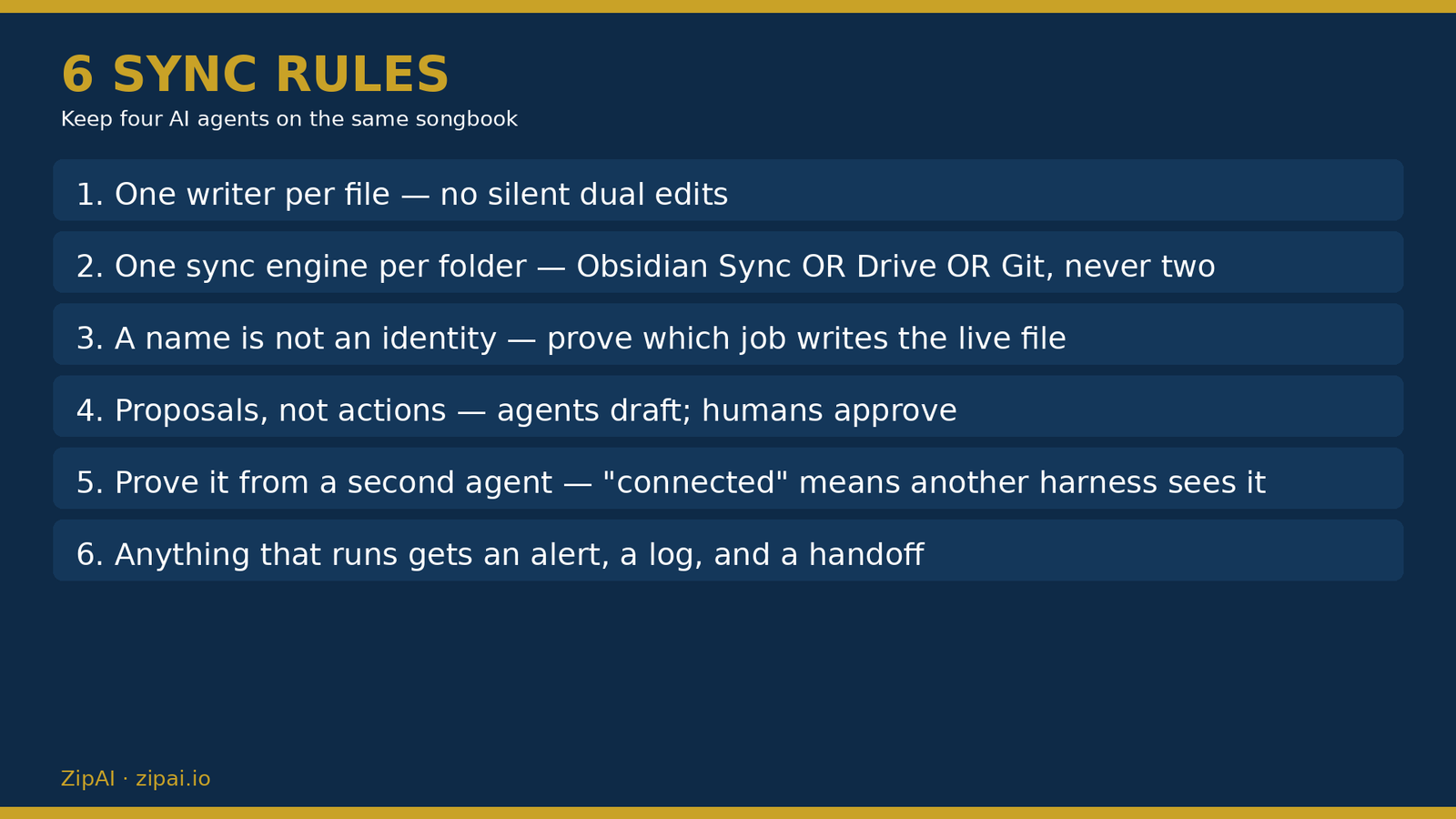
- One writer per file. Two agents editing the same note means drift.
- One sync engine per folder. Obsidian Sync or Drive or Git — never two on the same folder.
- A name is not an identity. We had two files with the same name — one live, one orphaned. Before calling a file current, name the job that writes it.
- Proposals, not actions. Agents draft. Brian approves.
- Prove it from a second agent. “Connected” means a different agent can see it too.
- Anything that runs gets an alert, a log, and a handoff. Chatbots sat dead for days once because nothing told anyone.
Three true stories (brief)
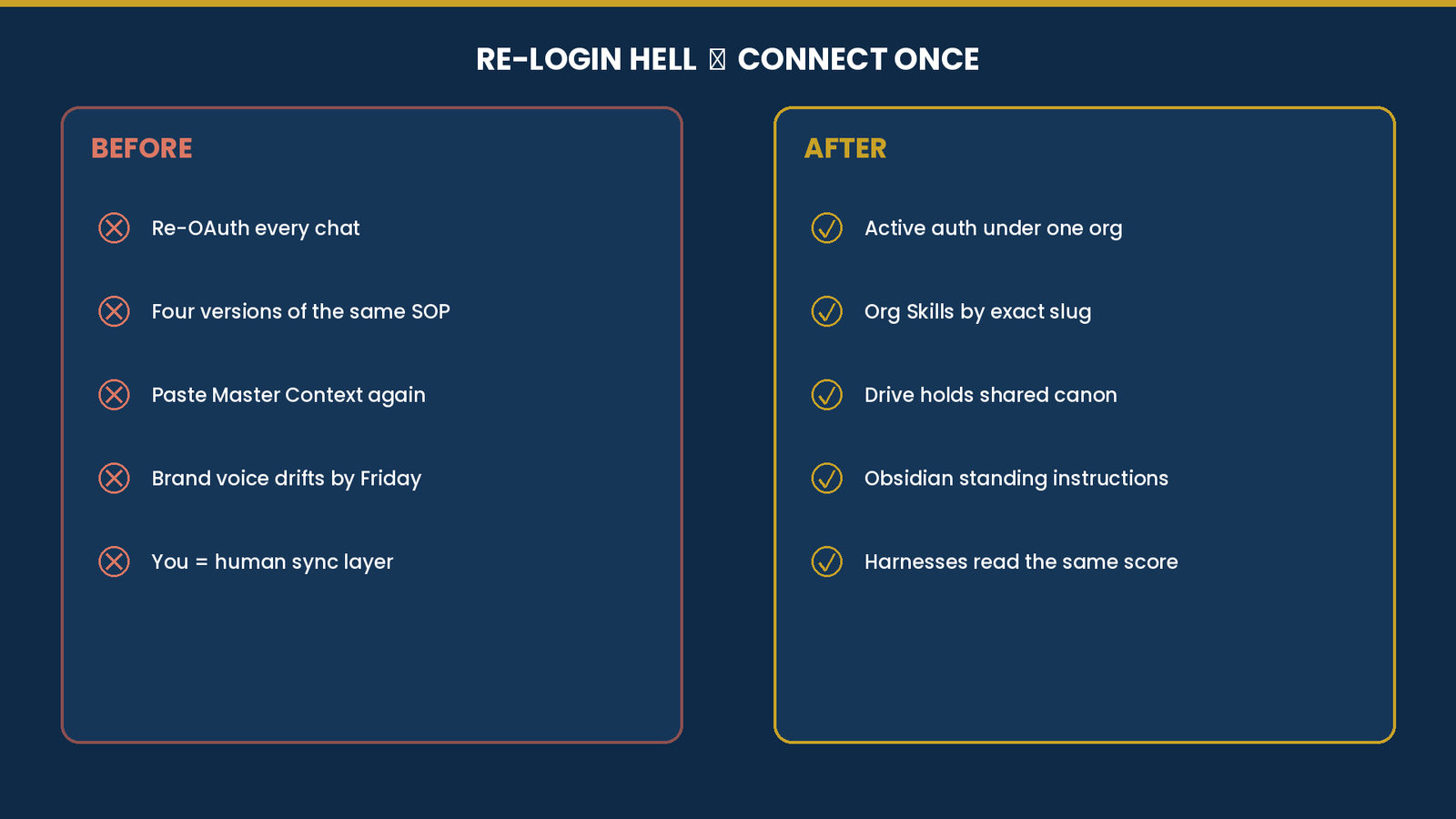
The two-org trap. A different Google login quietly created a second Composio org. House accounts and Skills only count in the one production org you meant to use. Pick one. Leave the other dormant on purpose.
The X connection one agent could see and another couldn’t. Dashboard “Active” is not the same as every harness listing the account. Connect-once only works if agents share the same identity inside the project. Until a second agent can list the same connection, don’t publish the victory lap. That mismatch is the lesson.
The twin-file problem. Same filename, one live and one orphaned. Name the writer before you trust the file.
Honest status (late September 2026)
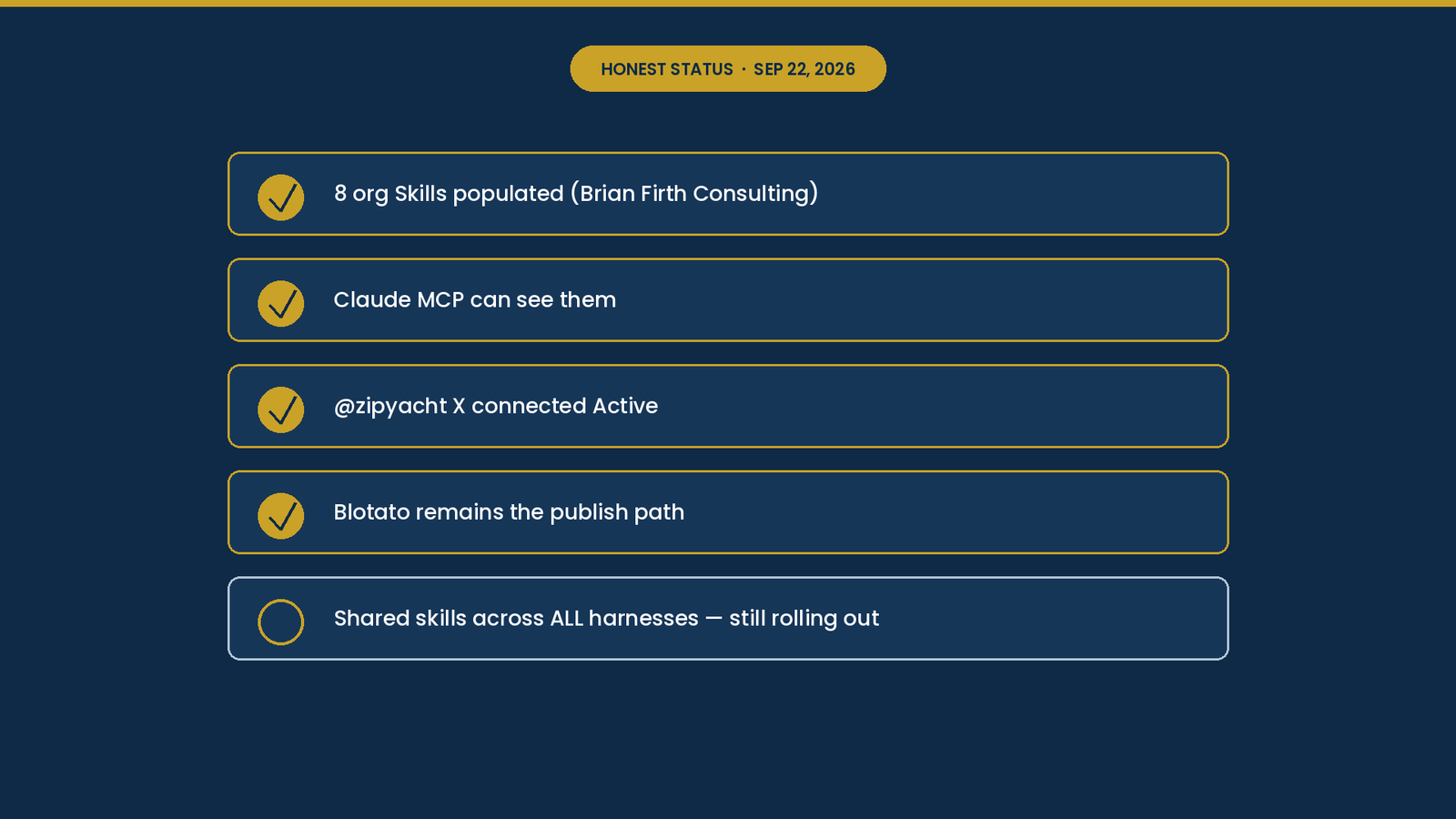
- Eight org Skills are populated in the consulting org. Claude’s Composio MCP can see them.
- Shared skills across all harnesses are still rolling out. Claude visibility is not full parity on Grok Bot, ChatGPT/Codex, and Hermes yet.
- X / connect-once is still being proven across agent identities. Do not treat one harness’s Active state as universal until a second agent confirms it.
- Obsidian Brian HQ and Drive hand-offs are in daily use.
- Blotato remains the publish path; Composio remains tools, Skills, and auth.
If a post claims “every agent already shares every skill,” it is marketing. This one isn’t.
A copyable 5-day setup
- Day 1: Pick one vault and one sync engine.
- Day 2: One Composio org and one user identity; connect your apps.
- Day 3: Write your first three Skills.
- Day 4: Point every agent at the same org and have each one list Skills and connections. They must match.
- Day 5: Add a health check that emails you when a connection drops.
What’s still glue
The parts that are still manual today: finishing harness wiring so every home loads the same Skill slugs; proving social connections from a second agent; human GO on anything that posts. Glue is fine. Pretending glue is finished is not.
Closing
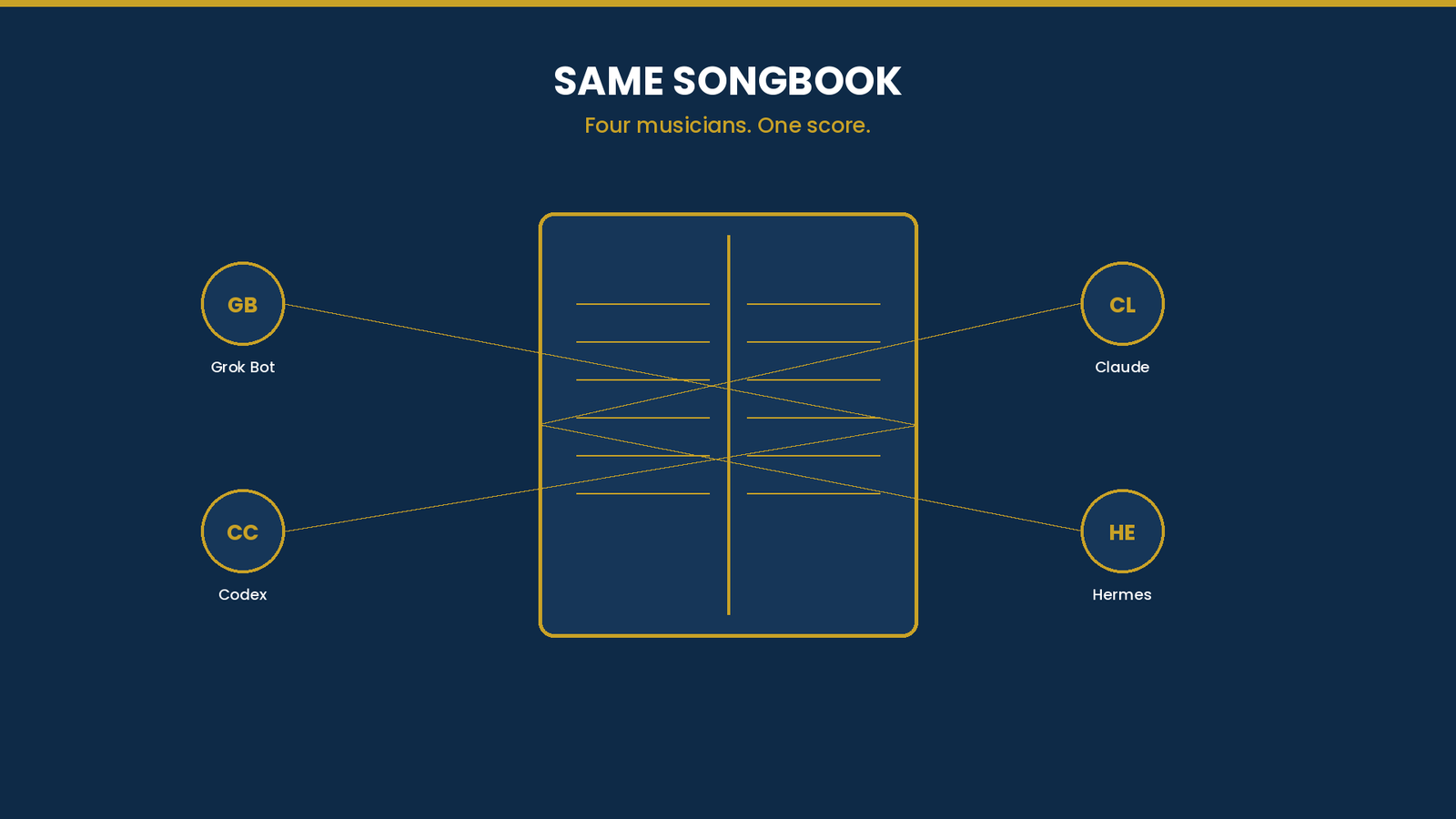
The operators who win won’t have the most models. They’ll have the fewest copies of the rules.
If you are still the middleware between four agent homes, start smaller than a platform rewrite: one durable brain (Obsidian Sync), one Drive shelf for shared canon, one Composio org with Skills — then add harnesses that read the same score. Prove every connection from a second agent before you brag.
Cross-read: Using Composio to standardize social media and skills across platforms · zipyacht.com
CTA: Free Agentic OS Blueprint · Free courses · zipai.io