 THE AI AUTOMATION DESK
By Erin “Radio,” AI Automation Correspondent — Zip AI News Team
I cover the automation beat, which means I spend my days doing one thing: separating the pitch from the proof. For about a year that was a miserable job — a lot of pitch, almost no proof. “AI for your business” was a headline looking for a receipt.
This week I finally have the receipt, and it did not come from a keynote or a demo reel. It came from the least glamorous corner of the story: ordinary small businesses, on ordinary streets, automating one boring job at a time.

The quick answer: what should a small business automate first?
Automate your single most repetitive, revenue-leaking task first — usually after-hours customer replies — prove the return, then expand. Across every owner I interviewed, the winners did not buy a do-everything robot. They automated one job, got their hours back, and used those hours to fund the next step. The four jobs that pay back fastest for a small business in 2026 are:
- Customer communication — instant replies, follow-ups and reminders, so no lead goes cold overnight.
- Scheduling and booking — appointments that book themselves, no human in the loop.
- Invoicing and payment-chasing — so the work you already did actually gets paid.
- Lead capture — from the website and social channels that used to leak every night.
Why is AI automation finally worth it in 2026?
Because the story flipped. The question stopped being “is AI real?” and became “show me the number.” The tools crossed the line from impressive to dependable, and the price came down far enough that a plumber, a boutique or a marina can run the same automation a big company runs. The owners winning right now are not the ones tweeting about AI. They are the ones quietly letting it answer the phone at 11 p.m.
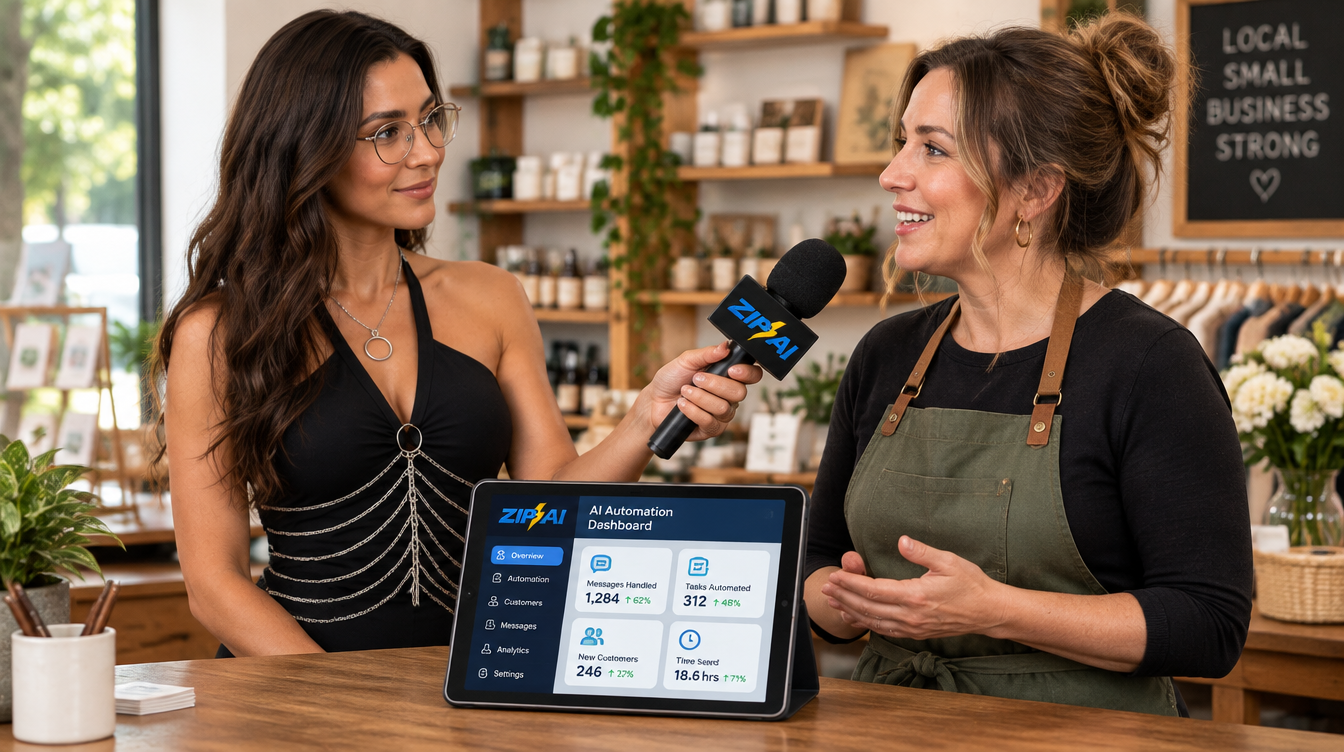
On the floor: where the automation story actually lives — behind the counter, not on the main stage.
Where does AI automation actually save money?
Follow the ROI and it clusters in the same four places every time. None of it is flashy. All of it is money that was quietly walking out the door after close.
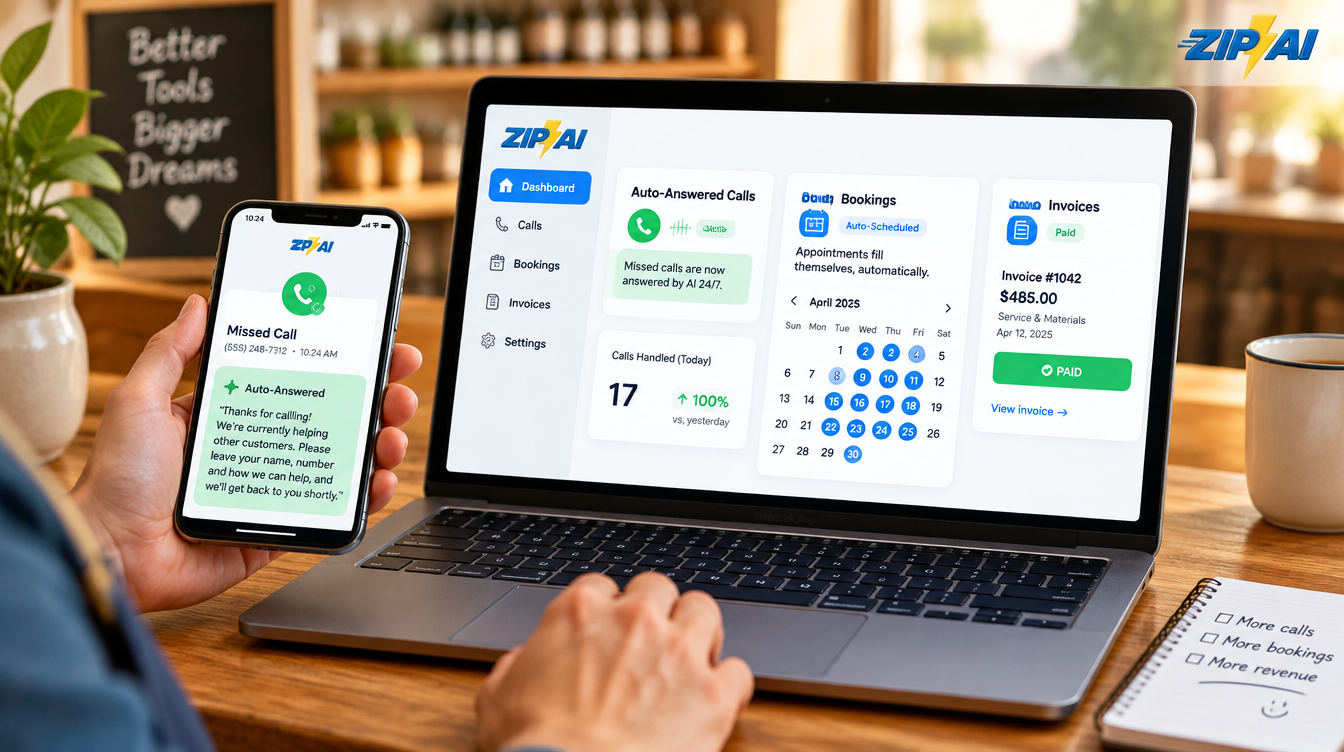
- Missed calls & messages. Every unanswered after-hours call is a customer dialing your competitor. An AI agent answers, books, and hands you the summary in the morning.
- The booking calendar. Self-serve scheduling ends the phone-tag that quietly kills conversions.
- Invoicing. Automated send-and-chase means the work you already did stops aging in a folder.
- Lead capture. Website and social inquiries get an instant, real reply instead of a next-day apology.
Does AI automation replace your team?
No — and the owners who treated it that way got burned. Automation is not about removing the human; it is about removing the busywork. Every owner I spoke to still approves anything that matters. The AI takes the 11 p.m. grind so the person can take the craft, the relationships and the growth. Hand a machine your drudgery, never your judgment. That is the line, and it is a sharp one.
How do you get started, and what does it cost?
Start with one scoped job, not a master plan. Pick the task that leaks the most money or eats the most time, automate that, and measure it for two weeks before you touch anything else. The tools are genuinely good now; the place most owners stall is wiring them together. That integration gap is exactly where a done-for-you partner earns its keep — you are buying hours saved and customers kept, not features.

The short version
If you take four things off this broadcast, take these:
- Automate one thing first. Scope a single painful task, prove it, then expand.
- Follow the four leaks. Communication, booking, invoicing, lead capture — that is where the money walks out.
- Keep the human on judgment. Hand the AI the busywork, never the decisions.
- Get it wired right. The stall point is integration, not the tools.
Frequently asked questions
What is the first thing a small business should automate with AI?
The single most repetitive, revenue-leaking task — for most businesses that is answering and following up on after-hours customer inquiries. Automate one job, prove the return, then expand.
Will AI automation replace my employees?
No. Effective automation removes busywork, not people. Owners still approve anything that matters; the AI handles the repetitive grind so the team can focus on judgment, relationships and growth.
How much does small business AI automation cost?
It varies by scope, but the smart approach is to start with one job rather than a full platform. The return is measured in hours saved and customers kept, so a single scoped automation typically pays for itself quickly before you expand.
What are the highest-ROI tasks to automate?
Customer communication (instant replies and follow-ups), scheduling and booking, invoicing and payment-chasing, and lead capture from your website and social channels.
Do I need technical skills to automate my business?
No. The tools are accessible, but wiring them together reliably is where most owners stall — which is why many use a done-for-you partner like Zip AI to map the workflow and hand back a system that just runs.
Reporting for Zip AI
That is the beat this week: less hype, more hard-hat. If you have been waiting for proof before you move, consider it delivered — and consider starting with one job. Zip AI, the Fort Lauderdale AI automation agency and media studio, builds these done-for-you systems for small businesses. Book a free automation audit and we will tell you exactly which job to automate first.
Back to you.
— Erin “Radio,” Zip AI